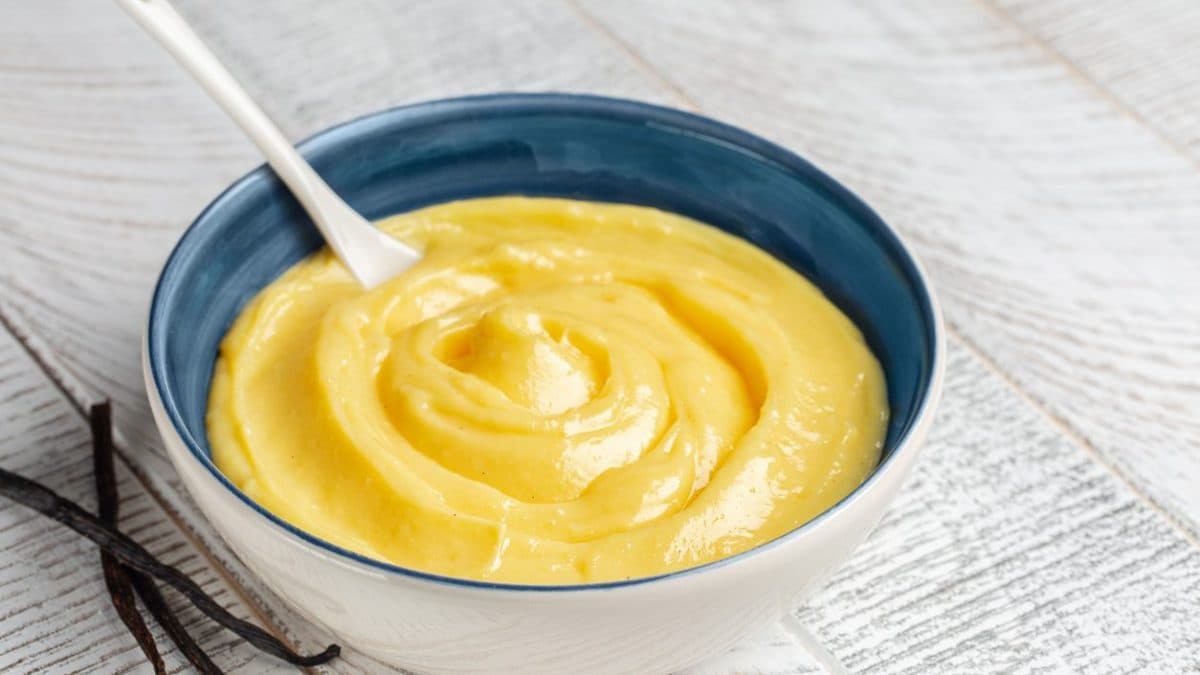
It's one of the most popular pastry preparations, a bit like béchamel in savory recipes: pastry cream (or custard) is used to make tarts, fillings for a wide variety of desserts, from puff pastry cannoli to semifreddo, as well as being the base for other delicious creams, such as diplomatica. Not to mention that it's delicious eaten simply with a spoon. Like all classic recipes, the methods for making it vary slightly in terms of ingredients and procedure, but there are common mistakes to watch out for, otherwise they lead to consistencies that are too dense or runny, lumpy, and unpleasant flavors. Let's see where it goes wrong and how to avoid it.
1. Using Flour as a Thickener

Let's start immediately with what is now considered the easiest mistake to avoid, but also the most common one, especially because it's still listed among the ingredients in many recipe books (often those from the past). We're talking about the use of all-purpose flour, the most traditional thickener, but which has mostly been replaced by cornstarch or rice starch: in addition to having a neutral flavor, being lighter and providing a glossy finish, they perform their job at lower temperatures (below 195°F/90°C), thus avoiding overcooking the cream, with the risk of an eggy aftertaste and an excessively firm consistency. Furthermore, they are both gluten-free, making them suitable for those with celiac disease.
2. Mixing Sugar and Eggs Poorly

One of the first steps is to whisk the eggs and sugar until smooth and homogeneous. This is precisely the stage at which you run the risk of lumps forming that will be difficult to dissolve later. The advice is to combine the egg yolks —not whole eggs, because the whites could destabilize the structure of the cream—and the sugar and begin mixing them together immediately, thus preventing the sugar, being hygroscopic, from absorbing the liquids and compacting.
3. Underestimating The Milk

Milk is one of the key ingredients: the most classic recipes are based on whole cow's milk, which satisfies certain functional characteristics thanks to its protein and fat composition, elements that bind with those of the eggs. Therefore, following the standard preparation, unless otherwise specified, the choice should fall on this type, so as to obtain a full-bodied cream: it is no coincidence, in fact, that in some recipes cream is added, which gives a richer and more velvety texture.
4. Not Flavoring

The custard must be flavored: when you heat the milk (being careful not to let it boil), you can add the seeds of a vanilla pod or the lemon zest, or both. As for the vanilla, omit the vanillin, which, despite being practical and inexpensive, doesn't provide the same flavor and is most often synthesized artificially. With citrus, however, you have two options: use the grated peel or take a small piece, infuse it, and then strain it out of the milk.
5. Not Stirring

Once the custard is on the heat, it must not be abandoned, but must be stirred with a whisk, so as to facilitate the union between the milk and the egg and sugar mixture and have a silky consistency without lumps.
6. Cooking Too Long (Or Too Little)

Cooking is an important step: if cooked incorrectly, the custard may be too thick or too runny, or have an unpleasant eggy flavor (we're not making an omelette). If you're just starting out, we recommend using a thermometer that will tell you the exact temperature: the correct temperature is around 179-183°F/82-84°C, which is the perfect time to remove it from the heat, as the custard will continue to cook for a short while. This is why it's important to let it cool quickly. How? We'll tell you right away.
7. Cooling The Wrong Way

You're almost done: the custard needs to be transferred to a container and refrigerated, to stop the cooking process. This process must be done as quickly as possible: pour it into a baking pan or large baking dish, spread it out, and immediately cover it with plastic wrap. This prevents the top from drying out on contact with the air, and the condensation that develops in the refrigerator from making the custard runny.
8. Not Trying to Fix It

Have you noticed that the cream has lumps? Luckily, you don't need to throw it all away; you can salvage it while it's still hot by blending it for a few seconds with an immersion blender, avoiding incorporating air. If you notice lumps while it's already ready, strain it through a sieve using a spatula. If the cream is too thin, however, it almost always means it wasn't cooked enough or the thickener wasn't enough: in this case, return it to a low heat and cook for a few more minutes, adding a small amount of cornstarch dissolved in a little milk if necessary.
9. Not Following The Recipe

We've included it at the end, but it really should be at the top of the list: pastry making doesn't allow for improvisation. While you can take some liberty when preparing a savory dish, when it comes to sweets, the type, quantity, proportions of ingredients, and method must be respected or the result won't be what the recipe promises. As we've seen, in fact, even keeping everything the same could lead to a less than perfect custard due to small errors or oversights, let alone taking more liberties.
10. Not Considering the Variants

This isn't a real mistake, but rather a tip: there's no single version of custard, so experiment. There are chocolate, coffee, and rum versions. Knowing that there are different variations could be useful when preparing it, and not just for taste. For example, if you want to prepare a dessert for vegan friends, relatives, or guests, know that you don't have to give up on tart, because in addition to the shortcrust pastry, there's also vegan custard with soy milk and a pinch of turmeric for color. If you're short on time, however, opt for the microwave-cooked recipe, ready in just a few minutes.
;Resize,width=767;)
