
Modern fast-food drive-thrus are crowded with limited-time collaborations, pretzel-bun mashups, and overloaded bowls. Yet decades before digital menu boards offered dozens of complex items, America's most iconic fast-food chains launched as hyper-focused operations centered around just one or two items made quickly, consistently, and affordably.
Remarkably, many of the very dishes that sparked the fast-food revolution are still available at the counter today—virtually unchanged in recipe, presentation, and preparation method. Here are ten original, empire-building fast-food menu items you can still order right now, arranged in the order they changed culinary history.
1. A&W's Draft Root Beer in a Frosted Mug (1919)
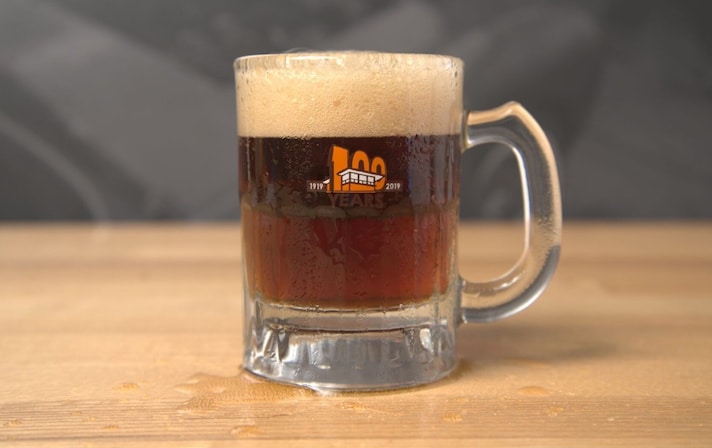
Before burgers dominated roadside dining, Roy W. Allen set up a small drink stand in Lodi, California, in June 1919 to serve returning World War I veterans during a homecoming parade. By partnering with Frank Wright in 1922 to form A&W, they launched what is widely recognized as America's oldest fast-food restaurant franchise.
A distinctively rich, herbal root beer brewed with real cane sugar, sarsaparilla, licorice root, herbs, and vanilla, served ice-cold. Drawn straight from the draft tap into a heavy, ice-frosted glass mug to ensure the drink stays cold down to the last sip without ice diluting the carbonation.
Order a Draft A&W Root Beer in a Frosted Mug (or top it with vanilla soft serve for a classic Root Beer Float) at any traditional brick-and-mortar or drive-in A&W location.
2. White Castle's Original Slider (1921)
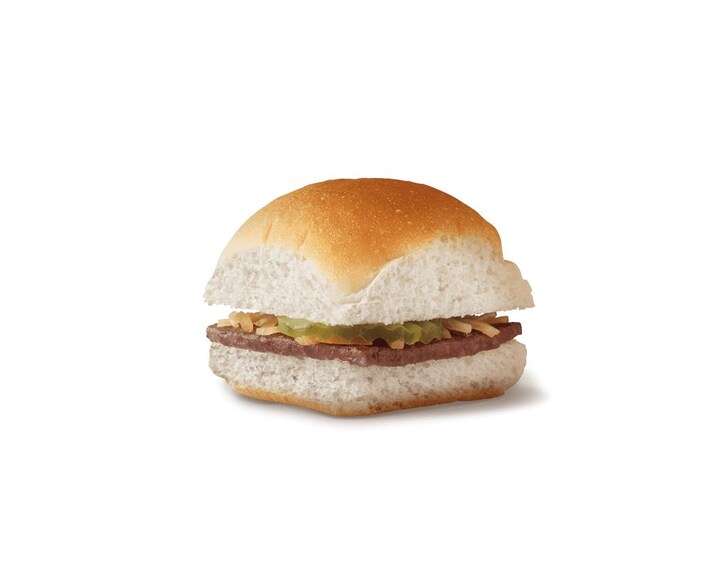
Founded in Wichita, Kansas, by Billy Ingram and Walter Anderson, White Castle was built to rehabilitate the reputation of ground beef, which the public largely viewed as unsafe and dirty following Upton Sinclair’s The Jungle. Ingram and Anderson used pristine white porcelain interiors, stainless steel, and open kitchens to prove their meat was clean.
A small, square 2.5-inch ground beef patty pressed thin and punched with five holes so steam and heat cook the meat quickly without ever needing to flip it. Steamed directly over a bed of finely diced onions on the flat-top, topped with a dill pickle slice, and tucked into a square bun that absorbs the savory onion vapor.
Ask for the Original Slider. Aside from modern automated processing and distribution, the basic flavor profile—sweet, steam-cooked onions and tender beef—remains true to its 1921 formula.
3. McDonald's Basic Hamburger (1948)
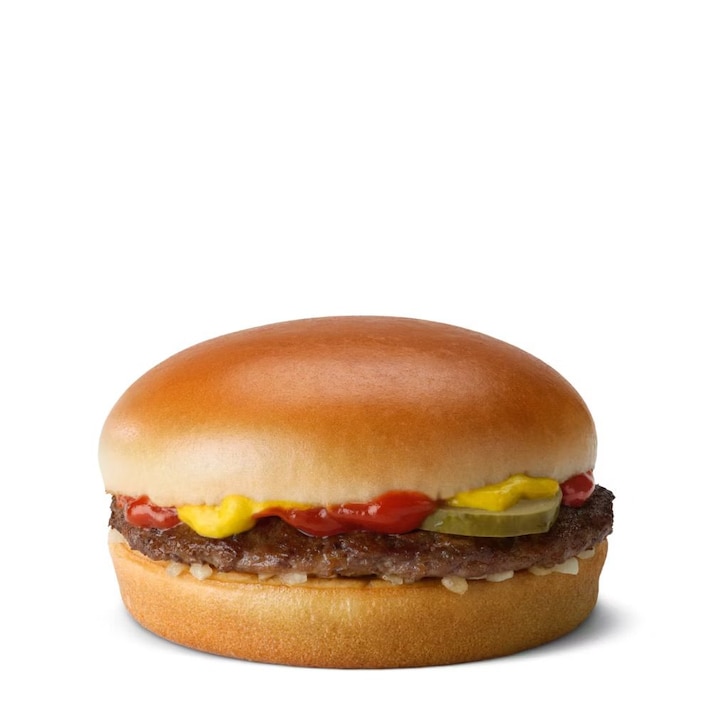
While Richard and Maurice McDonald originally operated a carhop barbecue restaurant in San Bernardino, California, in 1940, the modern fast-food model was officially born in December 1948. The brothers fired their carhops, introduced the assembly-line "Speedee Service System," and slashed their menu down to a handful of items.
A 1.6-ounce ground beef patty seasoned with salt and pepper, cooked quickly on a flat-top grill, and sold for just 15 cents. Placed on a toasted bun with standard toppings: a squirt of ketchup, a dab of yellow mustard, reconstituted minced dehydrated onions, and a single dill pickle slice.
Skip the Big Mac and Quarter Pounder and order a regular Hamburger (or Cheeseburger). The meat-to-bun ratio represents the exact proportion that turned the Golden Arches into a global phenomenon.
4. In-N-Out Burger's Single Hamburger (1948)
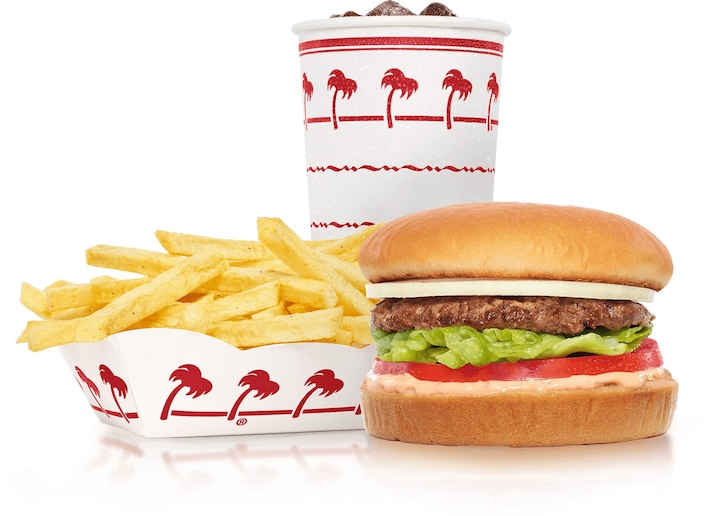
Founded by Harry and Esther Snyder in Baldwin Park, California, in 1948, In-N-Out pioneered the two-way drive-thru speaker system. From opening day, the Snyders instituted a strict quality policy: fresh whole chuck ground in-house, potatoes cut by hand, and no freezers or heat lamps.
Fresh, never-frozen beef seared on a flat-top grill, nestled inside a toasted sponge-dough bun. Dressed with crisp hand-leafed lettuce, ripe tomato, freshly sliced onion (raw or griddled), and Esther Snyder's secret thousand-island-style Spread.
Order the standard Hamburger or Cheeseburger. While the multi-patty "Double-Double" arrived in 1963 and the "Animal Style" secret menu followed later, the single hamburger on the menu today is identical to the one handed through the window in 1948.
5. Kentucky Fried Chicken's Original Recipe Chicken (1952)
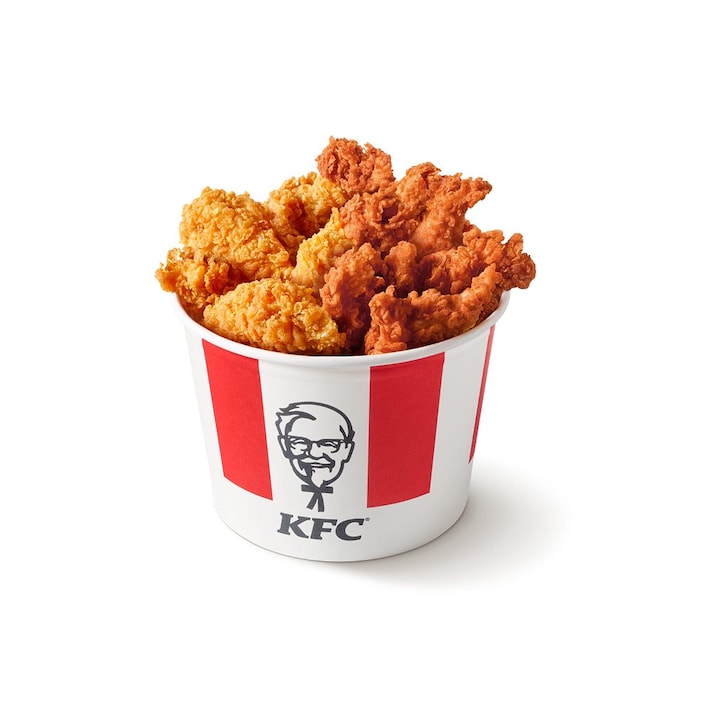
Harland Sanders spent the 1930s and 1940s perfecting pressure-fried chicken at his service station table in Corbin, Kentucky. However, the first official Kentucky Fried Chicken franchise didn't launch until 1952, when Pete Harman opened a location in Salt Lake City, Utah, introducing the famous paper bucket.
Bone-in chicken pieces coated in Sanders' proprietary blend of 11 herbs and spices, then fried in commercial pressure fryers to lock in juices and reduce cooking times. Hot, tender, and distinctly peppery, featuring a soft, seasoned skin rather than a hard, crunchy batter.
Order a bucket or combo of Original Recipe. KFC still safeguards the exact proprietary seasoning formula in a corporate vault, maintaining the savory flavor profile that launched Sanders' career.
6. Burger King's Whopper (1957)
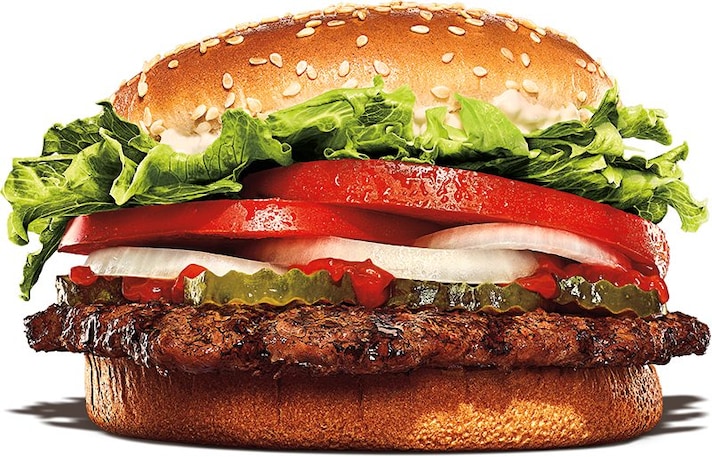
Keith J. Kramer and Matthew Burns founded Insta-Burger King in Jacksonville, Florida, in 1953, using a patented cooking device called the Insta-Broiler. After James McLamore and David Edgerton acquired the business, McLamore noticed a rival burger joint drawing huge crowds by selling large, oversized burgers. In response, he invented the Whopper in Miami in 1957.
A quarter-pound beef patty flame-broiled on a conveyor-belt grill rather than fried on a flat-top, designed to offer a smoky backyard barbecue flavor. Tucked into a toasted sesame seed bun with mayonnaise, lettuce, sliced tomato, pickles, ketchup, and sliced white onions.
Order the Whopper. It remains the chain's defining flagship item, offering the same signature flame-broiled char that distinguished it from competitors in the late 1950s.
7. Taco Bell's Crunchy Taco (1962)
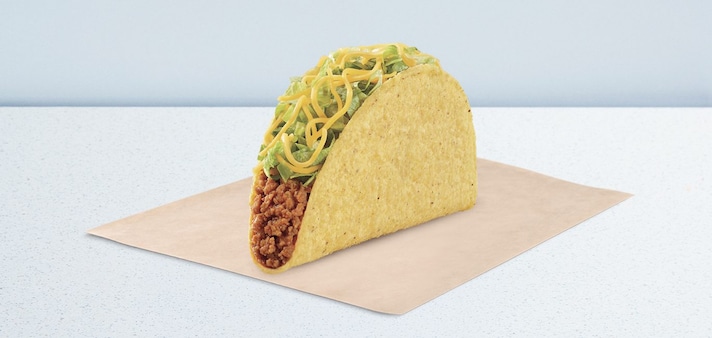
Before Glen Bell opened the first Taco Bell in Downey, California, in 1962, tacos were traditionally fried to order using soft corn tortillas. Bell noticed long customer queues across the street at the Mitla Cafe, where cooks spent several minutes frying each taco shell by hand. Bell's breakthrough was inventing a wire rack that allowed tortillas to be pre-fried into rigid, shelf-stable U-shapes.
A pre-formed, crisp corn tortilla shell engineered for rapid assembly-line filling. Stuffed with seasoned ground beef, finely shredded iceberg lettuce, and freshly shredded cheddar cheese.
Order the Crunchy Taco. While the chain has expanded into Doritos shells, chalupas, and loaded burritos, the basic crispy ground beef taco remains the structural core of the entire brand.
8. Chick-fil-A's Original Chicken Sandwich (1964)
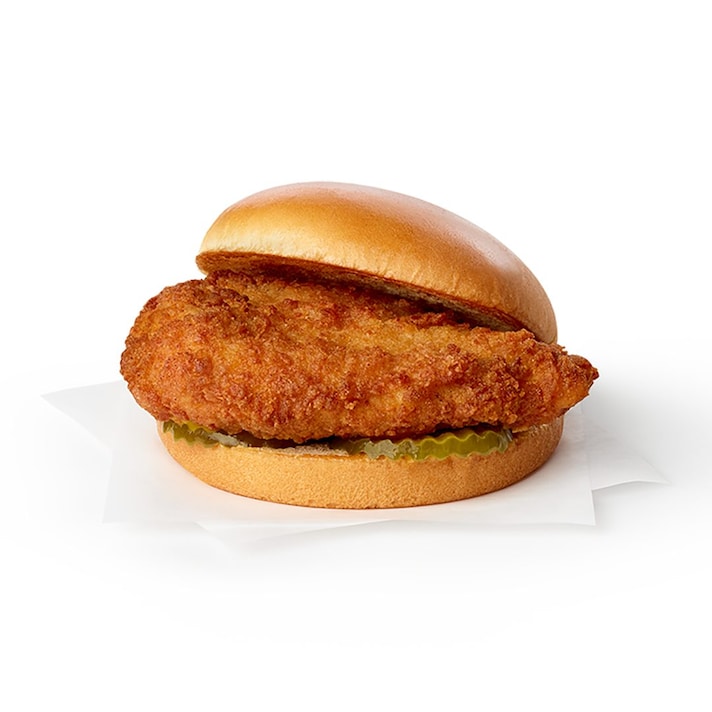
S. Truett Cathy operated a 24-hour diner called The Dwarf Grill (later The Dwarf House) in Hapeville, Georgia. In the early 1960s, a local poultry supplier approached him with excess boneless, skinless chicken breasts that airlines had rejected for being too large. Cathy bought them, spent years perfecting the recipe using a commercial Henny Penny pressure fryer, and officially debuted the sandwich before opening the first mall-based Chick-fil-A in Atlanta in 1967.
A whole boneless chicken breast seasoned, dipped in milk and egg wash, hand-breaded, and pressure-cooked in 100% refined peanut oil in under four minutes. Placed on a toasted, butter-brushed white bun with exactly two dill pickle slices—no cheese, lettuce, or sauce required.
Order the Chick-fil-A Chicken Sandwich. The formula remains untouched, still cooked in peanut oil and served with the exact two-pickle ratio Cathy perfected in 1964.
9. Arby’s Classic Roast Beef Sandwich (1964)
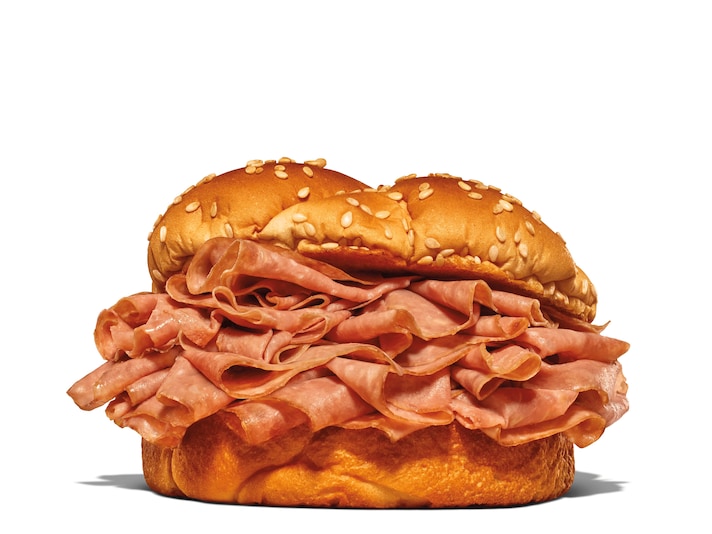
Brothers Leroy and Forrest Raffel opened the first Arby’s (derived from the initials "R.B." for Raffel Brothers) in Boardman, Ohio, in 1964. At a time when the market was flooded with 15-cent hamburger stands, the Raffels positioned Arby's as an upscale alternative, pricing their slow-roasted beef sandwiches at 69 cents.
Slow-roasted whole beef round, shaved paper-thin and piled high on a warm roll. Layered inside a soft, toasted sesame seed bun, intentionally left plain so customers could dress it at the counter with Arby's Sauce (tangy barbecue) or Horsey Sauce (horseradish mayo).
Order the Classic Roast Beef. While the chain now features smoked briskets, gyros, and crinkle fries, the thinly sliced roast beef sandwich on a toasted sesame bun remains their founding signature.
10. Wendy’s Dave's Single and Chocolate Frosty (1969)
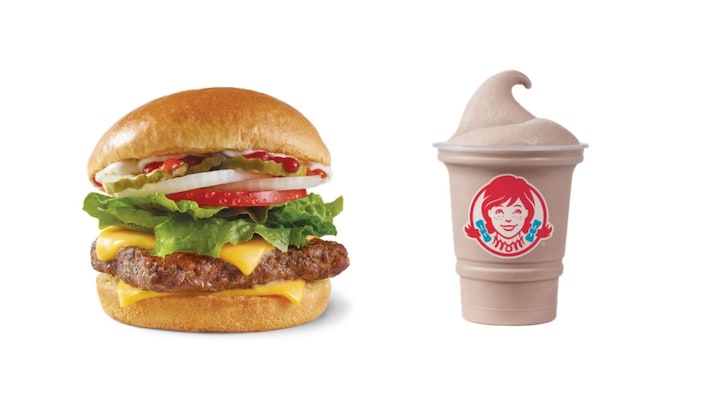
When Dave Thomas opened the first Wendy’s in Columbus, Ohio, in November 1969, he focused on fresh, never-frozen beef and a distinct presentation that separated his restaurant from competitors.
Fresh ground beef formed into square patties so the corners stuck out past the circular bun, visually demonstrating to guests that Wendy's "never cut corners." Thomas also introduced the Frosty—a thick, spoonable dessert formulated with a blend of chocolate and vanilla soft-serve mix so the chocolate flavor would not overpower the palate after eating a savory burger.
Order Dave's Single alongside a Classic Chocolate Frosty. Dipping hot, salty french fries straight into the chocolate dairy dessert remains one of fast food's most celebrated rituals.

