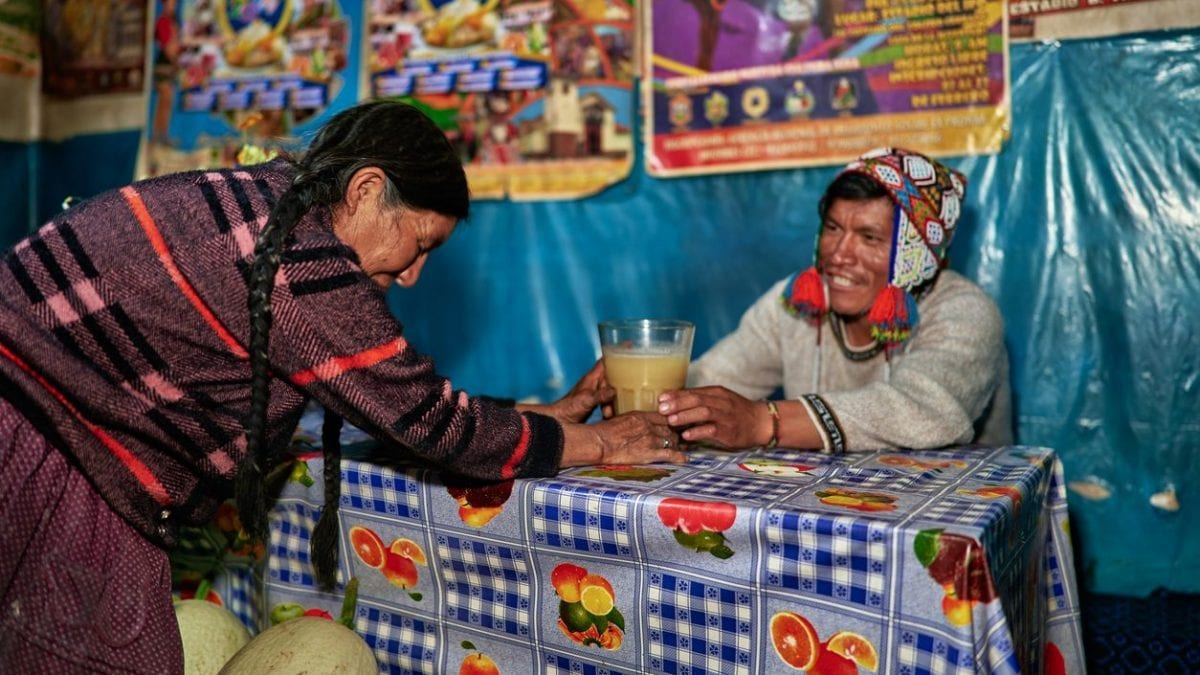
We all learned about El Día de los Muertos thanks (also) to the Disney film Coco: we fell in love with the culture, the colors, the music, the love between the people who are here and the bond between those who are here and who are no longer here. A celebration of death that dates back directly to the pre-Hispanic period: a tradition that has been handed down for centuries and to which Mexicans are still incredibly attached. Because there is nothing that tells more about its people than their customs, their habits and their origins and if there is a place in the world that has something wonderful to tell, it is certainly Latin America: a melting pot resulting from the mix of multiple cultures, especially the indigenous one, which has brought with it some of the most interesting traditions and stories of the different countries.
Beyond rituals, myths, and legends, pre-Columbian populations also left their mark on the history of Latin American gastronomy, with some typical beverages still consumed today. We learn about their stories and how they evolved over time.
1. Atole
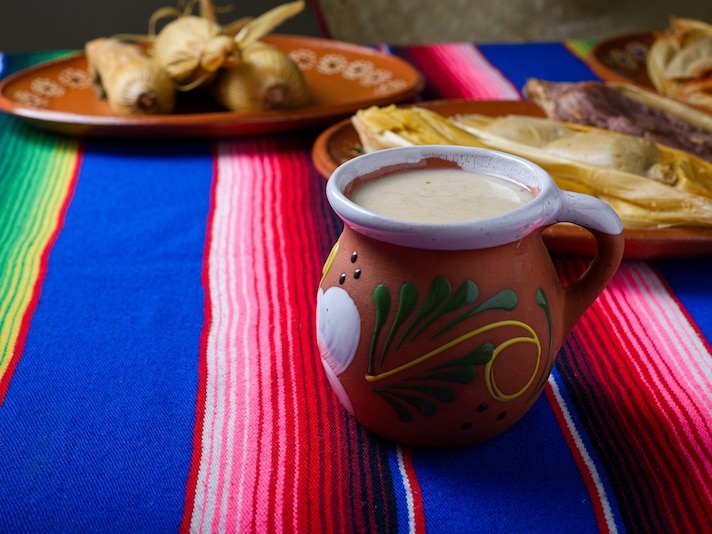
Many people may be familiar with its chocolate version: champurrado, often referred to as Mexican hot chocolate. Drunk on El día de los muertos (“Day of the Dead”) and Las Posadas (the Christmas holidays), champurrado is made from a base called atole: a drink already consumed by the ancient Mayans and currently enjoyed in Mexico, Guatemala, and other Central American countries. Thick, warm, and creamy, ideal for the winter season, it originates as a sugary mixture of corn flour and water.
According to tradition, atole is sweetened with sugar, honey or piloncillo, a sweetener made with sugar cane juice brought to the boil and evaporated, obtaining a molasses which is then poured into various molds and left to dry.
The flavor is not always the same, as it varies from region to region based on the products available in that territory: for example, in Michoacán (Mexico) an atole is prepared with wild blackberries; in the Chichicastenango region (Guatemala) it is possible to find an atole in which the protagonist is the plantain; in Mexico City, however, we find the white atole, the starting point for all the others, based on nixtamal (corn kernels boiled and left to rest in lime water, so as to make them more digestible and nutritious), without the addition of sugar or other flavorings.
A drink so ingrained in the local gastronomic culture that it even has a festival dedicated to it: the Atole Fair is held annually in Tarécuato, Michoacán, where in the city's central square, women display their clay pots and offer patrons a wide variety of atole, ranging from classic to more creative flavors, offering a selection of around 50 different options.
2. Balché
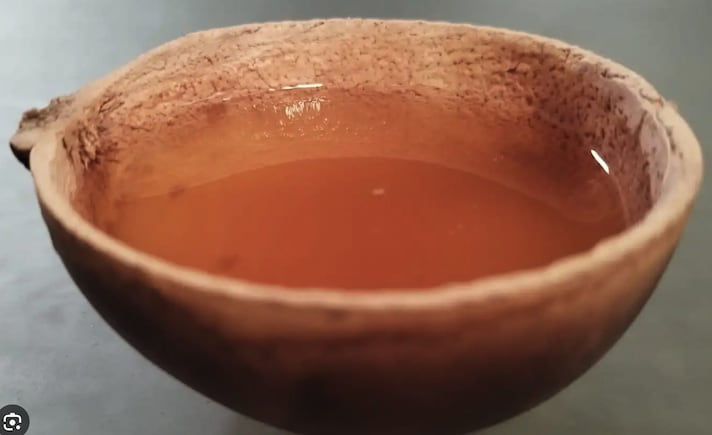
Also originating in the Mayan culture, balché takes its name from the tree of the same name. For the ancient Maya, it was a drink with magical properties, and it is even said that the Lacandons (a different people of the Mayan culture) managed to convince the conquistadors, who had banned its consumption, to lift the ban by explaining that the cause of the high mortality rate was due precisely to the abolition of this drink, believed to be curative.
Balché is prepared with the bark of the tree from which it takes its name: after having been washed, dried and crushed to release the sap, it is placed in a jar with equal parts water and honey and left to ferment for 4-6 days.
Even today, balché is traditionally consumed on ceremonial occasions: in this case, the bark is broken into four pieces and left to soak in a jar with two cups of "virgin" water, meaning water never seen by a woman, and one cup of pure honey, produced by a special stingless bee, and the whole thing is left to rest for about three days. In agricultural rites, balché is scattered on the ground in the four cardinal directions, while in ceremonies involving the sacrifice of birds, the latter are forced to drink balché before being sacrificed.
3. Tepache
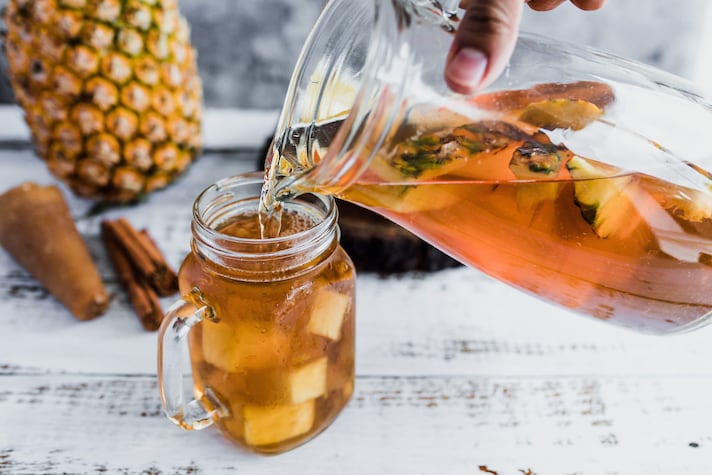
Tepache is also a drink of pre-Hispanic origin, more precisely of the Nahua people, the largest indigenous group in Mexico, who gave rise to the Aztec population. In this case, the etymology of the word itself helps us understand what we are dealing with: it derives from the Nahuatl (the Mexican language native to the Aztec people) tepatl, which means “corn” ; it also seems that another term from which it draws inspiration is tepachoa, also from the Nahuatl language, which literally means “to grind or press with stone”. So tepache is probably a drink made with stone-ground corn.
Today this drink is still very famous and consumed in Mexico, even if over time it has undergone important changes: the main ingredient is no longer corn but pineapple, of which the peel is generally used. The peculiarity of this drink lies precisely in its preparation: in fact, it is a drink obtained from a fermentation, which however does not occur through microorganisms that start the process, but from a natural fermentation thanks to the bacteria present on the pineapple peel. Therefore, the preparation of tepache consists of the maceration of pineapple peels together with piloncillo, cinnamon, cloves and water: it is a fresh drink, slightly fizzy and with a particular spicy flavor. It is very common to find it as a street cocktail, usually served in a bag with ice and a straw, but its preparation is so simple and accessible to everyone that it is often prepared at home.
Chicha
Another interesting version of tepache is chicha, a drink of Inca origin. It is also a fermented corn-based drink and there are different variations in different countries: chicha morada in Peru is made with a particular type of dark purple corn; in Chile it is called chicha muday, which uses brandy or other alcoholic beverages in addition to fermented corn; chicha criolla in Venezuela is non-alcoholic and made with rice or wheat semolina.
A peculiarity of chicha is the way it is prepared: in ancient times (but there are still those who do it today) women chewed the harvested corn and then spat it into an earthenware container, this is because the enzymes contained in the saliva aided the fermentation process, transforming the corn starch into simple sugars.
4. Tejate
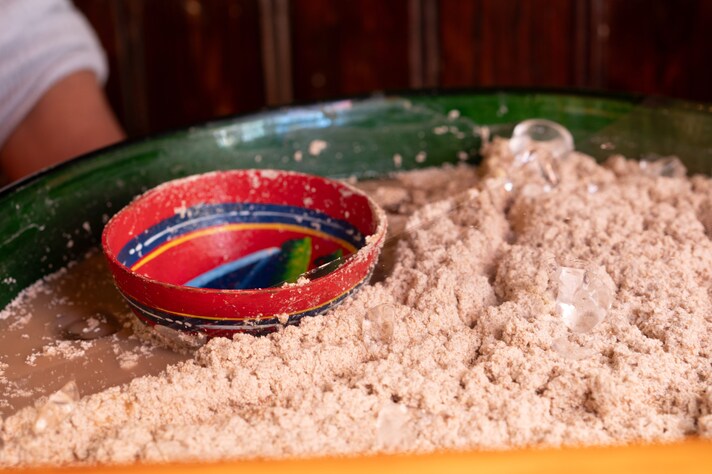
A non-alcoholic drink made from corn and cocoa, it was considered particularly important in the cuisine and corn-related agriculture of the Central Valleys of Oaxaca. Its origins also date back to the pre-Hispanic period and it was particularly consumed by the Zapotec kings. The main ingredients of tejate are toasted corn flour, fermented cocoa beans, mamey seeds (a tropical tree native to Mexico), and flor de cacao, also known as rosita de cacao. These are ground to form a paste that is then mixed with water, usually by hand, and, when the drink is ready, a sort of foam forms on the surface, due to the presence of the flor de cacao.
Like atole, tejate also has its own dedicated festival: it takes place in April in San Andrés Huayapam, in the Central Valleys of Oaxaca; or in Los Angeles, California, where since 2008 a group of Zapotecs have been promoting the drink, in a fair accompanied by regional dances and colorful shows.
5. Mezcal
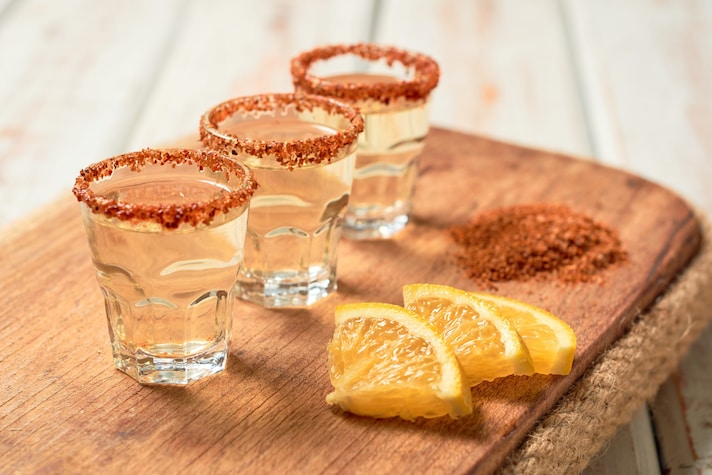
In Mexico they say, “Para todo mal, mezcal, para todo bien, también”: whatever happens, mezcal is a must. Often associated with tequila, mezcal (or mescal or mexcal) has origins that date back to before the Spanish conquest: it was the Aztecs who began the production of this distillate, although it is thanks to the technology brought by the conquistadors and the distillation techniques that the production of mezcal as we know it today began.
One of the legends linked to its birth dates back to the times of the Aztecs: the name derives from the goddess Mayatl, an "agave woman" who nourished her people with 40,000 breasts from which mezcal flows. A connection with the spiritual world, the people's adoration of the protector of a plant that played a fundamental role in Aztec culture given its abundance in the area. A more magical legend, however, tells us that mezcal was discovered when lightning accidentally struck an agave plant, cooking the heart and releasing its fermented juice: the word mezcal itself appears to derive from the Nahuatl mexcalli , which means "cooked agave."
In any case, mezcal is produced only from the central part of the agave, called espadin, and when the plant reaches 6-8 years of age, the leaves are removed, leaving only the piña, the heart of the plant. This is cooked in underground ovens and then left to macerate for 14 to 30 days. This is then followed by distillation, which can last a long time, in pot stills. Unlike tequila, which is produced only in the Jalisco area and from a single type of agave, the blue agave, the base of mezcal can be extracted from around 50 agave ecotypes.
6. Pulque
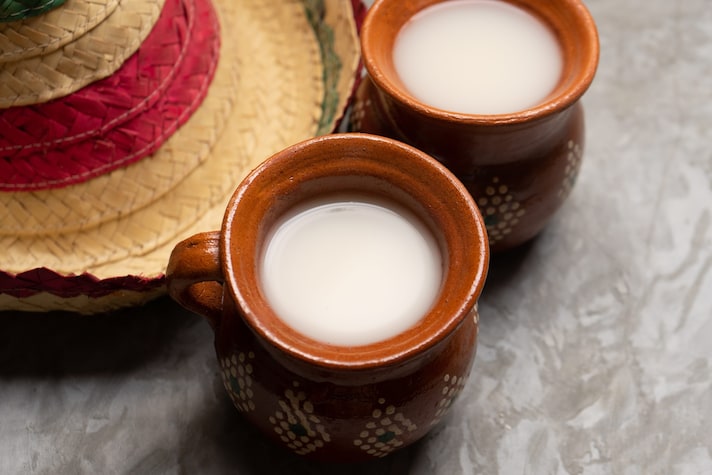
Long relegated to the "grandfather" of tequila and mezcal, pulque has been enjoying a revival in recent years. Considered more of a wine than a spirit, it is made from the heart of the maguey (a type of agave), from which the sugary sap called aguamiel is extracted. This is then fermented in wooden or fiberglass vats using a specific bacterium.
Like mezcal, the history of pulque also stems from the ancient Aztecs and, once again, a deity is involved: this time it is the goddess Mayahuel, goddess of the agave, whose blood, it seems, flowed through her veins from aguamiel. During the pre-Hispanic period, pulque was a beverage used during religious rites and important ceremonies, reserved for priests and nobles; with the arrival of the conquistadors, the drink became accessible to a wider public. During the 20th century, however, pulque's success suffered a decisive decline, thanks to the growing popularity of beer. In recent years, pulque has regained a prominent place as a symbolic drink of Mexican tradition and culture.
7. Pozol
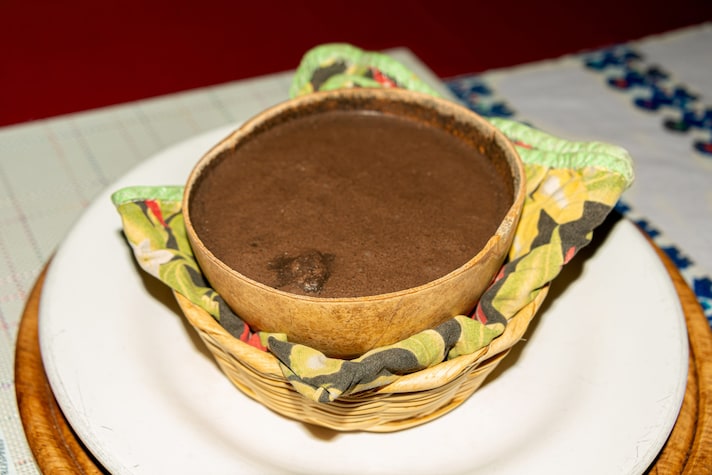
The history of pozol comes to us from the Mayan, Inca, and Aztec cultures. The term derives from the Nahuatl pozolli, meaning frothy, and it is essentially a drink made from corn and cocoa. Since its pre-Hispanic period, it was a highly prized drink for its high nutritional content, which is why it was a favorite among indigenous travelers, both because it gave them an energy boost during the journey and because, served cold, it offered a pleasant refreshment. Pozol is still considered, as in the past, a medicinal drink: in the case of the Mayans, for example, it was used to prevent or treat wound infections, today it is used to treat intestinal infections and parasitic infestations.
To prepare it, you start with the aforementioned nixtamal; once the beans are cooked, they are rinsed under water so that the husks come off, then more water is added and the mixture is put back on the heat until the beans soften. Meanwhile, the cocoa is toasted, husked, and finely ground before being combined with the corn: in its traditional form, cocoa was left to ferment in banana leaves for a period of between three days and a month, thus taking on a more tart flavor. Some people then also add sugar, piloncillo, honey, and milk to the mixture.
8. Pox
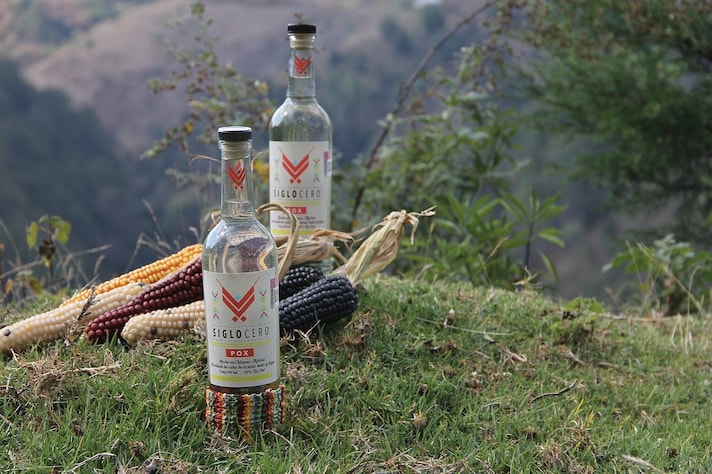
A gift, once again, from the Maya, specifically the Tzotzil Maya, resident in the Chiapas region of southern Mexico. This drink is mostly produced in the regions of San Cristóbal de las Casas and San Juan Chamula. The term pox (or posh, as it is pronounced) in their language means medicine and was originally used during religious ceremonies. It is obtained from the distillation of corn, wheat and sugar cane. Despite its growing popularity in recent years, the Mexican government has not yet recognized it as an alcoholic drink: consequently, there is no regulation that indicates precisely which products are used, where they come from and where they are processed. It goes without saying that there is not one and only pox, but each producer shapes it to his liking, but one thing is valid for all: the full moon. In fact , it is believed that the production of pox must correspond to a specific lunar phase, that is, when the moon is in its full moon phase.
9. Tejuino
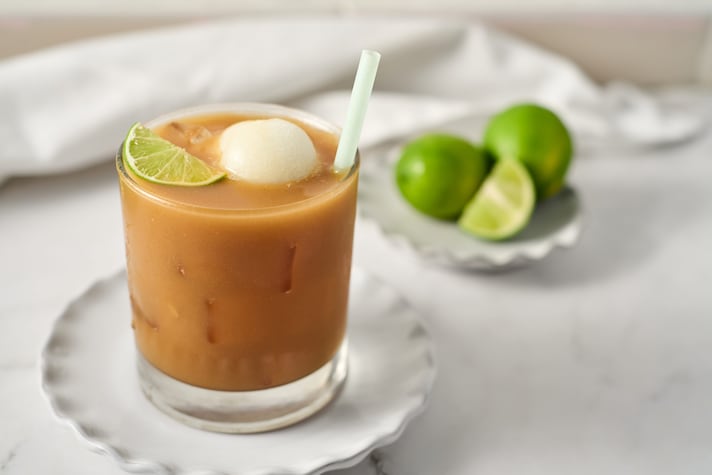
We're still in Mexico, and once again we're talking about a fermented corn-based drink. Consumed primarily in the regions of Jalisco, Oaxaca, Colima, and Nayarit, tejuino is made with corn masa (a dough made with water and ground nixtamal corn) to which piloncillo and water are added. The mixture is then boiled until the mixture thickens. At this point, fermentation begins, which can last several days (from one to ten) depending on the consumer's taste. It is then served cold with a pinch of salt, lime, and ice. The term derives from the Nahuatl tecuin, which means "heartbeat," not because it's intoxicating, so to speak, but simply because, like any alcoholic beverage, it accelerates the heartbeat.
10. Masato
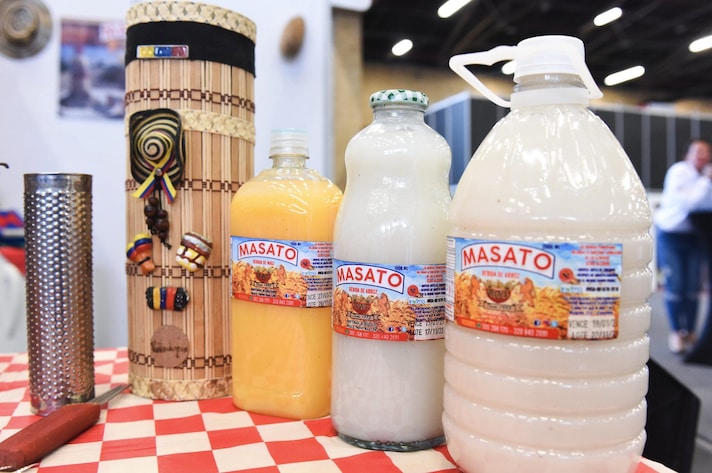
Finally, we move to the Amazon rainforest for a drink made from yuca (cassava), rice, corn, oats, or pineapple, typical of the local indigenous populations. Masato is made by letting the ingredients ferment for about eight days, until the mixture begins to foam. There are several variations of this drink, depending on the products available in each location: in Colombia, for example, masato is made with rice flour, water, sugar, cinnamon, and cloves, but it can also be made with pineapple and corn. In Peru, yuca is boiled, then chewed and spat out so that the enzymes in the saliva activate the fermentation (similar to corn for chicha). In Venezuela it is prepared by fermenting rice, cloves, water, beer and geranium which are then placed in a clay pot for three days and is usually prepared during special occasions such as Christmas, New Year's Eve, Easter or in August (especially in the city of Táriba for the day of the Virgin of Consolation).
;Resize,width=767;)
