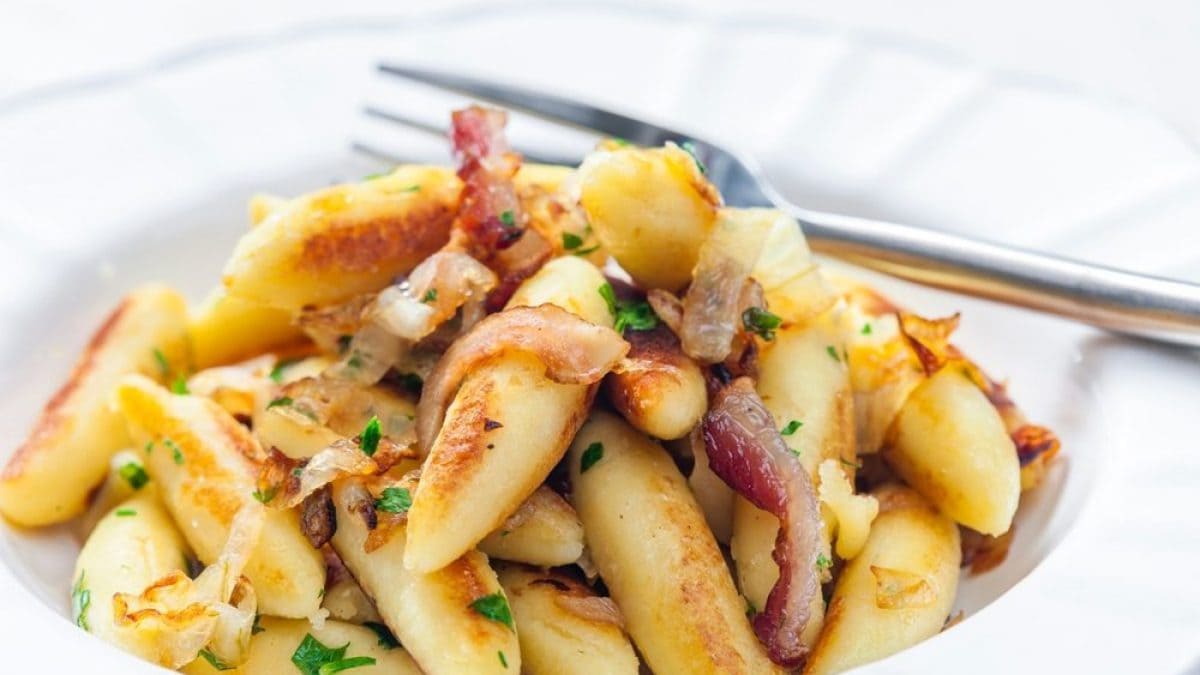
Some people love them, and some… well, love them. Because, come on, how can you not adore gnocchi? Those little pieces of potato, flour, and water with a unique texture and a flavor that goes with literally everything. Precisely because of the boundless love we feel for these little gems of happiness, their creation transcends their national borders, despite being a dish belonging to the Italian gastronomic tradition. And it's true that we are particularly fond of the Italian variations, but it's also worth knowing some fun foreign versions because, say you find yourself in Poland or Argentina and you crave gnocchi, what do you do? So here's a roundup of gnocchi from around the world for you.
1. Gnocchi à La Parisienne
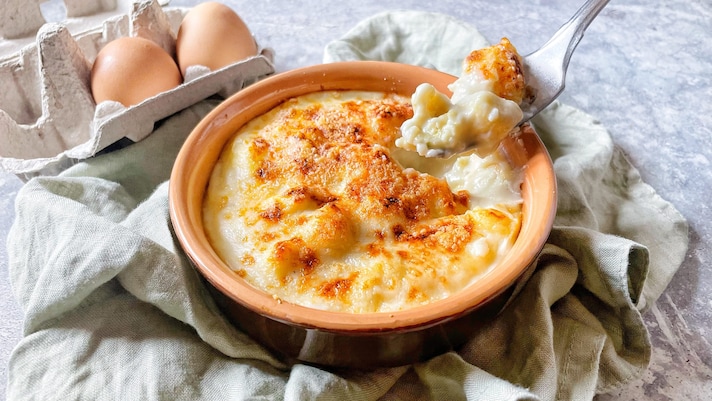
Its name betrays its origins. Or perhaps not. The history of this dish – also known in Italian as gnocchi alla parigina – is quite controversial. Some think they are gnocchi typical of the cuisine of the Île-de-France region; others, however, maintain that they were invented in Italy, more precisely in Florence, by Lorenzo the Magnificent. Whatever their true origins, it is a delicious and hearty dish: they are made with choux pastry – which gives them a soft and airy consistency, which is why they are also called puffed – and topped with the much-loved Mornay sauce, a type of béchamel to which egg yolks and cheese are added. The whole dish is then transferred to a baking dish and baked in the oven.
2. Schupfnudeln
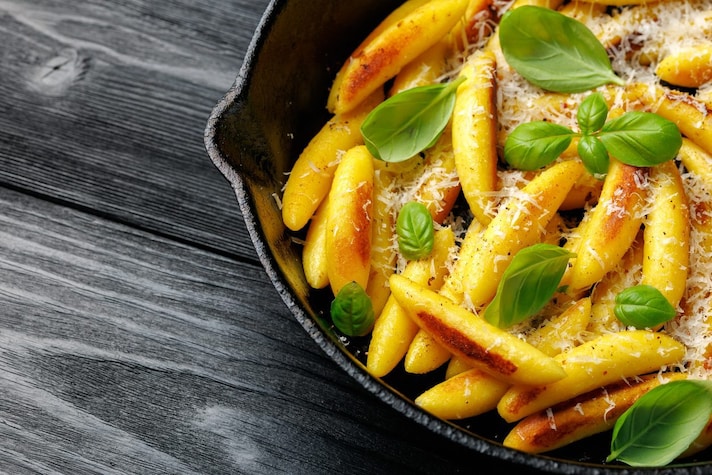
Typical German dumplings, on the other hand, are called schupfnudeln: they are simply potato dumplings —to which egg is also added —with an elongated shape, cooked in water and sautéed in a pan with butter, thus creating a crust that will blow your mind. Schupfnudeln can also be served with sauerkraut, vegetables, salads, or as an accompaniment to meat dishes. Their sweet version with sugar and cinnamon is also interesting.
3. Kopytka
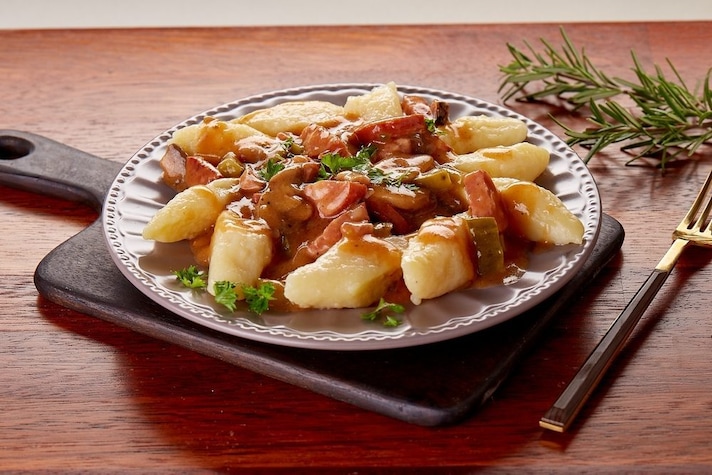
If you find yourself in Poland, you can try kopytka: typical diamond – shaped dumplings made with boiled potatoes, flour, and eggs. They're usually served with butter or fried onions, but sometimes also as a side dish for meat dishes, such as goulash or stews.
4. Kluski śląskie
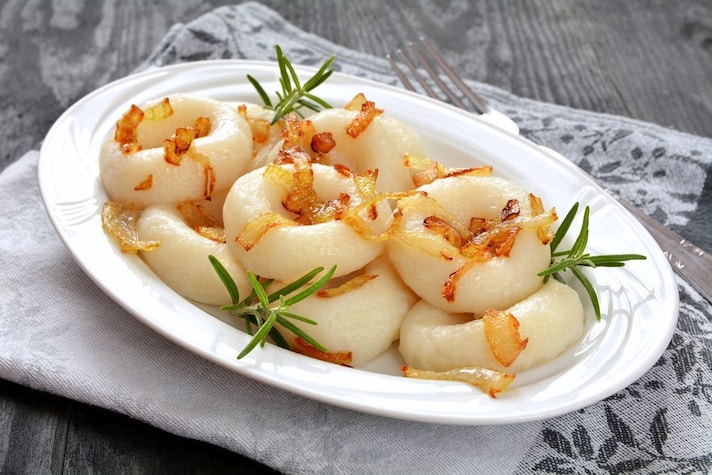
In the Silesia region —which mostly belongs to Poland and to a lesser extent to the Czech Republic and Germany— kluski śląskie are a typical dish, served especially on Sundays or holidays. They're made with boiled potatoes, salt, egg, and potato starch, and follow a somewhat unusual procedure: after boiling and mashing the potatoes, they're flattened in a bowl and divided into four pieces. One of the pieces is removed, replaced with an equal amount of potato starch. Egg, salt, and the previously set aside potatoes are then added. The dough is then shaped into a roll, cut into small pieces, rounded and flattened, and finally, a sort of hollow is created in the center with the thumb. After being cooked in salted water, they're served with fried beef rolls and red cabbage.
5. Knöpfle and Spätzle
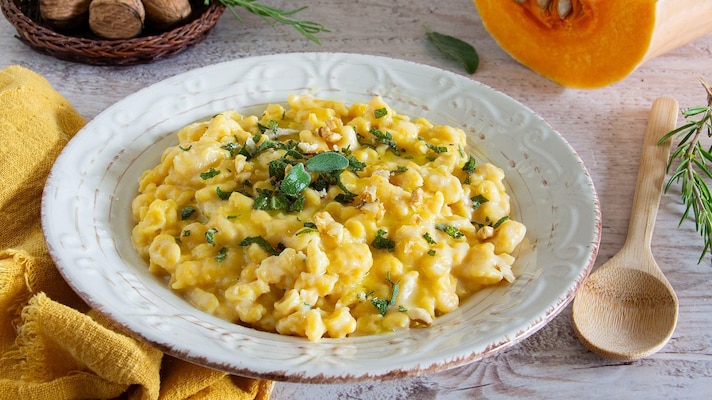
Say spätzle and we immediately think of the wonderful landscapes of Tyrol, Trentino-Alto Adige, or Switzerland. But for those unfamiliar with them and never had the fortune of tasting them, they are small , irregularly shaped dumplings made with flour, water, eggs, and salt, and originated in Germany. The dough, much more liquid than that of Italian gnocchi, is usually dropped into boiling water through a sort of grater with a small trolley on top—called a spätzlehobel —placed directly over the pot.
Their "cousins" are the knöpfle, also originating in Germany and mainly widespread in Switzerland and Alsace. They are not much different from spätzle except for their shape: while the former are longer and more slender, the knöpfle tend to be shorter and rounder, similar to small buttons (hence the name, which translates to "little button"). Even in terms of dough and preparation method, they are practically identical, except for the tool used: for the knöpfle, in fact, a tool with smaller holes is used.
6. Knödle and Knedlíky
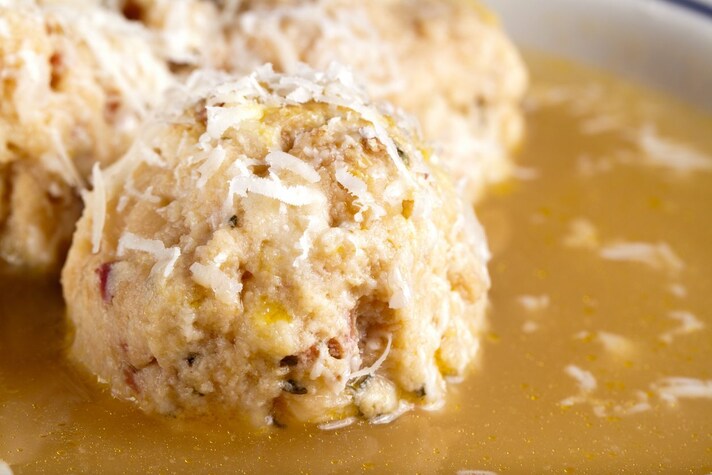
We're talking about canederli: those large bread dumplings typical of Tyrolean cuisine. Perhaps you don't know, however, that canederli are nothing other than the Italian knödle: these, in fact, are large dumplings usually made with stale bread or, in its place, potatoes. Compared to classic gnocchi, they are much larger, taking on the shape of our meatballs. They are still cooked in salted water and served as a main course or as an accompaniment to hearty meat dishes. Sometimes they are also prepared in a sweet version, filled with apricots, sugar, cinnamon, and cloves.
There are many variations of knödle, such as knedlíky, a typical dish of the Czech Republic. These too are often prepared with potatoes or bread but, unlike the previous two, they are mainly served as a side dish and not as a main course.
7. Bryndzové Halušky
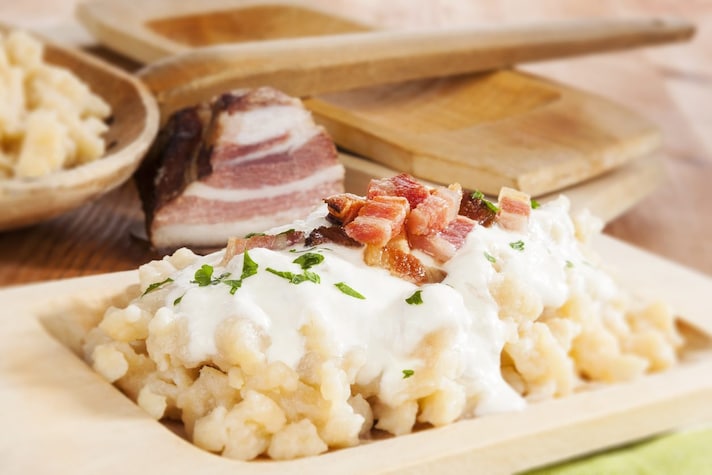
In Slovakia, together with bryndza cheese, they are the national dish. Bryndzové halušky are dumplings always made with potatoes, flour, eggs, and salt, and cut with a special tool very similar to that of spätzle. After cooking in salted water, they are combined with bacon and bryndza, a soft cheese made from sheep's milk.
8. Raspeballer
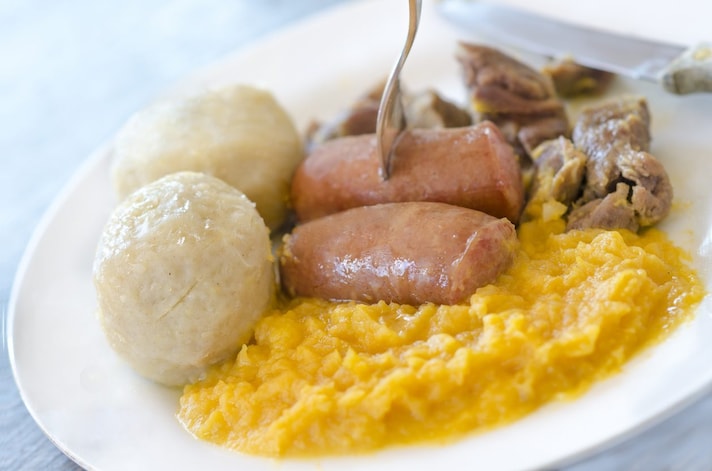
"Gnocchi Thursday"! You've probably heard it before as a saying, or seen it in some Roman's menus. But, think about it, even in Norway it's quite common to find gnocchi, or rather, raspeballer, in restaurants on Thursdays. This day of the week is, in fact, the busiest day for shopping, with shops closing later than usual: that's why restaurateurs, with their raspeballers, encourage customers to eat in their establishments.
Aesthetically, they resemble dumplings, with which they also share some ingredients: they are potato dumplings —made with grated cooked and raw potatoes—to which barley or wheat flour is added, then boiled in broth. In some cases, pieces of bacon are added inside. Raspeballer are usually served with something, such as pork knuckle, smoked sausage, but also salted lamb or turnip puree; in some cases, the entire dish is covered with a generous portion of chopped bacon. In their simplest version, they are garnished with sugar syrup and crispy bacon.
9. Ñoquis (of the 29th)
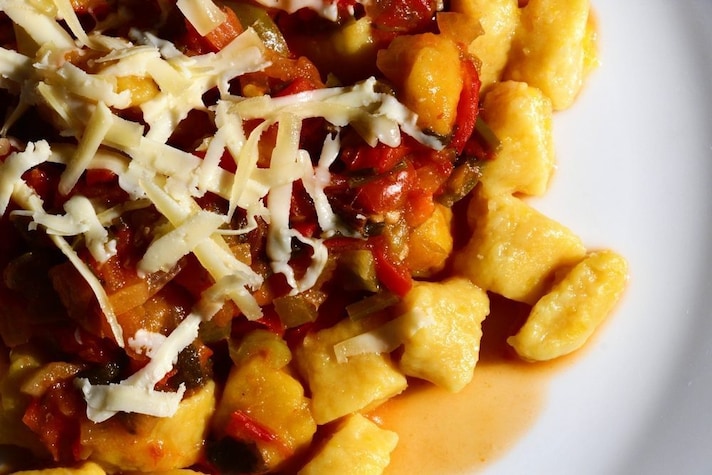
While in Italy and Norway gnocchi are eaten on Thursdays, in Latin America the favorite day is the 29th of each month. In Paraguay, as well as in Argentina and Uruguay, ñoquis have become part of a well-established tradition: they appear to have entered Latin American cuisines thanks to Italian immigrants in the late 19th and early 20th centuries, who brought with them some of the typical dishes of their cuisine. It also seems that they began preparing them on the 29th of each month, on the feast of Saints Peter and Paul, which falls on June 29th.
Although imported by Italians, ñoquis have clearly absorbed the influences of their host culture: these gnocchi are made with cassava root or yuca, instead of potatoes, to which the remaining ingredients are added: flour, egg, and salt. After being cooked in salted water, they are topped with a minced meat sauce, typical of Latin America, and the final result is sweeter than the Italian version.
10. Tteokbokki
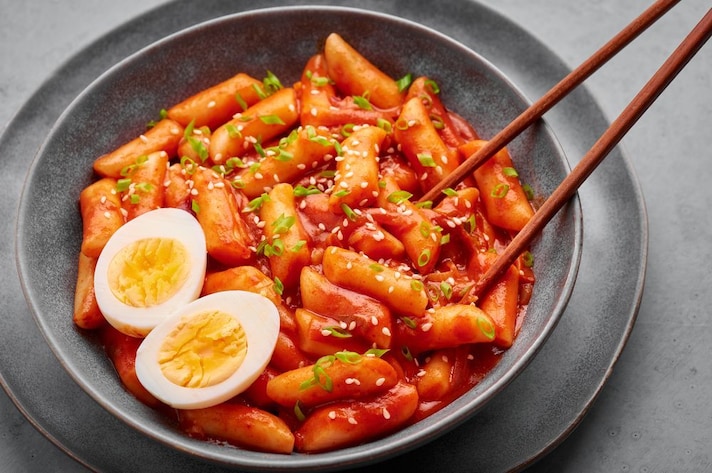
Tteokbokki is a dish originating in South Korea and is now one of its iconic street food staples. There were ancient versions of it even during the Joseon period (i.e., in the unified historical period of Korea), but the modern version—topped with fermented chili paste, called gochujang —originated and spread throughout South Korea, especially Seoul, in the 1950s. These dumplings are made with garaetteok —a steamed, pounded white rice dough—which is kneaded into compact cylinders of pounded and pressed rice dough. These "rice dumplings" have a springy, chewy texture, quite different from the softness of European potato dumplings, but they are based on the same principle: a simple dough shaped into small pieces.
Traditionally, tteokbokki was served on special occasions in non-spicy versions; today, it is especially popular in its spicy variant, in which the rice cylinders are sautéed in a thick sauce made from gochujang, broth, and sugar, often enriched with hard-boiled eggs, pressed fish (eomuk), cabbage, or cheese.
11. Dango
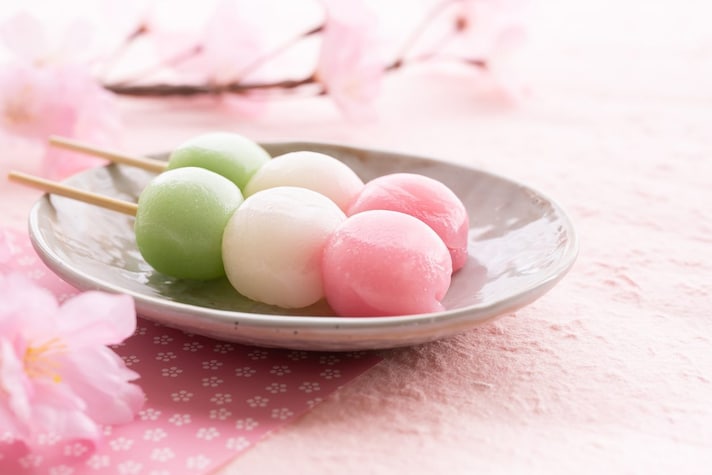
We fly from one side of the world to the other, flying to Japan, where we can find the wonderful dango. This time we are faced with a typical Japanese sweet, made by combining glutinous rice flour, called shiratamako, sugar, and water, mixing until obtaining a soft and homogeneous dough. The dough is then shaped and divided into small balls, cooked in boiling water.
There are several versions of this sweet treat—usually served on a skewer made up of three or five balls—which can be accompanied by sauces or other ingredients, or not: in their most famous version, after cooking they are often grilled and glazed with a sweet soy sauce, called mitarashi. Other times they are served with different toppings, such as azuki (sweet red bean) paste, or, in the case of hanami dango, the dumplings are colored pink, green, and white and are eaten during the cherry blossom season.
12. Tangyuan
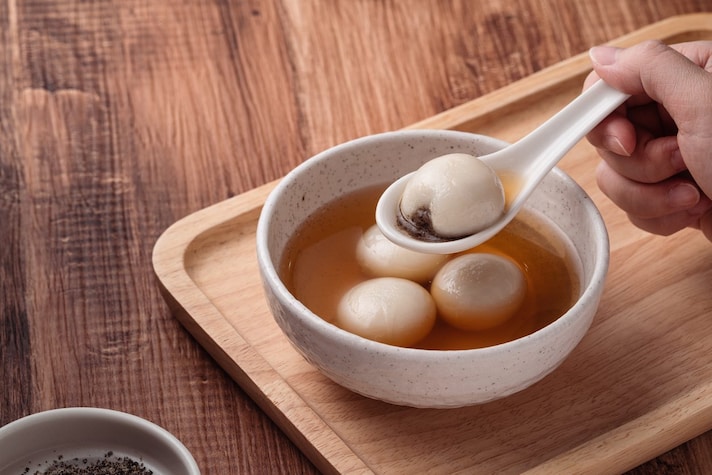
Staying in the East, more precisely in China, where tangyuan first appeared: these dumplings are similar to Japanese dango, also sweet and made with glutinous rice flour, but filled with black sesame paste or sweet red bean paste, but also peanut butter and chocolate. Cooked in boiling water, they are generally served in broth or soup and are eaten during the Lantern Festival, which falls on the 15th day of the first month of the lunar calendar.
What Are Gnocchi, Really?
It might seem a bit strange to ask this question only at the end of the article, but as you may have noticed, not all of the dishes listed above fully fall into the category of what Italians define as gnocchi. Why? In Italy, gnocchi are small pieces of pasta made with flour, water, potatoes, or sometimes vegetables (such as pumpkin variants), which are then cooked in salted water and seasoned. Based on this description, dishes like schupfnudeln or kopytka fully fall into this category.
It goes without saying that when we think of Italian gnocchi, it's a bit difficult to think of German canederli or knödel, for example, as gnocchi, because at first glance they look more like meatballs. What differentiates them, however, is the absence of meat as one of the main ingredients and the cooking method: canederli are cooked in water or broth, just like gnocchi, and not fried or browned like meatballs.
If we then extend this doubt to dishes from around the world, the ambiguity becomes even greater: in English, in fact, gnocco is translated with the word dumpling, which also refers to what Italians call ravioli. For this reason, abroad, dumplings are not just gnocchi as Italians understand them, but also a filled pasta, cooked and then seasoned as desired. This is why it is difficult to give a univocal definition of gnocco, and therefore, it is appropriate to say: when in Rome, do as the Romans do.
;Resize,width=767;)
