Biscuits are a beloved treat in the U.S., with endless varieties perfect for any occasion. Whether enjoyed at breakfast, paired with coffee after lunch, or served alongside a glass of sweet wine or liqueur after a holiday meal, there’s always a time for a biscuit. From classic regional favorites like Southern buttermilk biscuits to store-bought varieties that many of us have reached for at one point or another, biscuits are a staple in American kitchens. Whether homemade or from the pantry, these comforting baked goods bring warmth to every meal.
And abroad? What's the situation like? You could say: when in Rome, do as the Romans do. With just a few ingredients —flour, eggs, butter, and sugar—there are countless creations, crossing national borders and becoming true stars, from our own American cookies, packed with chocolate chips, to buttery Danish biscuits. Below, are 15 specialties to know (and try).
1. Chocolate Chip Cookies

We simply know them as "cookies" and they are probably the most famous biscuits in the world. Originally from the United States, they have a round, flattened appearance, with a crumbly texture on the outside and soft on the inside. The dough's main ingredients are flour, butter, brown sugar, eggs, and vanilla extract, which is then topped with delicious dark chocolate chips and chocolate chips.
2. Shortbread

Once you've tasted them, it's hard to forget how melt-in-your-mouth they are. Shortbread is a true Scottish icon, with the prefix "short" meaning "crumbly" in archaic English, and is characterized by an abundance of butter and the absence of eggs and yeast. Queen Mary, Queen of Scots (1542-1587), made them famous: even then, they appeared in the two types in which they are still found on the market: elongated rectangular (shortbread fingers) and round (shortbread rounds).
3. Speculoos

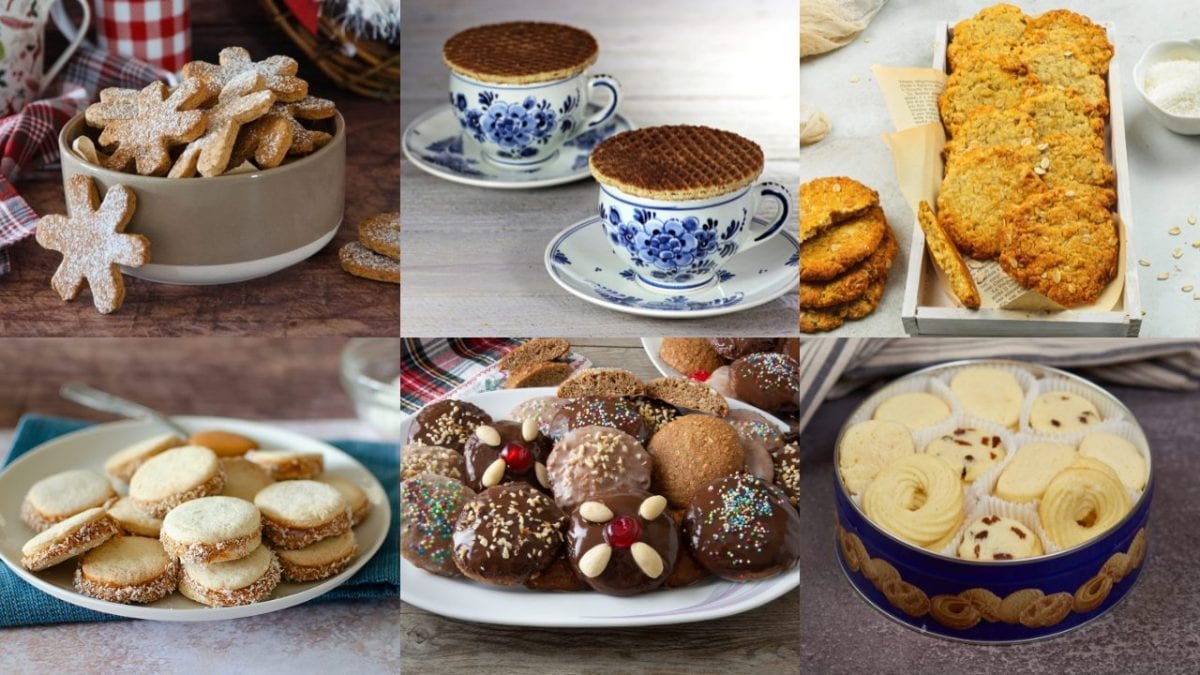
We move to Belgium and the Netherlands, more precisely to the geographical area formerly known as Flanders: it is here that speculoos — speculaas in the Netherlands— were born: brown, crunchy, and aromatic biscuits, perfect with a cup of coffee, which are linked to the figure of Saint Nicholas, who brought them as gifts to children. A characteristic element are spices, especially cinnamon, alone or mixed with star anise and cardamom.
4. Sablé Biscuits

Sablés are French delicacies made with butter mixed with flour, sugar, and a pinch of salt, resulting in a grainy texture reminiscent of sand. They smell of vanilla, and the contrast between sweet and salty is particularly tantalizing. Their history seems to begin in the 17th century in Normandy, historically known for its high-quality butter, later conquering the court of Louis XIV.
5. Stroopwafel

Stroopwafels are among the most popular cookies you'll taste in Amsterdam: their name literally means "syrup waffle" and perfectly describes their essence. They are two thin, round wafers filled with a thick caramel made with brown sugar, butter, and cinnamon. They're best enjoyed by briefly placing them over a cup of tea or coffee, allowing the filling to soften thanks to the heat of the beverage.
6. Danish Cookies

Also known as Danish butter cookies, these are classic sweets in various shapes and sizes, sold in the famous round blue tins our grandmothers used to store their sewing kits. The secret to their success, needless to say, is an unparalleled shortcrust pastry made with flour, sugar, eggs, and a generous amount of butter.
7. Gingerbread Cookies

These are the quintessential Christmas biscuits, a traditional Anglo-Saxon recipe that has spread throughout the world under the name of gingerbread. Gingerbread, in fact, is the essential ingredient in these cheerful biscuits, which come in a variety of shapes, perfect for Christmas decorations, including stars, trees, and the iconic gingerbread man, garnished with royal icing.
8. Pepparkakor

We're sticking with the theme of ginger, cinnamon, and the Christmas season with pepparkakor, biscuits that are crispier and slightly thinner than the previous ones. Once baked, they also fill the room with a warm aroma of spices, butter, and honey (or molasses). Their fame is due to Ikea stores, which have made them famous beyond national borders.
9. Lebkuchen

Let's not abandon Christmas, stopping in Germany or at one of the picturesque South Tyrolean markets, where among the stalls brimming with seasonal specialties are lebkuchen, spiced biscuits with a soft, flavorful dough, packed with dried fruit and candied fruit. Once baked, they are glazed and then finished with colored sugar sprinkles, almonds, candied cherries, or chopped hazelnuts.
10. Alfajores

Popular especially in Argentina and Uruguay, but also found in other Latin American countries and in Spain, alfajores are biscuits made up of two discs of shortcrust pastry (cornstarch, 00 flour, butter, sugar, egg yolks and vanilla) filled with dulce de leche, embellished with an additional delicious touch: the addition of grated coconut filling along the edge.
11. Anzac Biscuits

Little known in our latitudes, the Australian and New Zealand confectionery tradition also offers much satisfaction, starting with Anzac biscuits, also known as "soldier's biscuits." The term, in fact, is an acronym for the Australia and New Zealand Army Corps, an army corps that operated in Europe during the First World War. It is said that the wives of soldiers made these sweets from type 00 flour, flaked coconut, rolled oats, melted butter, granulated sugar, and golden syrup because they kept for a long time.
12. Yakgwa

We first saw the biscuit-South Korea combination in the beloved Squid Game, with the dalgona challenge, biscuits with different shapes printed on them (star, umbrella, circle and triangle) that the contestants had to make without breaking the very thin wafer. South Korean TV shows also introduce us to another very popular biscuit: in Alchemy of Souls, in fact, yakgwa makes its appearance, a fried biscuit-based snack characterized by a soft yet crunchy and sticky texture, thanks to a generous amount of honey flavoured with ginger (and sometimes cinnamon).
13. Digestive Cookies

They are the quintessential biscuits for cheesecakes and for dunking in tea. Versatile in the kitchen, they have a pleasantly sweet and salty flavor: light, round, with a slightly larger diameter than usual. The original recipe for Digestive biscuits appears to have been invented in the mid-19th century by two Scottish doctors: it contained sodium bicarbonate, which was believed to have properties that aid digestion. They have been marketed for over 100 years by the famous multinational McVitie's of Edinburgh, which instead traces the invention of the biscuit back to one of its employees, a certain Alexander Grant, in 1892.
14. Oreo

Among industrial biscuits, Oreos undoubtedly deserve a special mention. They were developed in the United States in 1912 and have become a true cult. It's hard not to recognize them: two round cocoa biscuits with a cream filling, which over time have become the star of countless delicious homemade desserts, such as Oreo tiramisu, Oreo cake, and Oreo truffles.
15. Fortune Cookies

We conclude our review with fortune cookies, famous for their hidden auspicious phrases and aphorisms (and more). Although they are very popular in Chinese restaurants, they are actually inspired by a Japanese dessert (tsujiura senbei) but were developed in the United States: by the late 1950s, fortune cookie production already reached 250 million a year. They can also be made at home with 00 flour, rice flour, sugar, egg whites, extra virgin olive oil, water, and vanilla extract: they will be light and crispy just right.
;Resize,width=767;)
