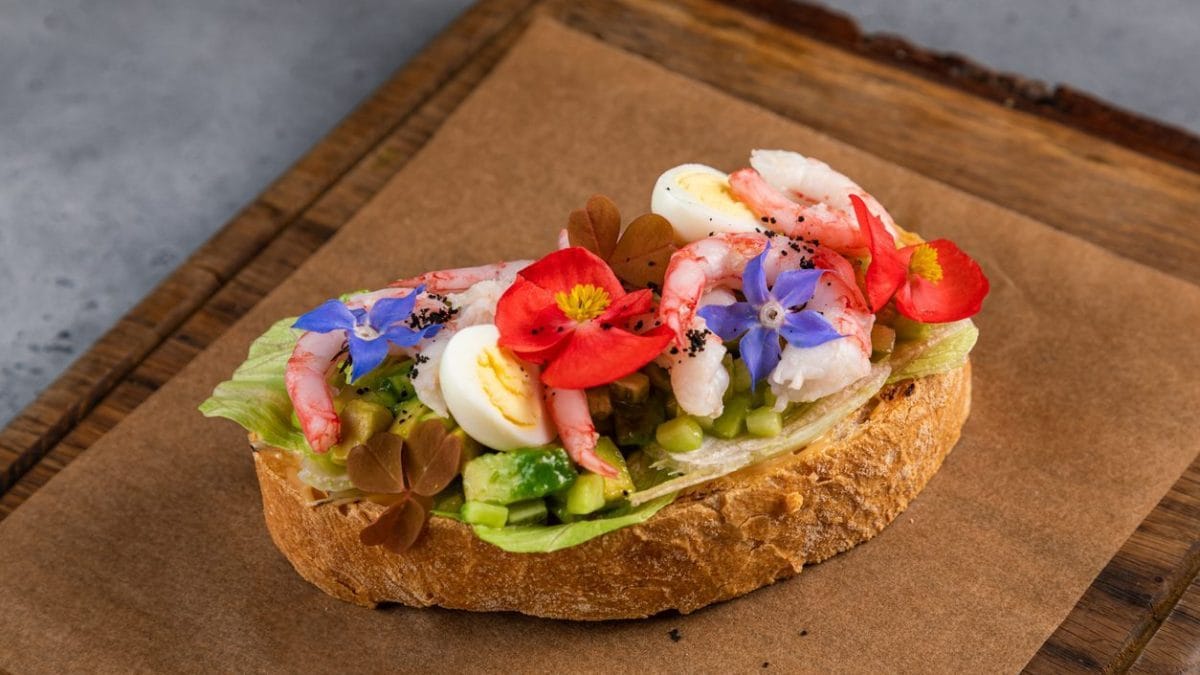
In recent decades, cuisine has accustomed us to seeing floral accents in dishes: edible flowers have exploded in fashion, plants that are beautiful to look at on the plate but also safe to eat. The beauty of contemporary cuisine, however, is its ability to constantly reinvent itself. Flowers thus become true ingredients, no longer just decorative elements, and tables are filled with rose petal cakes, spicy nasturtium risottos, and meat cooked with the spice of marigold. Even the great protagonists of Michelin-starred restaurants have been won over by the combination of cuisine and nature. In fact, there are a whole series of flowers called edible flowers, some varieties that are completely safe to eat and that actually add a real boost of flavor to your dishes, as well as a colorful and decidedly poetic touch. Some flowers, moreover, can be used as true aromatic herbs, exactly like the plants from which they come.
What Are Edible Flowers and How Can You Use Them in Cooking?
Floral cuisine is more than a passing fad. What seems like just another gourmet experiment is actually rooted in the habits of our ancestors, cooking using all the ingredients nature offers. Several historical documents have been found that demonstrate how the use of flowers in cooking dates back thousands of years, and how many civilizations were accustomed to using them, such as the Chinese, Greeks, and Romans. In reality, we have also always used them, only some are so ingrained in our culture that we don't even realize it anymore: have you ever heard of the squash blossom? It's a flower in every sense of the word, not a vegetable; specifically, it's the inflorescence of pumpkin and zucchini plants.

The use of edible flowers is therefore suitable for everyone, not just great chefs, as long as you know how to carefully use the correct quantities and varieties. Just like mushrooms, not all flowers are edible, and although there are over 40 species of edible flowers, many others can be toxic to the body, or even poisonous (wisteria is a prime example, whose flowers are technically edible but science says it's best to avoid them entirely). It's essential to have a thorough understanding of the species available before beginning experimentation.
1. Borage

The flowers of Borago officinalis, a plant commonly known as borage, are among the best-known edible flowers: blue with purple hues, these inflorescences are often used as ornaments in gardens and flowerbeds due to their beauty, but they are actually quite useful as an ingredient. Furthermore, you can also eat the leaves and seeds of borage, which are often used in salads and soups. Using all the elements of the plant, including the flowers, you can season pasta, prepare an excellent risotto, or enhance a delicious omelette.
2. Chamomile

Chamomile needs no introduction, a very popular flower, especially because its infusion makes an extremely relaxing herbal tea, which promotes sleep and helps combat stress. What you may not know is that chamomile flowers, both fresh and dried, can also be used as an ingredient in their own right: thanks to their particular sweetness, they lend themselves very well to flavoring sweet recipes, especially biscuits and cakes.
3. Calendula

If you've ever hiked high in the mountains, you've likely seen meadows dotted with cheerful, daisy-like flowers, but a deep orange hue: calendula, one of the most common and widely used alpine herbs, especially for its oil, which is used in creams and ointments (it has strong anti-inflammatory, antiseptic, and soothing properties) or in cosmetics. Calendula flowers are actually also edible: they have a slightly bitter, highly aromatic flavor, and once thoroughly washed, the petals can be used to garnish salads, soups, or candied sweets. Its buds are also edible and are commonly preserved in vinegar.
4. Milk Thistle

A typically Mediterranean herb with bright purple flowers, milk thistle is a particular variety of thistle known since ancient times for its many beneficial properties, a profile so rich that it is now the subject of pharmacological research. Beyond its medicinal properties, milk thistle is also an edible ingredient with many culinary uses: both the leaves and the inflorescences are eaten, which can be used raw in mixed salads. If you don't like their bitter taste, you can blanch them briefly and then batter them for frying or make a unique purée.
5. Fennel Flowers

Fennel is one of the most beloved vegetables. You certainly know that its seeds can be used both in infusions and to enrich various sweet and savory recipes, but in reality even the beautiful yellow flowers of this plant are edible: they have a very particular flavor reminiscent of licorice and are used primarily to flavor meat, fish, vegetable, and mushroom dishes. Both fennel flowers and wild fennel flowers are particularly appreciated in the preparation of cured meats, such as sausages, and to flavor soups and sauces.
6. Jasmine

The beautiful white-flowered jasmine is considered edible, but you must be very careful: it is not the common jasmine that adorns our gardens, but a specific variety of this plant that exists in many species, namely Jasmine Officinale. This is the only type of edible jasmine, so you must be careful to purchase the edible flowers of this plant only from reputable and experienced suppliers. Jasmine flowers are used to make drinks and infusions, but they are also used to add a fragrant note to cakes and biscuits, or to make delicious ice cream; in Italy, these flowers are also used to make the traditional Sicilian granita.
7. Hibiscus

Besides being beautiful with their vibrant, colorful colors, hibiscus flowers are also very versatile: they are edible and used in various cultures. For example, the flowers of Hibiscus sabdariffa, also known as karkadè, are famous for their use in a particular, deep red infused drink. They have a slightly tart flavor and, if used sparingly, can be used as a decorative element, added to salads, or even made into drinks and sauces.
8. Nasturtium

Nasturtium is a truly unique plant because all its parts are edible: the leaves, seeds, and petals of the beautiful, colorful flowers are all edible. They can be used raw to enhance salads and meat dishes, adding a distinctive spicy note, but they can also be cooked to flavor main courses and side dishes, such as sautéed dishes, or they can even be used as a filling for fresh pasta.
9. Acacia Flowers

Pollination of acacia flowers produces a delicious, precious, and health-rich honey, but did you know that the flowers are actually edible too? Very fragrant and delicate, with a particularly sweet flavor, they are usually fried in a simple and quick batter, which should be light and fairly runny: this way, the flowers will be crunchy and delicious.
10. Elderflowers

Elderflowers (Sambucus nigra) are among the most famous and widely used edible flowers in cooking, harvested between May and June when the plant is in full bloom. They can be eaten fresh or dried, and can be used in many ways: the most common is to make the highly fragrant elderberry syrup, a drink with a fresh and delicate flavor, but they can also be fried, added to cakes, biscuits, and pancakes, or infused to make beneficial herbal teas. Be careful, especially if you pick them wild: some species of elderberry are toxic, such as Sambucus ebulus, so before picking the flowers and using them, make sure they are truly the edible variety.
11. Mint Flowers

Mint is an exceptional plant, highly beneficial in many ways and a great ally in the kitchen: just a few leaves can add an aromatic boost to countless recipes and can even become a full-fledged ingredient. Perhaps you didn't know that you can also use mint flowers: they're edible and have the same flavor as the leaves, but more delicate and less intense.
12. Rosemary Flowers

Rosemary is one of the most beloved and used aromatic plant in cuisine—not only because it's delicious, but also rich in beneficial properties —but not many people know that its small, beautiful flowers can be used without any problems. Depending on the variety, they will be more purple or more white and purple, but always exquisite, with a flavor similar to that of the plant but more delicate, and can be used in the same way to decorate or flavor dishes.
13. Sage Flowers

A similar argument applies to sage flowers: delicate and beautifully colored, they are as edible as the plant's leaves. They have a similar flavor, can be used both raw and cooked, and can be added to salads, used to garnish dishes, or to flavor sauces and herbal teas. They have the same refreshing power as sage, so try turning them into ice cream or popsicles, especially when paired with lemon.
14. Violets

Violets or pansies, whatever you call them, are among the most beautiful flowers to look at and delicious to eat. They have fantastic bright colors, a delicate floral flavor, and a pleasant minty aftertaste, all characteristics that make them perfect for adding to fruit salads, drinks, and fresh cocktails, but also for decorating salads, canapés, and crackers spread with cheese. They are particularly suited to desserts and can be candied.
15. Roses

Roses are the most beloved, romantic, and gifted flower, beautiful for their colors, the delicacy, and the texture of their petals. But did you know they're also an edible ingredient? Their flavor is subtle and fruity, and they also have important antibacterial properties and contain vitamins C, B, and K. The most famous recipe in which they're used is rose risotto, a fragrant and refined variation of the classic risotto, but they actually go well with everything, especially soups, teas, jams, and desserts.
16. Lavender

Lavender is a true marvel for the eyes with its intense color and a delight for the nose with its unmistakable scent, but it can also be a delight for the palate: sweet and fragrant, lavender is an edible flower and lends itself to countless recipes. It is best in sweet preparations—try lavender cookies, they are irresistible—but it is also great for flavoring risottos, stews, sauces, and cheeses, for making relaxing infusions and herbal teas, or refreshing drinks like lavender lemonade.
17. Dandelions

Dandelion is a wild plant with bright yellow flowers and is entirely edible, including the petals. The leaves, flowers, and roots of the dandelion are used in a variety of culinary ways: the flowers, in particular, are perfect for adding to salads or omelettes, but they also lend themselves well to jams and jellies; from the pollination of these flowers, we also obtain dandelion honey, a very rare variety with strong diuretic properties and a unique flavor.
Where Can You Buy Edible Flowers?
A fundamental aspect of floral cuisine is the choice of flowers, not only for flavor, but also for their provenance. It's forbidden to buy flowers for cooking from nurseries: they often use chemical treatments during the cultivation and preservation stages, making the plant unfit for consumption. It's also best to avoid flowers near roads, cities, or places with particularly high levels of pollution. Edible flowers must come from the countryside, be wild, or cultivated completely naturally. If you don't feel ready to pick them yourself, you can contact companies specializing in organic flower cultivation for use as ingredients.

Whether you buy them yourself or collect them in the wild, once you have your flowers there are two ways to consume them: fresh, but without washing them under running water because they would spoil and lose the velvety patina in which their main properties are contained, or dried on baking paper and away from a direct source of light, to be stored in a glass or tin container to create your own personal herbalist's shop.
;Resize,width=767;)
