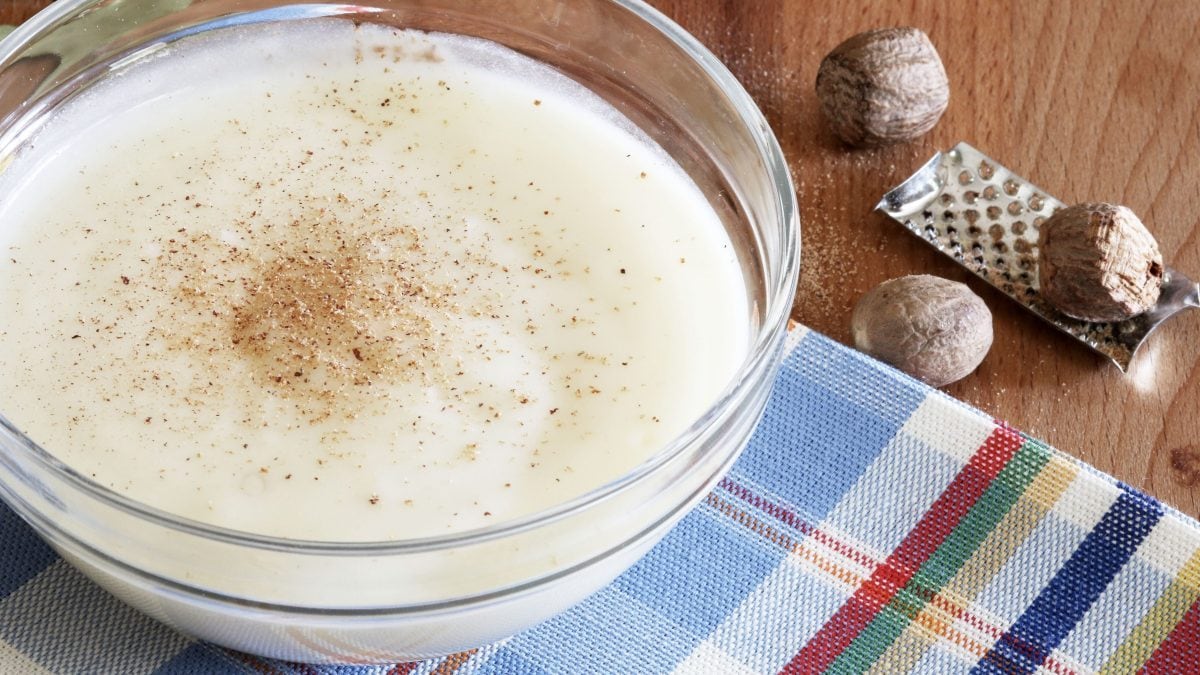
Part of the small but very important family of mother sauces, béchamel is one of the staples of classic cuisine. Present on French tables since the 17th century, it is made only of flour, butter, and milk and serves as the basis for countless preparations. Making it is generally easy, but as is often the case, even the simplest things sometimes hide small pitfalls that can ruin the final result. That's why we want to list some mistakes to avoid when making your béchamel.
How to Make it And What Are The Mistakes
If you've ever tried making it, you know that it's a very simple sauce: melt the butter, add the flour – creating the so-called roux, which will serve as a thickener – then the milk and mix over low heat until it reaches the desired consistency.
Easy peasy, right? After all, it's only three ingredients, yet mistakes are always lurking. Especially when flour is involved, ready to ruin the recipe (and even your day) with those nasty little lumps. So, we're here to give you a list of all the mistakes you can make and a few simple tips for making a white, smooth, velvety, perfectly thick béchamel sauce, along with all the other positives you could want. Let's get started.
1. Getting the Recipe Quantities Wrong
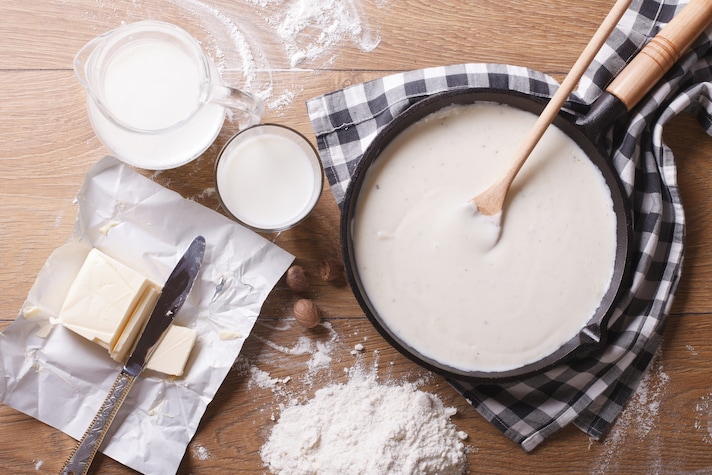
We all know the basic proportions more or less (and if you don't, now's the time to learn): 10 grams of butter, 10 grams of flour, and 100 ml of milk. There are times, however, when these proportions can change, and it's always the amount of flour —and consequently, butter —that varies: depending on the final result you want, you'll need to add or subtract 10 grams of each ingredient. So, if we consider that your recipe calls for 500 ml of milk, 50 grams of butter, and 50 grams of flour, go down to 40 grams if you want a thinner sauce —perfect for lasagna and crepes—while if you prefer a slightly thicker béchamel sauce, go up to 60 grams of butter and the same amount of flour.
2. Adding Flour and Milk Little by Little
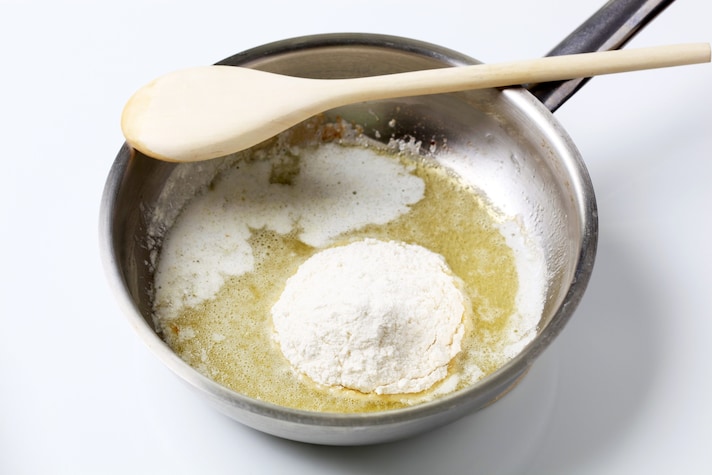
Let's start with the basics, the roux: it's very simple, but there are two small tricks to keep in mind. The butter should be melted slowly over medium-low heat to prevent it from burning, and the flour should be added quickly, all at once: at this point you must stir, without hesitation, with all your energy, and possibly with a whisk, to avoid lumps forming. As for cooking times, there are three types of roux that differ precisely in how long they are cooked on the heat. In the case of béchamel, the roux should be white, then slightly golden in color: therefore, just a few minutes will be enough.
At this point you will then need to add the milk, which should not be excessively hot and science explains why. According to the now well-known science communicator, Dario Bressanini, if our roux contains lumps and we add very hot milk, this immediately gels the outer part of the flour lumps, preventing water from entering the starch granules of which it is composed: and it is precisely this process that allows the béchamel sauce to thicken. So, cold milk, room temperature milk and all at once, stirring quickly.
3. Not Mixing Vigorously
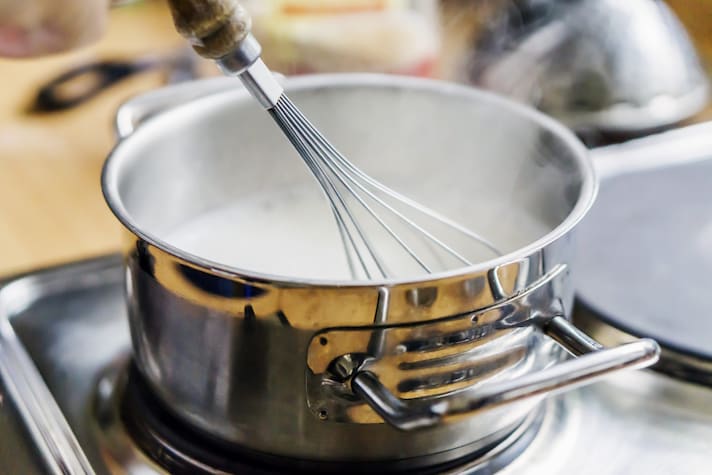
We've already mentioned it in the previous point, but it's so fundamental it deserves a separate paragraph: to make perfect béchamel, you need to stir vigorously. It's not just a physical exercise or a movement that gives us that air of a great chef, but it also helps prevent lumps from forming: the initial phase, the roux, is extremely important, where you need to stir vigorously so that the butter and flour combine properly without creating lumps. Once the milk has been added, it's important to stir, but you can also do it more gently: it's essential, however, to stir constantly so that the heat spreads evenly and to prevent the bottom from overcooking —or even burning—compared to the top layer.
4. Raising The Heat Too High
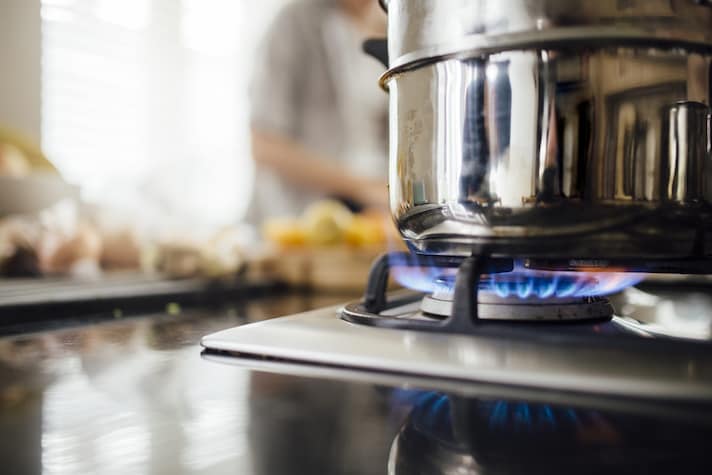
Béchamel is a sauce that needs to be cooked gently: for this reason, managing the heat is also important. When making the roux, you can opt for a low or moderate heat (but never high), while when adding the milk, it is advisable to reduce the heat to low to prevent it from burning and sticking to the bottom of the pan.
Béchamel sauce needs to boil because, as Bressanini always explains, flour has a lower thickening power than pure starch, and reaches its maximum thickening effect at temperatures close to boiling. Therefore, bring it to a boil (until you see small bubbles forming on the surface) over low heat, stirring constantly.
5. Letting It Cool Uncovered
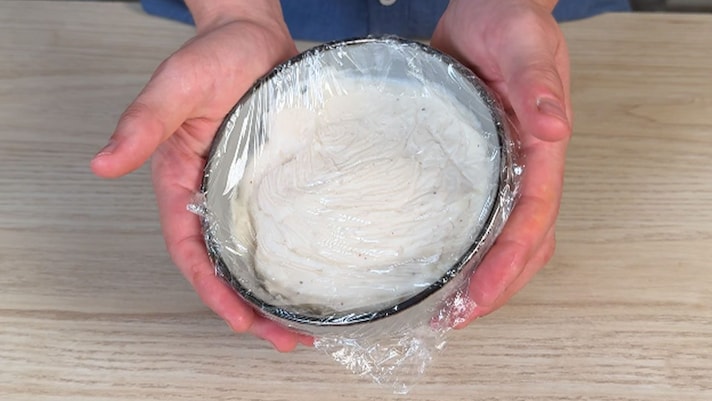
At this point, you've reached the end, and after about 15 minutes of pure tension, you can finally relax because your béchamel is ready. However, there's always a but: if you don't need to use it immediately, you also have to pay attention to how it cools. If you leave it in a container, out in the open, or simply with a lid on, you risk forming that unpleasant skin as well as lumps. To avoid this, transfer it to a container, cover it with cling film, and place it in the refrigerator. If you forget this little detail and the skin has already had time to ruin your perfect work, simply remove it: avoid stirring it, as this could create lumps of curdled béchamel.
Two Little Extra Tips
Having completed this short list of mistakes to avoid, we want to conclude with a couple of bonus tips. The first concerns a béchamel sauce that didn't turn out too well: if you've followed all the steps perfectly—or you've made a few of the small mistakes listed above—and your béchamel doesn't have the desired consistency, don't despair: if it's too thick, simply reheat it and add a little milk; if, however, lumps have decided to invade your sauce, simply sieve it or blend it a little with an immersion blender.
The second tip is to avoid buying pre-made béchamel: firstly, because, as you'll surely agree, homemade sauces have a completely different flavor, but, above all, industrially produced ones almost always contain cream. This will make the béchamel less delicate in flavor and, if you're concerned about your weight, it will add extra calories and fat that are completely avoidable.
;Resize,width=767;)
