
Turkey may be the star of Thanksgiving, but it’s also the one dish that intimidates home cooks the most. Undercooked in the center, dry on the outside, bland all the way through—there are plenty of ways a turkey can go sideways. But with a little planning (and a few chef-approved tricks), roasting a perfect bird doesn’t have to feel like culinary roulette. Here are five essential tips to make sure your Thanksgiving turkey turns out juicy, flavorful, and beautifully golden—no panic attacks required.
1. Start With a Fully Thawed Turkey
A turkey that’s even partially frozen will roast unevenly, leaving you with overcooked legs and an icy center. If you're using a frozen bird, thawing it properly is essential—not optional. The safest way to do it:
- Place the turkey on a tray to catch drips, then thaw it slowly in the refrigerator. Plan on 24 hours of fridge time for every 4–5 pounds of turkey.
If you’d rather skip the thawing marathon altogether? Buy a fresh turkey and avoid the race against the clock.

2. Brining Is the Secret to Big Flavor
A turkey’s size works against it: lots of meat, not much fat. Brining helps solve that problem by seasoning the meat all the way through and keeping it juicy as it roasts. Overnight brining is ideal, but even 2 hours in a simple brine makes a noticeable difference. A classic mixture includes:
- water or apple cider
- kosher salt
- brown sugar
- ice
But feel free to make it your own—herbs, citrus, peppercorns, garlic, or bay leaves all add great flavor. Whether you wet-brine or dry-brine, the goal is the same: juicy meat, crisp skin, and richer flavor.

3. Don’t Roast Blind—Use a Meat Thermometer
Turkeys vary wildly in size, oven temperatures fluctuate, and no “minutes per pound” rule is accurate for everyone. The only reliable method is checking the internal temperature with a meat thermometer. You’re looking for 165°F in the thickest part of the breast and thigh. Once it hits that number, pull it from the oven. And no matter how proud you are of your perfectly roasted bird—don’t carve it right away.
4. Finish With a Quick Baste for That Golden Glow
Contrary to old-fashioned advice, basting every 20 minutes does not make turkey juicier. But basting at the end of roasting does help you get that gorgeous golden, glossy finish. In the final 15 minutes, brush or spoon a mixture of melted butter and maple syrup (or just butter, if you prefer) over the skin. The sugars caramelize quickly, giving the turkey that classic Thanksgiving look.
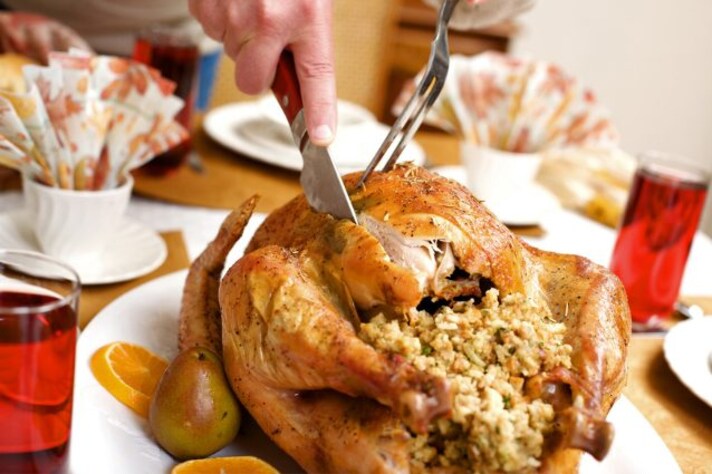
5. Let the Turkey Rest Before Carving
This is the step people skip when they’re hungry—and the one they regret most. Resting the turkey for at least 30 minutes helps the juices redistribute throughout the meat. Carve too soon and all that moisture ends up on the cutting board instead of your plate. A rested turkey is a juicy turkey. Simple as that.
;Resize,width=767;)
