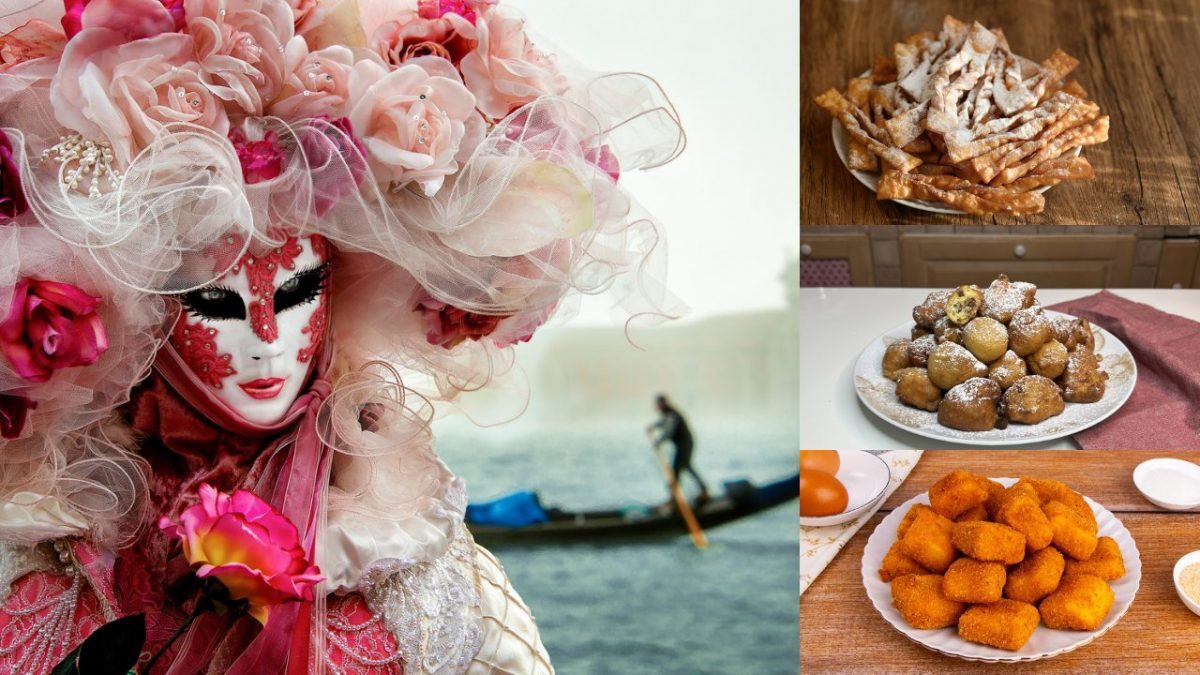
The Venice Carnival needs no introduction, an iconic event in the lagoon city now famous throughout the world thanks to its dazzling masks, masquerade balls, and traditional events. And, of course, also thanks to the food. As with Carnivals throughout the rest of the world, there's no true celebration without traditional recipes to accompany the festivities, and Venice has plenty of them, practically all fried and each more delicious than the last. It's no surprise, considering that even confetti was originally edible: modern confetti, in fact, derives from the ancient Renaissance custom, particularly widespread in Venice, of throwing coriander seeds coated in colored sugar, similar to small confetti, during Carnival. The tradition of edible confetti lasted until the 19th century, when they were replaced with paper due to their high cost and inconvenience. Confetti aside, Venice during Carnival offers the chance to sample some of the city's most delicious recipes, especially sweet and mostly fried. Here's what to eat in the lagoon during Carnival, between a cicchetto and a fish scrap.
1. Venetian Fritters

There is no Carnival in Venice without Venetian fritole, one of the oldest and most iconic recipes of this time of year. Born in the fourteenth century and proclaimed "the national dessert of the Serenissima" in the eighteenth century, fritole were once prepared only by members of the renowned fritoleri guild, who passed the recipe down from father to son, and were sold on street corners, still piping hot on a wooden skewer to avoid greasy fingers. Today they are found in all the pastry shops and bakeries of the city: the traditional recipe calls for them strictly fried and hollow, prepared with a mixture of flour, milk, eggs, sugar and brewer's yeast enriched with pine nuts and raisins, the whole thing dusted with sugar after cooking. In the city, however, many variations can be found, for example baked, or filled with classic or cocoa custard. In recent years, some have gone even further and even tried to offer savory fritters, stuffed with various ingredients and served as a snack.
2. Galani

Although they resemble chiacchiere, the quintessential Carnival dessert with different names and shapes throughout Italy, Venetian galani have a distinctive shape reminiscent of ribbons, the kind that adorned women's necks and dresses, especially ladies, but also the less wealthy who could afford a new, colorful bow; "galan" in Venetian means "ribbon." Also known as crostoli, galani have a shortcrust pastry similar to that of chiacchiere, which is common throughout Italy, but differs in the addition of two tablespoons of grappa to the dough.
3. Fried Cream

The quintessential street food of the Venetian Carnival is crema fritta, a characteristic sweet that actually begins to be eaten after Christmas. It is a classic custard that solidifies after being refrigerated for about six hours, then cut into cubes or diamonds and dipped in eggs, flour, and breadcrumbs before being fried. The shape is not accidental; in fact, it is closely linked to the dessert's connection to the city: the rhombus, in fact, is a widely used heraldic figure that ended up giving the crema fritta its name due to its geometric similarity, but also because it immediately became a delicacy worthy of the Doge himself, the most prominent figure of the Serenissima; it is no coincidence that in the city, these sweets are still known as "rombi del Doge". Crispy on the outside and soft on the inside, they are prepared until Shrove Tuesday and are enjoyed possibly accompanied by a nice glass of passito.
4. Castagnole

Already present in city recipe books dating back to the 1700s, castagnole are a typical dessert of the Venice Carnival, which, like almost every region, has its own version of these fried dough balls that look similar to chestnuts (hence the name). In Venice, you'll find them in different versions: they can be fried or baked, plain or more often filled with fillings such as custard, cream, chocolate, and often creams flavored with liqueur. Regardless of the filling or cooking method, the rule is always to coat them in plenty of sugar after frying.
5. Mamelukes

It's a much rarer dessert than the previous ones, but if you look carefully in the city streets, you can taste it during Carnival: they are mammalucchi, less well-known yet highly sought after, at least by those most discerning and knowledgeable about the lagoon city's traditions. For many years, the story circulated that this dessert was created by mistake, but their inventor himself explained that it wasn't quite like that: Sergio Lotto, in fact, recounted how his mammalucchi were created in the 1970s at the Bonifacio pastry shop with a somewhat "odd" dough (which is why he himself called the sweets "mammalucchi," a term meaning a silly or stupid person) made of flour, sugar, egg, butter, raisins, and orange peel, but one that he worked on for a long time. Lotto, however, explains how he added a personal touch that he never revealed to anyone, despite having left the basic recipe to only two pastry shops, which then personalized it over the years and which, even today, are the only two where the mammalucchi are found: the Pasticceria Bonifacio, where they were born, and the Pasticceria Bar Targa.
;Resize,width=767;)
