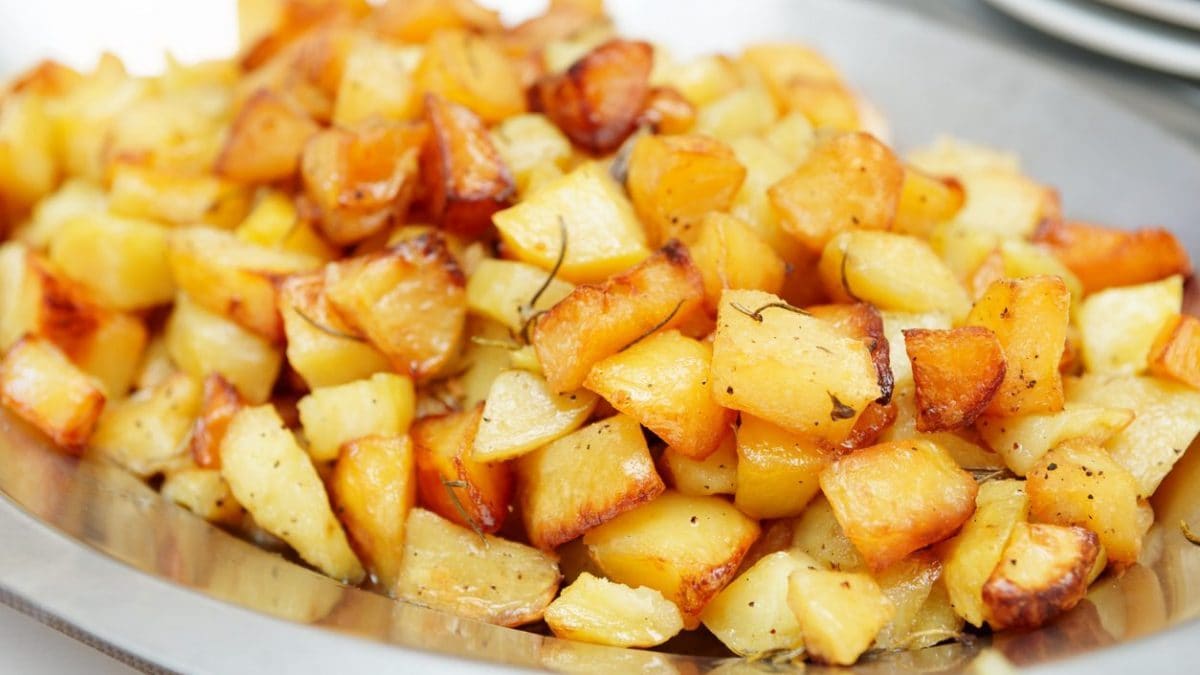
A classic side dish that never gets old and that we've all cooked at least once in our lives: we're talking about oven-roasted potatoes, irresistible thanks to their crispy crust and soft interior. It's a timeless dish that pairs perfectly with any type of main dish, from chicken and roast fish to sausage and cutlet, even vegetarian and vegan dishes, always adding an extra touch of deliciousness. A preparation that uses just a few simple ingredients, it doesn't always turn out the way you'd expect: the potatoes appear pale or burnt, raw and flavorless inside, too greasy and mushy. In short, compared to the popular image of golden and tasty potatoes, the appearance and taste can be disappointing. Below, we've collected the most common mistakes people make with oven-roasted potatoes—from the choice of raw ingredients to the seasoning—to understand where you're going wrong and never make them again.
1. Choosing the Wrong Potatoes
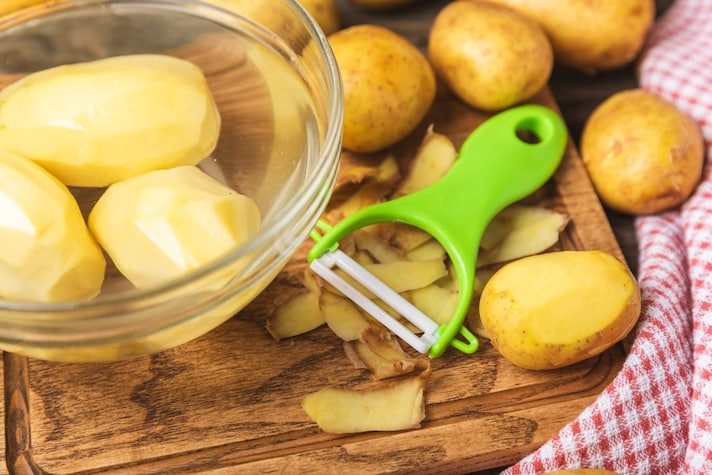
The ideal potatoes for this type of recipe are yellow-fleshed varieties, which maintain a firm, compact flesh when cooked and have a low starch content, unlike the ones used for gnocchi and mashed potatoes , which, on the contrary, should fall apart. In this case, also avoid old potatoes, because they are floury.
2. Cutting Them Into Different Sizes
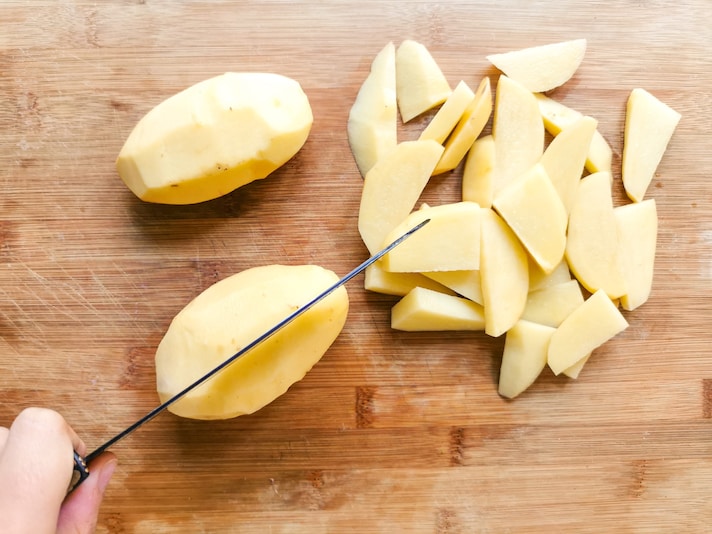
A very common mistake is cutting potatoes "by feel," resulting in different shapes and sizes. What happens? Small and large pieces don't cook at the same time, but rather require different cooking times: this results in some chips being more burnt and others being semi-raw. You can opt for chunks, wedges, or rounds, but remember that they must be uniform.
3. Putting Them in The Oven Immediately
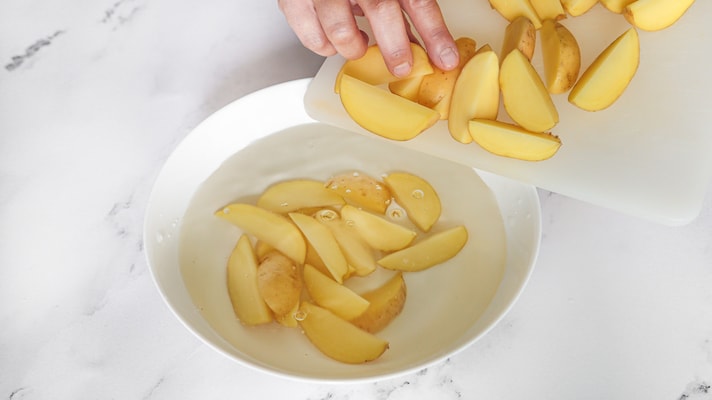
Often, once cut, potatoes are seasoned and oven-roasted. Actually, there are two more steps that are best at this point, as skipping them can compromise the final result. The first is the ultimate trick for crisping while keeping the flesh soft: it's very simple: simply blanch the potatoes in plenty of water for no more than seven minutes (they shouldn't break apart), thus also reducing their oven time. If you have starchy potatoes, however, soaking them in a bowl for at least 30 minutes is helpful, to remove the excess.
4. Seasoning Them When They Are Already in The Pan
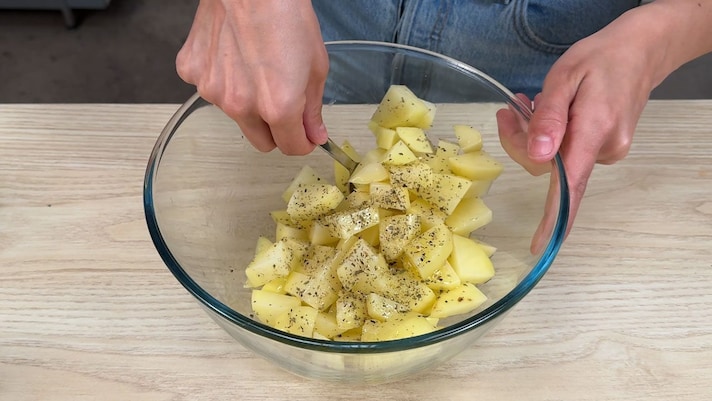
Once blanched or soaked, transfer the potatoes to a bowl and season them: use a drizzle of extra virgin olive oil, chopped herbs of your choice, pepper, and salt, and massage with your hands to distribute the ingredients evenly over the surface. Once placed in the pan, you can also add a clove of garlic or sprigs of rosemary, which you can remove just before serving.
5. Arranging Them One on Top of The Other
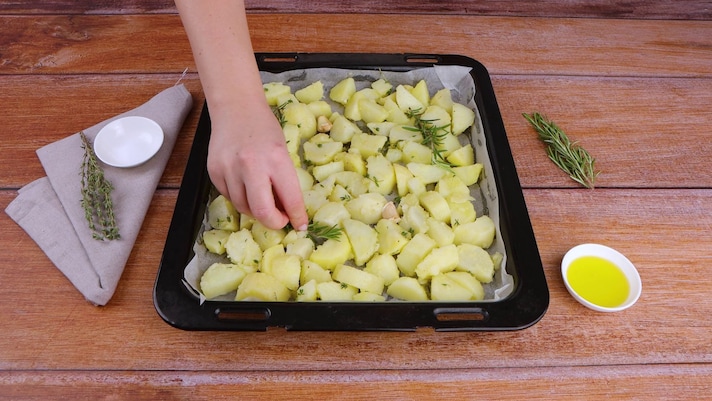
Arranging potatoes on a baking sheet is often overlooked, but it's important. Piling potatoes together essentially means steaming them instead of roasting them. The reason? When the pieces overlap, heat isn't distributed properly and moisture gets trapped, preventing a crust from forming. Arrange the potatoes in a single layer, if possible, using a large baking sheet or two baking sheets.
6. Turning Them Continuously
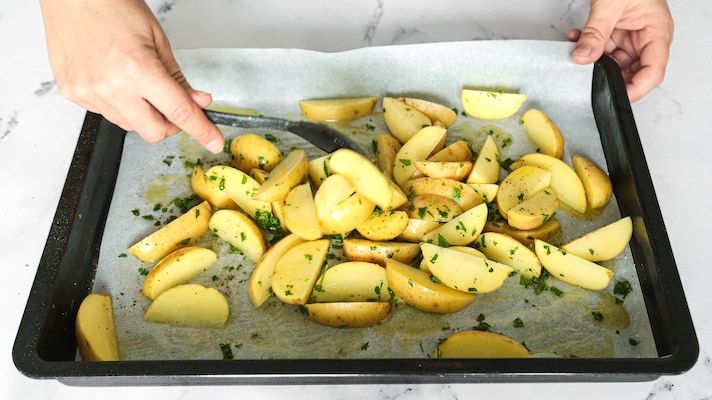
Once roasted, oven-roasted potatoes should not be forgotten or even disturbed. The cooking time (30 to 60 minutes) varies depending on the size of the pieces and the quantity. Always preheat your oven— a fan-assisted oven ensures better heat circulation, but a conventional oven is also fine, as there's less risk of drying them out—to between 355°F/180°C and 430°F/220°C, depending on the recipe you're following. We recommend turning them only once halfway through cooking, to help develop a crispy layer.
7. Peel, Yes or No?
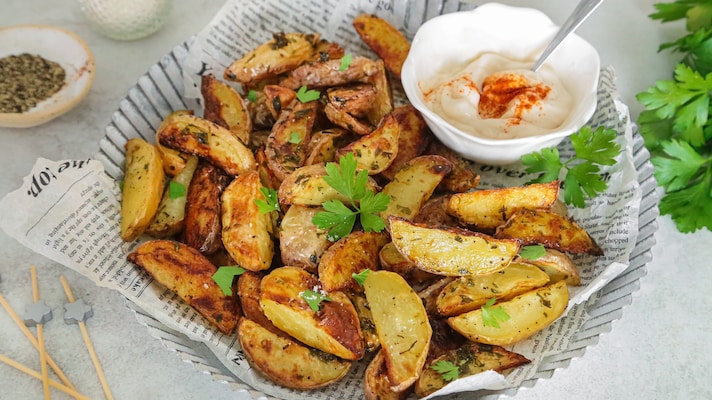
The question has always been controversial: are oven-roasted potatoes better with or without the skin? The answer is that both options are valid. With the skin on, potatoes are more rustic and flavorful. Without the skin, however, they are more delicate. In any case, always wash potatoes carefully and opt for organic ones if you choose not to peel them. If there are bruises or green parts, it is always better to remove the skin.
;Resize,width=767;)
