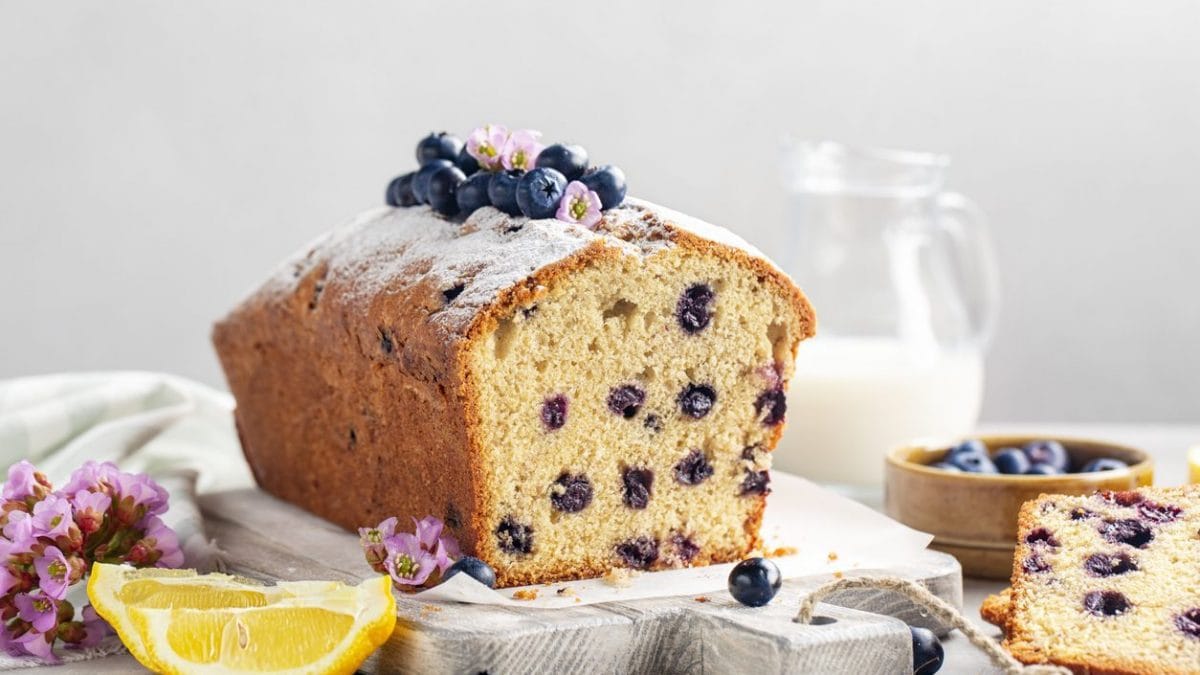
Loaf cake is probably one of the most popular desserts in our homes. Tall, soft, and fragrant, it's ideal any time of day: for a sweet breakfast, a delicious snack, or even a delicious dessert. Although it contains only a few ingredients and is incredibly simple to make, there are a few details to keep in mind to achieve a flawless result every time. Here, we'll explain them all, so you can make a loaf cake that's always tall and with its iconic dome.
1. Using Cold Ingredients

A detail that may seem irrelevant and is too often overlooked: fresh ingredients, such as eggs and butter, must be used at room temperature. If the butter is too cold, it risks creating lumps and not mixing properly with the other ingredients. Likewise, using cold eggs can cause some of the butter to solidify again, creating an uneven and lumpy mixture.
2. Overmixing the Dough

It's true that all the ingredients need to be thoroughly combined, but that doesn't mean the dough should be overworked. This is because overmixing, and too vigorously, can cause the gluten to overgrow, which could make the cake tough.
The Choice of Flour
For the same reason, it's also important to choose the right strength flour: for loaf cake, you need a weak flour (or at most a medium one) that has around 9-10% protein. We don't need a strong structure that can retain a lot of leavening gases —as is the case with pizza—but a final product that is soft and crumbly.
3. Not Preparing the Mold

Many times, and not just for loaf cakes, we've read that before placing the batter in the mold, the latter needs to be buttered and floured. If we were to skip this step, we could compromise the final result, as the cake risks sticking to the mold and breaking when we try to remove it. Alternatively, you can also use parchment paper or silicone molds.
4. Unmolding it When It's Still Hot

The loaf cake needs to cool slightly after it comes out of the oven. This is because, being a very fragile cake, if you remove it immediately after baking—as in the previous step—you could cause cracks and the cake to break. Therefore, let it cool at room temperature for at least 15-20 minutes and then remove it carefully.
5. Using the Wrong Mold and Dough Quantity

Tall and rectangular: these are the basic characteristics we all know by now, and this is the shape our loaf cake pan should have. Beyond this, however, it must also have an adequate capacity to leave room for the dough to rise: if my container is too small, in fact, I risk overfilling it and causing the dough to spill out when it rises during baking. If my pan is too large, however, the loaf cake will rise but may still be too shallow. The optimal solution is a pan filled to about 2/3 of its total capacity, and the size will obviously depend on the quantities of the individual recipe.
6. Setting the Oven Temperature Too High or Too Low

It's important to know that when recipes instruct you to preheat the oven, it's not just a heartfelt recommendation, it's actually an order: placing your loaf cake in a still-cold oven could compromise the effectiveness of the yeast, which would begin to work even at low temperatures and would run out in a short time. An oven that's too hot, however, also risks damaging the final result: the cake could cook too quickly on the outside, remaining raw on the inside. Loaf cake requires a slow and controlled rise: for this reason, the right temperature is usually between 340-355°F/170-180°C.
7. Opening the Oven During Cooking

As mentioned above, loaf cake, like other desserts, requires uniform and constant heat to rise. For this reason, it's best to never open the oven during baking: the cold air that enters could cause the yeast to suddenly stop working, resulting in the collapse of the structure. Towards the end of baking, however, the risk is less severe: therefore, it's best to avoid opening the oven for the first 25-30 minutes, although our advice is always to wait until the end of the baking time indicated in the recipe.
8. Not Checking The Cooking With a Toothpick

Of course, we can't constantly monitor the cooking of our entire loaf cake, but it would be a shame if, once we took it out of the mold, we realized that it was raw inside.
To check the doneness of a loaf cake with a cooking thermometer, simply measure the internal temperature at the thickest point of the cake. Ideally, the core should reach a temperature between 200°F/94°C and 208°F/98°C. If it stays between 200°F/94°C and 205°F/96°C, the loaf cake will be softer and moister; if it reaches 206-208°F/97–98°C, it will be drier and fully cooked. To measure correctly, insert the thermometer probe into the center of the loaf cake, from the top or side, being careful not to touch the mold, which would alter the reading. If the temperature is still not right, continue baking for another five minutes and then check again.
If you don't have or don't want to use a thermometer, you can check the cake's doneness by inserting a toothpick into the cake. If it comes out moist and with bits of batter stuck to it, it needs a few more minutes of baking; if it comes out dry and clean, your cake is ready to be taken out of the oven.
;Resize,width=767;)
