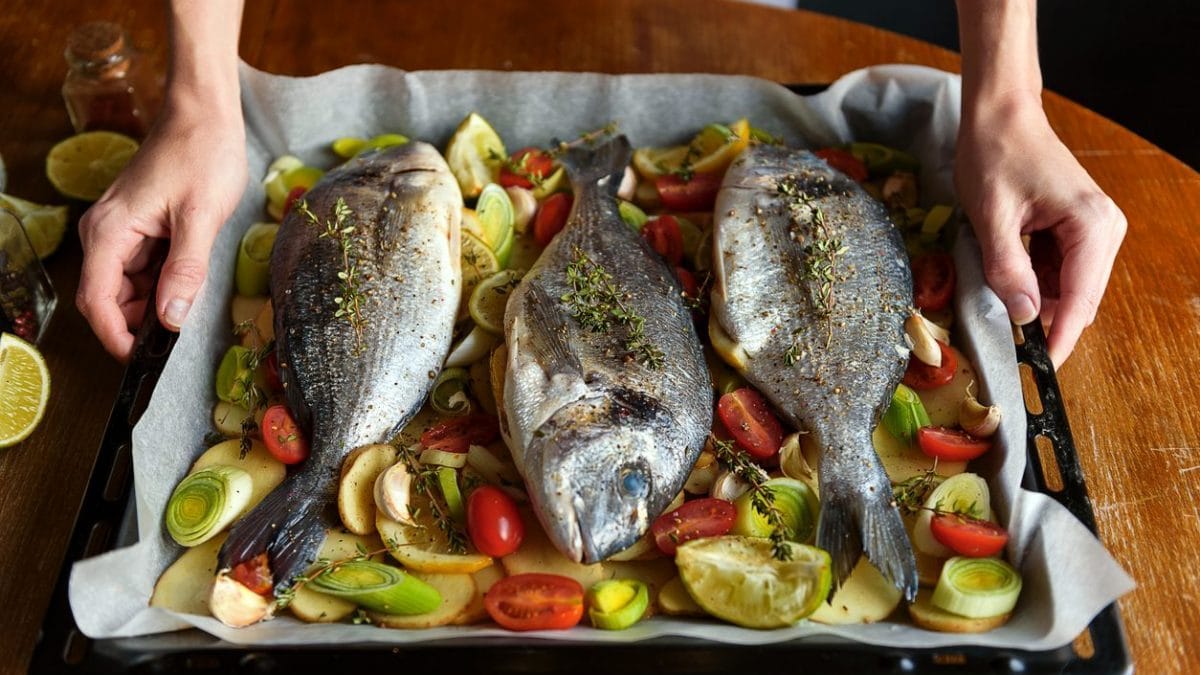
Fish, a blessing and a curse. A food prized for its health benefits and versatility, yet popular belief holds that it's difficult to prepare, unless you're dealing with a can of tuna. In reality, approaching sea bream, sea bass, mackerel, a steak of swordfish or salmon, and even sole isn't that complicated, but it takes a bit of practice to choose quality fish, learn how to clean and fillet them expertly, and cook them to perfection, so as not to ruin a precious raw material. Below, we'll look at the most common mistakes and how to avoid them.
1. Not Thinking About Freshness

The first mistake is made at the fishmonger's or at the supermarket counter: to get good results, you need to choose fresh fish: whether whole or pre-portioned into fillets and steaks, there are details to pay attention to, which involve the appearance, smell, and firmness of the flesh. Also pay attention to the origin, type, whether wild-caught or farmed (mandatory declaration on the label), and seasonality, useful information from a sustainability perspective. And don't disdain frozen fish products: when the frozen fish is on board (always indicated on the label), it means that very little time has passed from when it is caught and brought to a temperature of -0.4°F/-18°C, reducing the risk of contamination, as well as maintaining its organoleptic properties intact. When buying fresh fish, remember to consume it within the same day and not to leave it sitting in the refrigerator, because it begins to spoil after 24 hours.
2. Cleaning The Fish Poorly

Cleaning fish is essential for both health and taste, as blood, gills, and innards can impart an unpleasant bitter flavor. If you're not an expert, it's best to have the fishmonger gut it yourself, as not all species are cleaned the same way. Consider elongated or oval fish like sea bass and sea bream, where the innards are removed with a long cut along the ventral side from head to tail. Flatfish like turbot or sole, however, have internal organs concentrated in a specific area at the front. An important and often overlooked step is to dry the fish thoroughly after rinsing: excess water causes poor browning, so always pat dry with paper towels.
3. Not Removing the Bones

A separate chapter is dedicated to bones, commonly called spines, which are the bony structure of fish: some fish species naturally have fewer of them, while others have more, with varying thicknesses and sizes, from thin to large. Finding even a single bone on your plate can ruin the experience, and don't underestimate the discomfort (and potential danger, especially for children) when it gets stuck in the throat. Even if you've purchased pre-cleaned fish, check for residual bones by feeling the flesh and removing them with tweezers. Do the same after cooking, whether you're serving the fish whole on serving plates or as a fillet or individual steak. Your guests will thank you.
4. Skin: Yes or No?

The answer to this question is not clear, and we'll give you two reasons. The first is that some fish have thin, perfectly edible skin, so you can simply remove the scales under running water with a sponge or a small knife. In the second case, the skin acts as a protective layer around the flesh, preventing it from being ruined: for example, when cooking with salt, removing the skin would allow the salt to penetrate the flesh, rendering it inedible, while grilling would be too harsh. Furthermore, there's often a layer of fat between the skin and the flesh, which adds juiciness and prevents the inside from drying out. How do you proceed with pan-frying? Start cooking on the skin side and then flip it over; you can then remove the skin before serving.
5. Throwing Away Waste (Which Isn't Waste)

Cooking fish also means trying to waste as little as possible. And that's precisely why if you have a whole fish in hand, you can use many more parts than you think. For example, heads and bones are generally considered waste and are thrown away, but in reality they are among the tastiest parts: it's no coincidence, therefore, that they are essential ingredients for making a broth or stock, which can be used as a base for soups, risottos, pasta dishes and stews inspired by the sea.
6. Underestimating the Condiments

Fish flesh has a distinctive flavor, generally mild in white fish and bold in blue fish. For this reason, to make it fragrant and appetizing, it is often enriched with seasonings: when baking a whole fish, you can insert slices of lemon or orange, garlic cloves, and aromatic herbs into the belly, as with sea bass, and drizzle the surface with citrus juice and extra virgin olive oil. Another useful ally are marinades, which also add moisture and soften fattier fish or fish with lingering flavors: they are suitable for salmon (see the grilled version), for anchovies (a great classic), and for grilled cod. A simple emulsion can also be brushed on without waiting, as is done with salmoriglio on swordfish before cooking. When should you salt fish? Salt tends to dry out meats: the suggestion is to include it in the seasonings and in grilled whole fish it is added once it is cooked.
7. Cooking it Wrong

And here we come to one of the most complicated moments: the actual cooking. Fish cooks rather quickly: you don't want to overcook it or it becomes stringy, but you don't want to undercook it either, otherwise it will remain raw. As a general rule, always keep the size in mind: the larger the fish, the more time it takes, with fillets being the quickest and most delicate format, as they often require just a few minutes. Whether you choose a pan, griddle, or grill, remember that the surface must be very hot. If you use the oven, it's helpful to preheat it to ensure a uniform temperature, usually around 355°F/180°C. Cooking in foil is advantageous, with the fish, whole or portioned, wrapped in baking paper and foil, cooking in its own juices without the need for adding fat to flavor and moisten it. For a light and healthy dish, opt for steaming, which doesn't equate to deprivation. The secret lies in the flavoring: you can add herbs, spices and citrus fruits to taste both in the water (as we did in the steamed swordfish) and in the basket with the fish, as in this steamed salmon.
8. Not Using The Right Tools

Let's conclude with tools: having the right utensils makes life in the kitchen easier, and fish recipes are no exception. What could be a basic set? A cutting board to use as a work surface, a special knife for filleting, a pair of scissors to help open the fish and remove any fins, tweezers to remove bones, and gloves to keep your hands free of unpleasant odors.
;Resize,width=767;)
