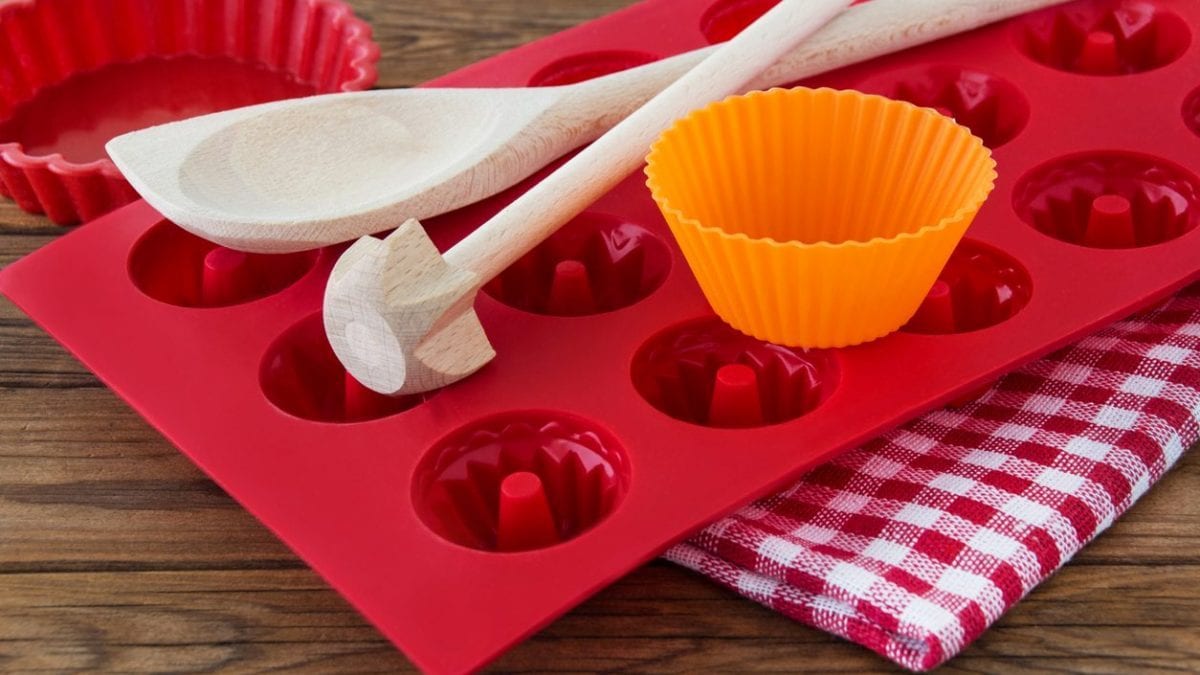
In recent years, silicone molds have made their way into our kitchens: convenient, practical, lightweight, and flexible, they are suitable for muffins, loaf cakes, and cupcakes. Often preferred to aluminum or steel pans because they allow for easier unmolding, they are the perfect ally for our sweet creations. However, the materials they are made of are less well-received: in fact, according to some studies, they could release unwanted substances into food and the air.
The Canadian Study
A recent study, published in the Journal of Hazardous Materials, analyzed several silicone molds to understand if and how the substances they are composed of can reach us. The group of Canadian scientists examined 25 molds, filling them with a mixture of sand and oil —to simulate a fat-rich dough—and baked them at 350°F/177°C for about an hour, also monitoring the air around the oven. The researchers detected the presence of cyclic siloxanes in the mold material, in quantities ranging from 680 to approximately 4,300 micrograms, while in the surrounding air they found an average concentration of 646 micrograms per cubic meter.

The authors did not elaborate on the health risks these compounds may pose because the available data is still limited. They do emphasize, however, that children are more at risk than adults. In any case, before we rush to throw away all our silicone molds, the team of experts offers some good news: the release of these compounds drops dramatically with repeated use. They observed that the percentage dropped by about 95% after just three baking cycles, continuing to decrease after each use. Their advice, therefore, is to pre-bake them immediately after purchase—empty or perhaps with test mixtures that can be thrown away—and to use them frequently.

How to Use Silicone Molds Correctly
At this point, you may be (rightly) wondering how these molds should be treated to avoid any potential health risks.
- Read the instructions: it's important to know the maximum temperatures and washing methods to which the product can be subjected, to avoid any possible deterioration. Also check that the fork and knife symbol is always present, certifying its suitability for contact with food.
- Wash them thoroughly before first use: production residues and volatile compounds can migrate from the silicone to food, a risk that washing drastically reduces.
- Do a test baking: as studies have also shown, baking with a test dough can reduce the passage of some harmful substances from the mold into our food.
- Replace if there are cracks or cuts: If the mold is damaged, it is best to replace it with a new one, as the risk of contamination would be higher.
- Grease the pan with oil or butter: this is essential only before the first use to ensure maximum non-stick performance. There will be no need to repeat this step afterward.
- No open flame, yes microwave: silicone molds should never be exposed to flame, as they could be damaged and rendered unusable. You can, however, safely use them in the microwave.
- Water and oil: Silicone molds can be safely stored in either the freezer or the refrigerator, with just a few simple precautions. If you're freezing, brush the inside with water; if you're refrigerating, use oil.
- Don't use knives or sharp objects: It's pretty easy to understand why: using these objects can scratch and ruin your mold.
- Yes, dishwasher and hand washing are allowed, but without abrasive sponges: as in the previous point, the use of sponges can damage the surface of the molds.
- Remove the mixture carefully: before removing your cupcakes or plum cake, wait until the mold has cooled so that they can be removed much easier.

;Resize,width=767;)
