If you've ever chosen a sparkling wine and come across the word "Brut" on the label, you might have wondered what it really means. Is it synonymous with elegance? Dryness? Quality? Or is it just one of the many technical terms that populate the world of wine?
In reality, the term "Brut" is much more than a simple label: it reveals something specific about the taste, the perceived sweetness, and how that sparkling wine was produced. And it's not the only one: there are other classifications (such as pas dosé, extra dry, demi-sec, doux) that indicate the level of residual sugar in the wine and can help you make a more informed choice.
Today we'll look at what Brut means, what other sugar levels there are, and how to navigate the different types of sparkling wine to find the one best suited to your tastes and occasions.
What Does Brut Mean for a Sparkling Wine?
The word "brut" comes from the French and means "pure" or "raw." In winemaking, it indicates a sparkling wine with a residual sugar content of less than 12 grams per liter; this parameter refers to the amount of sugar remaining in the wine after alcoholic fermentation, that is, after the yeasts have converted the sugars into alcohol and carbon dioxide.
Brut represents a perfect balance between dryness and smoothness: it's not completely dry like pas dosé, but not as sweet as demi-sec or doux. It's precisely this versatility that makes it one of the most popular and best-selling dosages in the world, lending itself to a wide range of food pairings, from shellfish to risotto, from delicate cheeses to elegant dinners.
The classification of sugar content depends on when the producer decides to interrupt fermentation, leaving a specific amount of untransformed sugar: this residual sugar is what determines the category of the wine and profoundly influences its taste profile.
What Are The Other Sugar Dosages?
In addition to Brut, there are several categories that define the sweetness of a sparkling wine. These classifications are regulated at the European level and are based on the amount of residual sugar, expressed in grams per liter.
1. Pas Dosé / Brut Nature

With less than 3 grams of sugar per liter, Pas Dosé is the most "naked" and natural sparkling wine. No liqueur d'expédition (a mixture of wine and sugar) is added before corking, and the perceived sweetness is that of the grape's original sweetness. On the palate, it is dry, fresh, and has a pronounced acidity. It is ideal for raw fish, sushi, and smoked dishes, but is less common on the mass market.
2. Extra Brut

With a residual sugar content between 0 and 6 grams per liter, the Extra Brut maintains the freshness and acidity of the Pas Dosé, but with a slightly added smoothness. It's perfect for aperitifs and seafood dishes, and is a refined choice for those seeking a simple yet understated sparkling wine.
3. Brut

As mentioned, with a residual sugar content of between 0 and 12 grams per liter, Brut is the most balanced and versatile sparkling wine. The liqueur d'expédition is present in small quantities, just enough to smooth out the acidity without overpowering the wine's character: on the palate, it is dry, harmonious, and pleasantly fresh. It is ideal as an aperitif and pairs easily with fish, shellfish, and light cuisine, representing the most widespread and appreciated type.
4. Extra Dry

Contrary to its name, Extra Dry is sweeter than Brut, with a residual sugar content of 12 to 17 grams per liter. The sweetness is perceptible but not overpowering, and the taste is dry with a smooth finish. It was traditionally considered the most classic dosage for Prosecco, where the Glera grape finds its most elegant expression. Excellent as an aperitif and with dishes served with delicate sauces.
5. Dry/Sec

With a residual sugar content between 17 and 32 grams per liter, Dry (or Sec) is noticeably sweet, creamy, and smooth. It's suitable for those who prefer less acidic, more rounded wines. It pairs well with cheeses, cured meats, and light desserts, and is primarily found in Italian sparkling wines produced using the Charmat Method (which involves secondary fermentation in large autoclaves). Serving it at 39-42°F/4-6°C helps balance the sweetness.
6. Demi-Sec

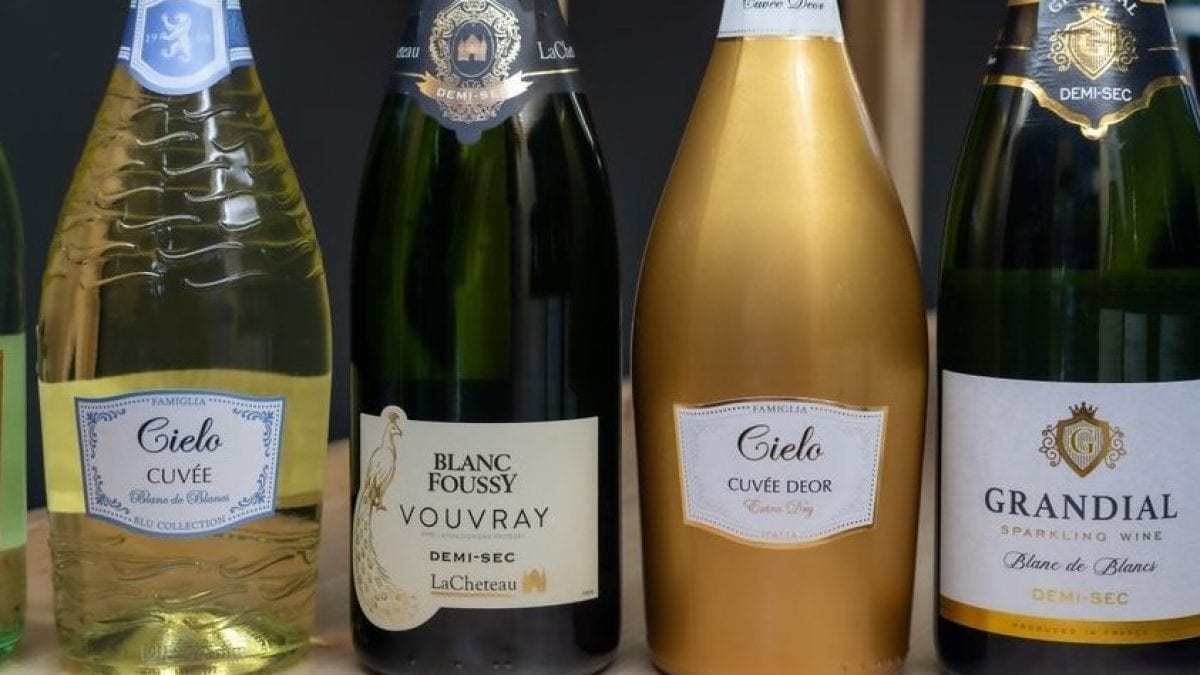
Demi-Sec contains between 32 and 50 grams of sugar per liter. It's a sweet wine, with a distinct but not excessive sweetness. It pairs well with desserts, blue cheeses, and dishes with sweet sauces. It can also be an excellent meditation wine, best enjoyed slowly.
7. Sweet/Doux

With over 50 grams of sugar per liter, Dolce (or Doux) is the sweetest category; sweet sparkling wines are often made with aromatic grape varieties such as Moscato, Malvasia, or Brachetto. Asti Spumante is the best-known example, containing around 80 grams of sugar per liter: ideal for desserts and celebrations, it is appreciated by those who appreciate fruity and intensely sweet flavor profiles.
Some Fun Facts
Names can be misleading : why is "Extra Dry" sweeter than "Brut"? The answer is historical: when the classification was defined, Dry and Demi-Sec were considered "less dry" than sweet wines, but still in the dry category; the term "Dry" therefore referred to the comparison with sweet wines, not with Brut.
Finally, the distribution of dosages varies based on the production method and origin. In classic method sparkling wines, such as Champagne and Franciacorta, Brut and Extra Brut dominate. In Prosecco, however, Extra Dry and Dry have historically prevailed, with a growing interest in Brut. Pas Dosé is appreciated by connoisseurs, while Doux appeals to those with a penchant for sweetness.
Knowing these differences helps you choose the right sparkling wine for every occasion, making the most of the moment of sharing a bottle.
;Resize,width=767;)
