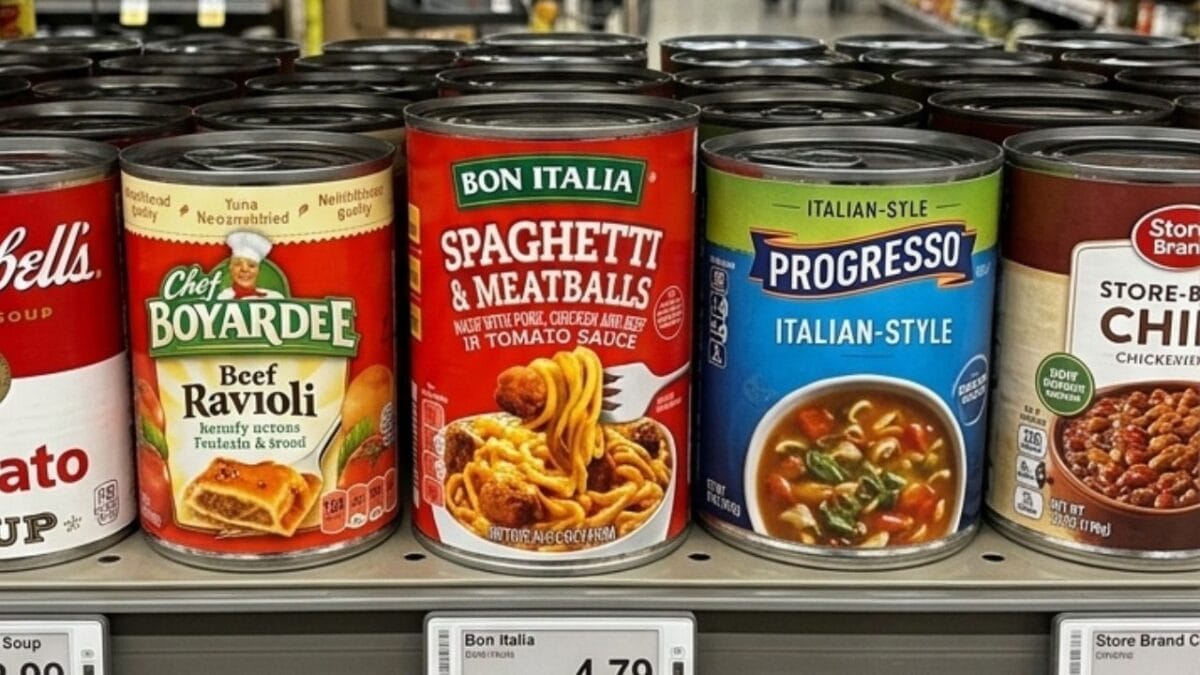
There's a moment, when Italians enter a U.S. grocery store, when they might feel like they've come home. Not because they recognize the grocery store, obviously, but because familiar words start to appear on the shelves: Milan, Rome, Naples, Tuscany. Then come the Italian flag, a few photographs of the Colosseum, a plate of spaghetti, and, inevitably, that slightly rustic design that's supposed to make them think of grandma's cooking. But as they get closer, they discover that something doesn't quite add up: Parmesan isn't Parmigiano Reggiano, Cambozola isn't Gorgonzola, and a product can call itself "Italian Style" even when there's practically nothing Italian about the place where it's produced.
This is where the journey into the supermarket of "almost Italians" begins: that of Italian Sounding, the phenomenon by which names, images, colors, and references to our tradition are used to suggest an Italian product, even when that product originates far from the peninsula. And the most curious thing is that, to achieve this, often you don't even need to actually copy Italy: you just need to evoke it.
Cheeses Bordering on The Absurd
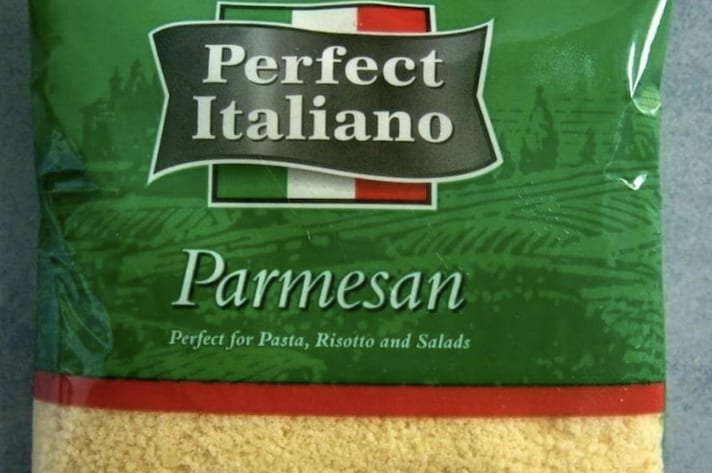
If there's one area where the imagination of foreign producers knows no bounds, it's undoubtedly the dairy sector. The undisputed king of this category is Parmesan: the name is so similar to Italian Parmigiano that it immediately triggers an association, but in non-European markets (where the PDO protection of the 2008 EU ruling doesn't apply), a Parmesan can be produced anywhere and not comply with the strict rules of the Parmigiano Reggiano specification. But the creativity doesn't stop there. In Germany and the United States, refrigerated trays house Borgonzola or Cambozola, industrial hybrids born by combining the moldy feel of Italian Gorgonzola with the consistency of Brie and Camembert.
Fontiago is also popular in the US, a vacuum-packed block created by blending two distinct icons: Fontina and Asiago. Meanwhile, in American tubes of Romano Cheese, you'll find a cheese made exclusively from cow's milk, lacking the character and aromatic profile of Pecorino Romano. And in South America? There's Reggianito, born of Argentine emigration and sold in packs or bricks, aged for just six months compared to the minimum 12 for true Parmesan.
Preserved Cured Meats and Squeezable Sauces
Moving to the packaged cured meats section, the illusion continues with products that have become classics abroad. Among the examples documented in international markets is Genoa Salami: Genoa thus becomes part of the name of a product that doesn't necessarily originate in Liguria. And this is perhaps one of the most fascinating aspects of Italian Sounding: Italian cities become ingredients.
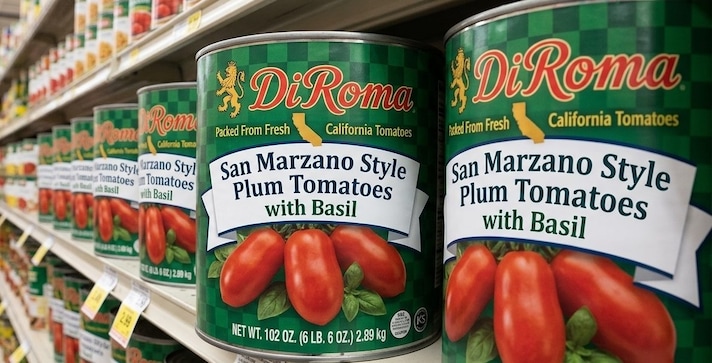
Things aren't any better on the shelf of canned goods and ready-made condiments. Did you think peeled tomatoes were safe? In the United States, cans of San Marzano "Style" tomatoes are all the rage: the packaging features a prominent Vesuvius, fonts reminiscent of the Amalfi Coast, and patriotic colors, but inside are tomatoes grown in California. Even pesto alla Genovese isn't immune to this scourge. In its traditional version, it has a very precise identity: basil, pine nuts, garlic, Parmigiano Reggiano or Grana Padano, pecorino, extra virgin olive oil, and salt. Basil, in particular, isn't just any detail: it's one of the elements that immediately defines the sauce. Yet, in international markets we can find products called "Pesto Italian Herbs" that use herbs other than basil, such as rosemary and thyme.
Visual Illusion and How Not to Fall Into the Trap
At the end of this tour of the shelves, you might wonder: how do these products sell so well? The secret lies in the unscrupulous use of the colors of Italian flag, glimpses of the Colosseum, Venetian gondolas, or hilly landscapes printed on the packaging to evoke quality and tradition where in reality there is only a local industrial assembly line. When you want to savor the true Made in Italy, remember not to stop at the first tricolor printed on the bag: check the list of ingredients, look for the official DOP and IGP marks, and, above all, be wary of grated cheeses in plastic jars or pestos meant to be squeezed like mayonnaise.

