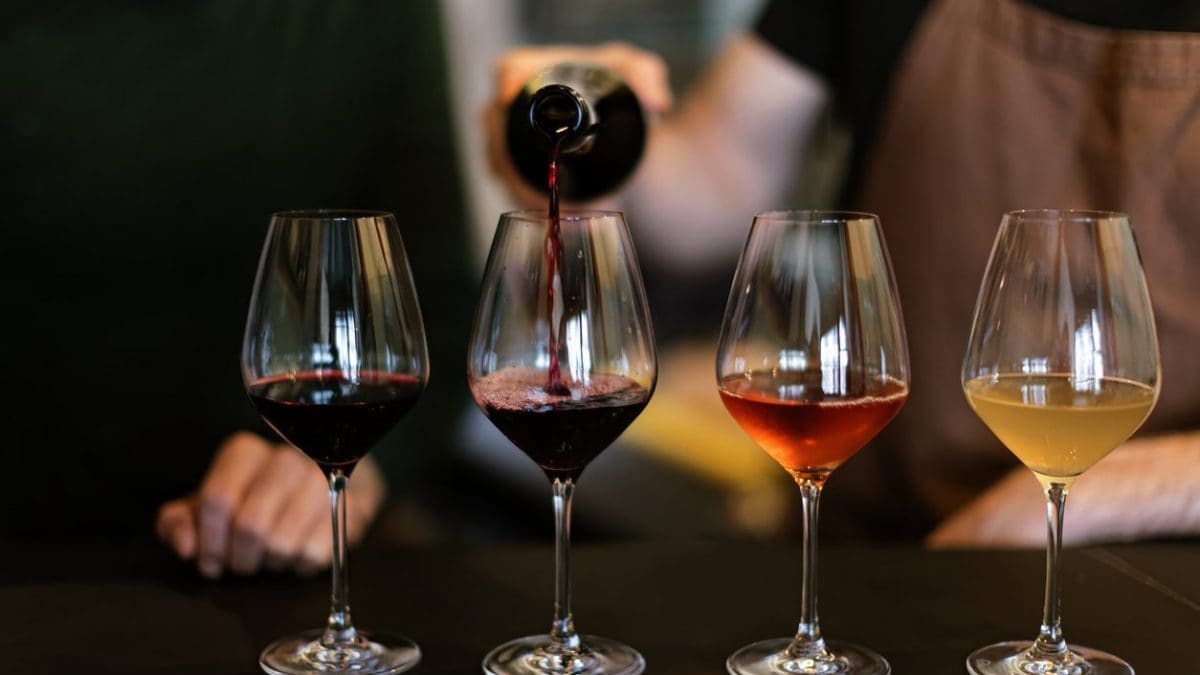
If you think wine tasting is a practice for a select few, gifted with extraordinary talent, we have good news and bad news. The good news is that you don't need an extraordinary sense of smell and taste to become a skilled taster. The bad news is that to sharpen your senses, in terms of perception, you'll need a lot of training.
But let's proceed step by step: how do you taste wine? Experts, or sommeliers, follow the phases of the so-called "sensory analysis": a process that involves three distinct and sequential phases that involve various sense organs.
Tasting is a journey to discover each component of wine, which is ultimately judged based on its flavor balance. Each stage of this journey reveals a different aspect of the wine before us: the taster's skill lies in bringing the various aspects together to delineate the wine's profile—like a puzzle of sensations.
Visual Analysis
The first phase of sensory analysis focuses on the eyes. Pour two or three fingers of wine into the glass and observe it, raising the glass to eye level: this way, we can evaluate the clarity.
Next, we tilt the glass against a white background to evaluate the color. Finally, we swirl the wine in the glass to evaluate its fluidity.
The degree of clarity gives us an idea of the health of the wine, which should always be more or less clear and able to let light pass through.
Color tells us about the history of the wine we're looking at: it can provide clues about how it was made and the specific winemaking techniques used, as well as information about its age, the vintage, and the characteristics of the soil and climate of its location. A young wine will have a bright, vibrant color, while an older wine will have less vibrant hues.
Finally, fluidity gives us a sense of the wine's consistency: it gives us a "taste" of what we'll soon taste directly. This depends on the presence of various molecules, including alcohol and glycerin.

Olfactory Analysis
The second phase of sensory analysis focuses on our sense of smell: through olfactory analysis, we'll evaluate the spectrum of aromas that characterize the wine. This is the phase that most intimidates those curious and non-wine experts: very often, when raising a glass to their nose, their first reaction is to exclaim, "But I don't smell anything!" —and that's completely normal. We assure you that even the best sommelier in the world, when faced with his first glass, couldn't name any specific aroma.
As we said at the beginning, it's all a matter of practice: to develop our sense of smell, we simply need to remember to smell everything we come across: from fruit to flowers, from vegetables to spices. The trick to recognizing aromas in wine is to build a personal olfactory memory: a set of smells and scents that we can accurately recognize. Think of the smell of freshly brewed coffee, or a freshly cut apple segment. Remember that, in a wine, you will only be able to recognize the aromas that are present in your olfactory memory: if, for example, you've never smelled jasmine, you will never be able to recognize its scents in a wine.

How should you proceed at this stage? Bring your nose close to the wine and inhale two or three times; then swirl the glass: this movement helps release the volatile substances —the aromatic molecules that make up the wine's aroma. Then, inhale again.
The most trained tasters are able to identify various families of aromas (e.g. fruity, floral) and name the precise scents (e.g. peach scent, cut grass scent).
The number of detectable families and the variety of aromas will determine the complexity and breadth of a given wine's aromatic bouquet. Beyond these aspects, it's possible to evaluate the intensity of the aromas and how long they remain perceptible, or their persistence.
Taste Analysis
Contrary to what we might think, the sense of taste doesn't specifically identify the taste of what we eat or drink: it's the sense of smell that identifies complex tastes, which are the product of olfactory sensations, both direct and retronasal. The role of taste, instead, is to identify the basic flavors and their overall balance, in addition to the tactile and thermal sensations in the oral cavity.
To proceed with the taste analysis, we introduce a sip of wine into our mouth and, with the help of our tongue, bring it into contact with the most sensitive areas of the oral cavity. This will activate our sense of taste and allow us to identify the basic flavors (sweet, salty, bitter, sour) and tactile sensations (smoothness, acidity, astringency, saltiness) found in wine.

Holding the wine on the tongue and drawing in a little air between the lips heightens the sensitivity of taste and touch. The air also carries the odorous vapors into the retronasal cavities, reactivating the sense of smell through retrolfaction. This allows us to evaluate the aromas in the mouth, as well as their intensity and quality. At this point, we can either expel or swallow the wine.
By identifying flavors and tactile sensations, we can evaluate the wine's gustatory balance, asking ourselves whether some elements are more prominent than others and whether this balance is consistent with the type of wine being tasted.
Tips for Best Tasting Wine
Here are some practical tips for tackling a mindful tasting:
- Take your time: don't rush. Each step deserves attention and calm.
- Choose the right glass: the shape of the glass influences the perception of aromas.
- Check the temperature: a wine served too hot or too cold alters aromas and flavors.
- Write down what you perceive: even simple impressions help develop sensitivity.
- Train your sense of smell every day: fruit, herbs, coffee, bread – anything can become a reference.
- Avoid strong aromas or lingering flavors before tasting: they could interfere with perception.
- Taste in company: comparing yourself with others helps you improve and recognize more nuances.
;Resize,width=767;)
