
Mulled wine is the scent of winter: a warm embrace that immediately brings back memories of Christmas markets, strolls among the lights, and the pleasure of holding a steaming mug in your hands as the cold stings your cheeks. When you prepare it at home, you're not just warming wine and spices, you're repeating an ancient tradition that spans cultures, countries, and centuries.
The ancient Romans already knew the pleasure of mulled wine, served as conditum paradoxum, a sort of ancestor of mulled wine, made with honey, dates, and exotic perfumes that also served to invigorate the body during the cold season. In the Middle Ages, this tradition transformed into ipocras, a spiced wine beloved in European courts, where spices and medicinal herbs were not just an aromatic indulgence but a true auspicious ritual.
Over time, the practice spread throughout Northern Europe, where it became part of winter culture: in France it took the name vin chaud, in Germany it became glühwein, in Scandinavia it transformed into glögg. Each region added its own personal touch in the form of different liqueurs, citrus fruits, and spices, creating a mosaic of versions that still populate Christmas markets today. Mulled wine has also found a second home in the U.S., especially in Vermont, New Hampshire, Massachusetts, California, and New York, becoming synonymous with conviviality and the warmth that emanates when people gather together on winter evenings.
A curious anecdote tells that mulled wine was once used to "save" slightly tired or slightly oxidized wines: thanks to the heat and the presence of spices, their flavor became more pleasant and the wine preserved longer; a practical, ingenious solution, perfectly in keeping with the creative spirit that still makes this drink so beloved today.
Preparing it means engaging with a thousand-year-old tradition, reinterpreting it according to your own tastes. Today, we'll accompany you on this journey, starting with the most important choice: the right wine. You don't need to be an expert or use technical jargon; all you need is a little curiosity and a willingness to experiment.
Mulled Wine With Red Wine, The Classic Version
Red mulled wine is the most recognizable and widespread version, the one enjoyed at Christmas markets and winter festivals. Its ruby color and intense aroma of spices and red fruits create an immediately familiar atmosphere. To achieve a balanced result, it's important to choose a wine that can interact with spices like cinnamon, cloves, and nutmeg without being overpowered.
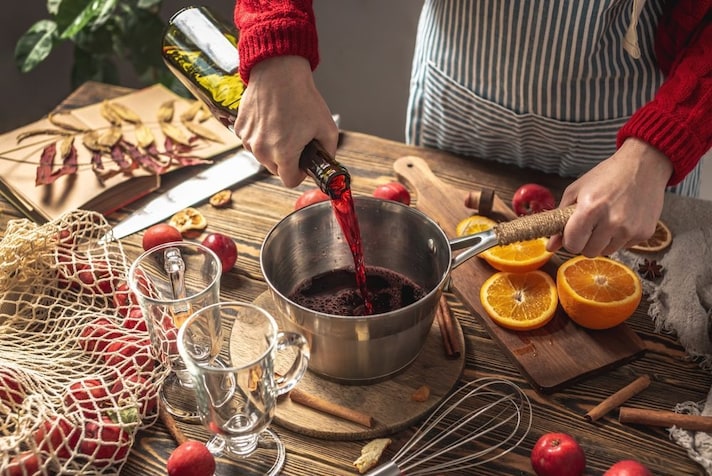
Why Mulled Wine is Mostly Made With Red Wines
Tradition favors red wines because they are naturally more structured and rich, with fruity aromas that pair well with the complexity of the spices. A suitable red doesn't necessarily have to be a fine wine: it simply needs to have character, body, and a certain roundness. As a golden rule, it's always best to avoid wines that are too light or excessively tannic, as they risk becoming unbalanced when heated.

The Best Red Wines for Mulled Wine
Among the most suitable red wines for this preparation, Merlot stands out, with its soft, fruity nature allowing for a sweet, enveloping, and harmonious mulled wine. Cabernet Sauvignon also lends itself very well, especially if you want a more vigorous and intense version, rich in dark fruit aromas and a structure capable of handling more pronounced spices.
International reds like Grenache, Syrah, and Tempranillo are also highly appreciated, often served at markets in Northern Europe and in France, where mulled wine has become an integral part of the winter tradition. If you prefer something more "homegrown," a Chianti or a similar red from central Italy is perfect for creating a drink with a more rustic and authentic character, typical of our northern regions.
In German-speaking countries, wines such as Dornfelder, Regent, Zweigelt, and Sankt Laurent are also used, which lend a sweeter, more velvety profile, very similar to the famous glühwein. Whatever you choose, remember that a naturally soft wine will require less sugar during preparation, making your life easier.
Mulled Wine With White Wine, a Fresh and Aromatic Variant
The white wine version is less well-known in the U.S. but beloved in many Central European countries. Using white wine in the preparation yields a surprising result: more delicate, bright, and aromatic, it's ideal for those who prefer less overpowering, fresher flavors. This version highlights spices like vanilla, cardamom, and star anise, creating a different yet equally captivating flavor profile compared to mulled wine in its classic red guise.
White mulled wine has a more gentle, floral character: its lightness allows the spices to take center stage without becoming overpowering. It's a perfect preparation for those who don't like red wine or for those looking for an original alternative during a dinner or a winter evening with friends.

The Best White Wines for Mulled Wine
Riesling is an excellent choice thanks to its structure and lively acidity, accompanied by aromas of exotic fruit, honey, and green apple. Gewurztraminer, with its aromatic character and notes of flowers and natural spices, is also perhaps the most appealing wine for this preparation, as it naturally embraces vanilla and cardamom. Moving to France, Chenin Blanc also lends itself very well, especially if you're looking for a more structured base with hints of pear, pineapple, and apple.
In German regions, wines such as Grauburgunder, Kerner, and Grüner Veltliner are often used, which produce fresh, light, and very pleasant versions. In Italy, there are interesting alternatives: a few Malvasias or a dry Moscato can make a surprisingly aromatic and refined white mulled wine.
Spices, Variations and Ideas to Try
Once you've chosen your wine, you can have fun with the spices. Each region has its own preferences, and each family has its own "secret recipe." Cinnamon, cloves, star anise, citrus peel, and a touch of nutmeg are the most common bases, but from there, you can play around with your imagination. In many places in Austria and South Tyrol, pear, apple, or vanilla are added, giving it a sweeter, fruitier character.
There are also ready-made versions produced by various Italian wineries, often made with their own wines or blends designed to achieve the perfect balance between aromas and structure. A practical solution, especially if you're short on time but don't want to give up the pleasure of a hot, spicy drink.
Mulled wine is a ritual that unites past and present, tradition and creativity. Whether you choose a full-bodied red or a delicate white, the important thing is to find the combination that best represents you, following your curiosity: choose the wine, light the fire, let the spices release their aromas, and enjoy the warmth of winter, one sip at a time.
;Resize,width=767;)
