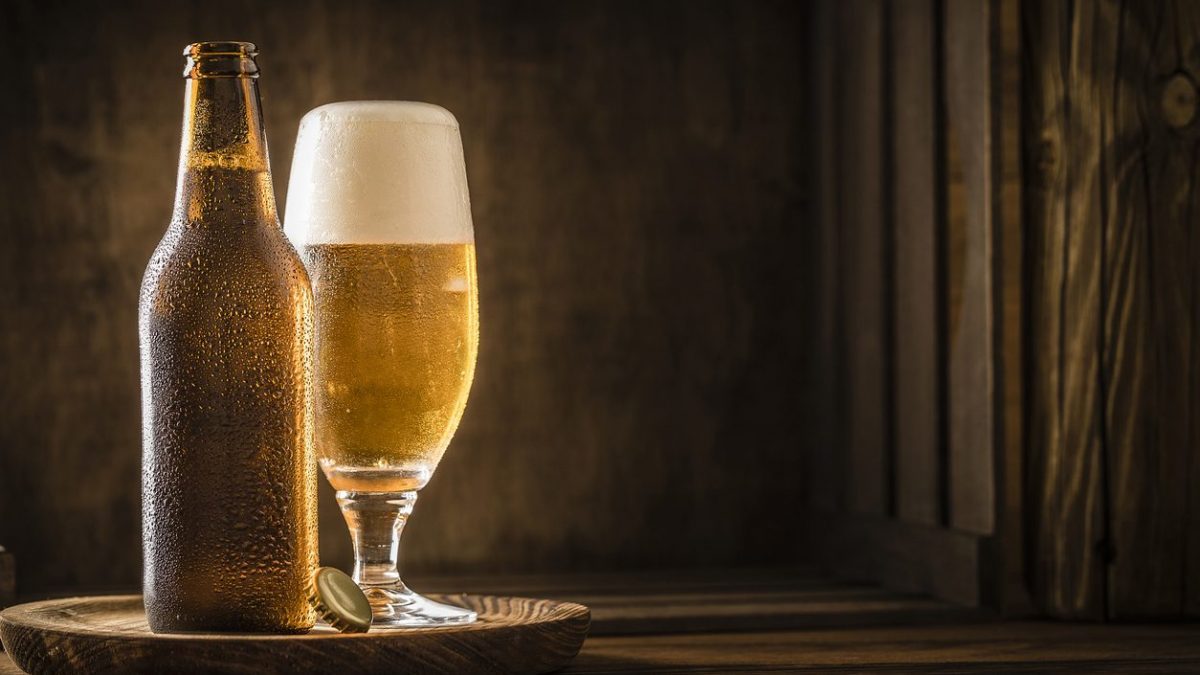
You're on a night out with friends, finally relaxing after a week of work. You order different beers, but you notice that the head of yours is much more "compact" than that of the other glasses. Why does this happen? What usually goes completely unnoticed has instead come under the scrutiny of scientists at the Swiss Federal Institute of Technology (ETH) in Zurich. They discovered what distinguishes beers that manage to maintain a denser and longer-lasting head from those in which this effect fades quickly. Publishing the results in Physics of Fluids, the discovery was significant: it doesn't just concern the "shape" of the head, but the physics that determines its stability and duration. Let's look together at all the steps taken by the scientists.
What the Seven-Year Study Says
Jan Vermant, research coordinator and professor of soft materials physics at ETH Zurich, asked a Belgian brewer several years ago how beer production was controlled. The brewmaster revealed that everything was controlled by observing the foam. It was from that answer that Vermant and his entire team of scientists began analyzing the physical forces and protein structures that prevent foam from "collapsing" and thus quickly disappearing from the mug.

The study conducted by the scientists was far from simple; the research lasted over seven years, but the essential answer to this dilemma has finally come to light. To fully understand why some beers maintain a more stable head, the researchers began studying the proteins present in malt, in particular a protein called LTP1. This protein is in fact considered the main factor responsible for the formation of the so-called head cap. During fermentation, LTP1 radically changes structure: in some beers, it breaks into smaller fragments that behave like "surfactants": essentially, some of the molecules "love" water, while others repel it. This characteristic allows the fragments to arrange themselves around the gas bubbles, forming a more solid membrane, capable of resisting rupture for longer.
There is a Clear Hierarchy Between the Types of Beer Examined
The researchers clarified that there is no single rule that explains the stability and duration of the head. Each beer style, in fact, has a different physical mechanism that allows the reactions subsequently analyzed. They sampled Tripel, Dubbel, and Singel beers, and a clear hierarchy emerged. Tripels are the most stable, followed by Dubbels, and lastly Singel, which have a less long-lasting head due to their lower alcohol content and lighter fermentation. In this case, therefore, the dynamism of fermentation favors the formation of protein fragments that make the head "longer-lasting." For this reason, some beers seem to maintain a compact head for several minutes while others lose it after a few seconds.

But if you thought the study ended there, you're wrong. Beyond protein chemistry, a more complex physical phenomenon also comes into play: the Marangoni effect, and we'll try to explain it very simply. Essentially, when tension differences are created on the surface of the beer, microscopic flows are generated that continually redistribute the protein fragments and strengthen the "film" surrounding the bubbles. In other words, the foam "self-repairs" as it forms, counteracting the natural thinning of the liquid film that would normally lead to its collapse.

In short, the heart of the discovery lies right here: scientists have managed to identify which mechanism prevails in each beer style: viscoelasticity of the liquid film, protein structure and Marangoni effect.
Therefore, as we mentioned earlier, there is no single formula that applies to all beers, but rather a true conceptual map of the processes that determine why the head vanishes immediately in some beers and lingers for several minutes in others. This result could open up new possibilities for breweries, who, with this research, will be able to optimize production processes, modify ingredients or fermentation times, observing whether a beer is following the desired path. In conclusion, what for many is an aesthetic detail is actually one of the most reliable indicators of a beer's quality. And the next time you notice that white head is more compact than usual, you'll know it's not just a question of style, but of physics and chemistry combined.
;Resize,width=767;)
