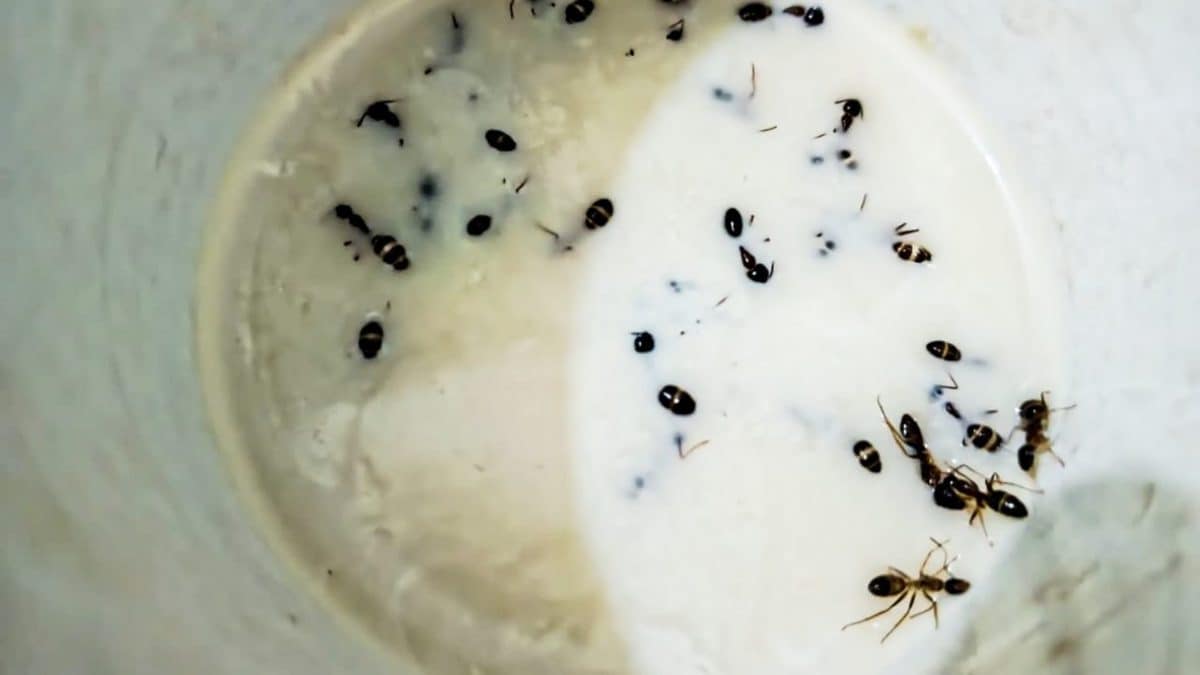
Some will be shocked, others will be simply curious, and still others will be fascinated. In any case, it's not the first time the world of food has intertwined with that of insects, because many say it's "the food of the future": in reality, we can also say it's that of the past. Making yogurt with ants, in fact, isn't a recent experiment, but an ancient method still used today in some rural areas of Turkey and Bulgaria. Now, a team of experts has shown in detail how insects —ants in this case—can help ferment milk, turning it into yogurt.
How The Research Was Conducted
Some might cry foul, thinking that this is yet another provocation of extreme haute cuisine, but before the advent of the modern food industry, it was very common to use insects in fermentation processes. For this reason, a team of food technologists and anthropologists, coordinated by microbiologist Veronica Marie Sinotte of the Department of Food Science at the University of Copenhagen, attempted to ferment milk using live ants, publishing the results in the scientific journal iScience.
To do so, the researchers traveled to a Bulgarian village belonging to co-author and anthropologist Sevgi Mutlu Sirakova, where they documented and recovered the traditional recipe, passed down orally from generation to generation. The process was replicated by placing four live ants in warm milk, then leaving the container to ferment inside an anthill, which functioned as a sort of natural incubator thanks to the heat generated within, the researchers explain. The jar was recovered after a day: the milk had acidified and, when tasted, "had a slightly acidic flavor with a slight herbaceous note and pronounced flavors of pasture-raised animal fat," the experts explain.
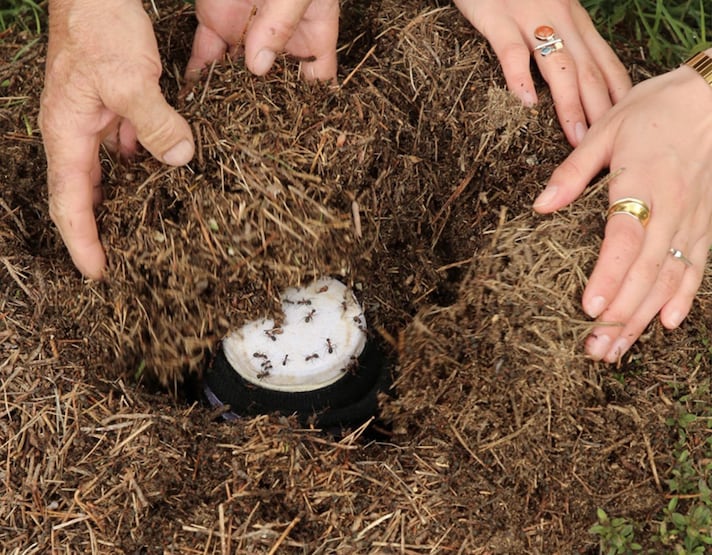
The experiment was conducted with both live ants and frozen and then dehydrated ants: although both aided the process, the latter did not develop the same microbial community as the live ones. The research team also emphasized the need for caution when replicating the method at home: ants can carry harmful microorganisms and render the yogurt inedible and dangerous.
How Ants Contribute to Fermentation
It's interesting to understand the specific role of these tiny insects in the milk. Scientists refer to a holobiont, a biological system comprising an organism (such as animals or plants) and all the microorganisms that live with it. In the case of ants, this system introduced lactic acid and acetic acid bacteria into the liquid, which are essential for fermentation: these microorganisms convert milk sugars into acids, creating the creamy texture and characteristic flavor of yogurt.
Added to this is formic acid, a substance naturally produced by ants as a defense mechanism, which helps lower the pH and create an ideal environment for fermentation. Furthermore, particular types of enzymes capable of breaking down milk proteins have also been identified, facilitating the transformation of milk into yogurt.
The Transition From Science to Cooking
The potential culinary applications of this process were explored with the team at Rasmus Munk's two-Michelin-starred restaurant Alchemist, known for its vision of combining science and cuisine. The result was a truly unique menu that included an "ant sandwich," consisting of an ice cream made from sheep's milk yogurt fermented with live ants; a mascarpone, made from goat's milk, in which dehydrated ants helped coagulate the liquid; and, finally, a milk-based cocktail, inspired by recipes already popular in the 17th and 18th centuries. Traditionally, these preparations involved curdling the milk with citrus juices, replaced, in this case, with dehydrated ants, which induce the milk's separation, altering its structure and flavor profile.
;Resize,width=767;)
