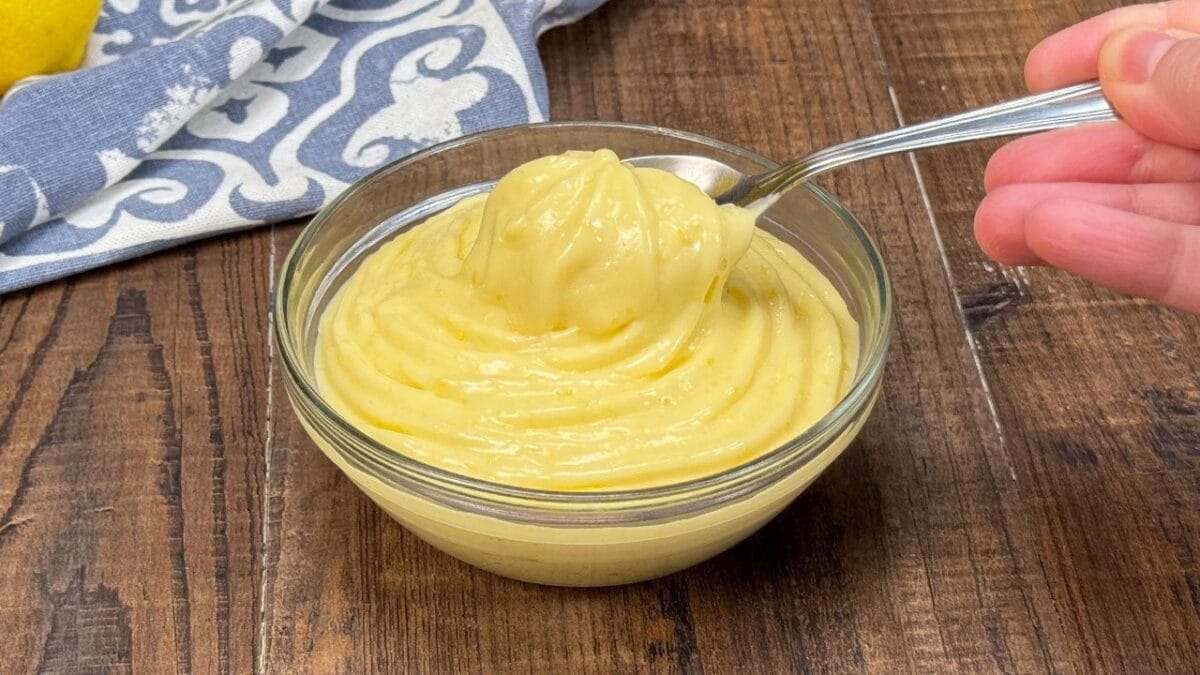
Some lemon creams are light and tangy. Others are rich enough to feel like a dessert all on their own. This French-style lemon cream brings both qualities together, combining the bright freshness of real lemons with an exceptionally smooth, buttery texture.
Inspired by the refined simplicity associated with French pastry, the recipe relies on eggs, sugar, lemon juice, and a generous amount of butter to create a luscious cream that melts on the tongue. It's wonderfully versatile, whether spooned into a tart shell, layered into pastries, or served in small dessert glasses.
What Is French Lemon Cream?
French lemon cream, often associated with crémeux au citron, is a rich citrus preparation used in professional-style pastry. Like lemon curd, it combines lemon juice, sugar, eggs, and butter, but its texture can be especially smooth and luxurious thanks to the generous proportion of butter and the way it is incorporated.
This version also includes gelatin sheets, which help the cream set more firmly after chilling. That makes it particularly useful for desserts that need to hold their shape, such as tart fillings and layered pastries.
Why Everyone Will Love This Recipe
The contrast is what makes this lemon cream so appealing. Fresh lemon juice delivers a lively citrus flavor, while butter softens its sharpness and gives the finished cream a beautifully silky consistency.
It also requires only a few ingredients and no oven. Once the custard base is cooked, the cold butter is blended in to create a smooth, glossy finish. The result feels sophisticated without requiring elaborate pastry techniques.
Tips for Making Perfect Lemon Cream
- Use fresh lemons. Freshly squeezed juice gives the cream its bright flavor, while finely grated zest adds fragrance. Avoid the bitter white pith.
- Watch the temperature. Cook the egg mixture gently, stirring constantly, until it reaches about 185°F (85°C). Excessive heat can cause the eggs to scramble.
- Add the butter cold. Cut it into small cubes and incorporate it gradually once the cream has cooled slightly. This helps create a smooth emulsion.
- Use an immersion blender carefully. Keep the blade submerged to avoid introducing too much air, and blend until the cream looks glossy and uniform.
Frequently Asked Questions
Is Alain Ducasse's Lemon Cream the Same as Lemon Curd?
Not exactly. Both use eggs, sugar, lemon, and butter, but this lemon cream contains a particularly generous amount of butter and added gelatin. The result is richer and more structured than many traditional lemon curds.
Why Does This Lemon Cream Contain So Much Butter?
Butter gives the cream its luxurious mouthfeel, balances the acidity of the lemons, and contributes to its smooth, silky texture. It is a defining feature of this rich French-style preparation.
Can You Make Lemon Cream Without Gelatin?
Yes, but the consistency will change. The cream may remain softer, making it better suited to spoon desserts or spreads than fillings that need to hold their shape.
Why Did My Lemon Cream Turn Grainy?
The eggs may have cooked too quickly, or the butter may not have emulsified properly. Gentle heating, careful temperature control, and blending the butter into a slightly cooled base help prevent graininess.
What Can You Use Lemon Cream For?
This cream is delicious in tart shells, éclairs, cream puffs, layered cakes, and dessert glasses. It also pairs beautifully with berries, shortbread cookies, and whipped cream.
Can You Make This Lemon Cream Without an Immersion Blender?
Yes. Add the cold butter gradually while whisking vigorously until the cream is smooth. An immersion blender generally produces a finer, more consistent finish.
How to Store
Transfer the lemon cream to a clean, airtight container and press plastic wrap directly against its surface to prevent a skin from forming. Refrigerate promptly and keep for up to 2 days.
Serve chilled or allow it to stand briefly at room temperature for a softer, creamier texture. Avoid reheating the finished cream, as excessive heat can affect its emulsion and consistency.
How to Freeze
Freezing is not recommended for this lemon cream. The butter-rich emulsion and gelatin can change texture after thawing, potentially leaving the cream grainy or watery.
For the best flavor and silky finish, prepare it fresh and store it in the refrigerator.
Ingredients
How to make Silky Lemon Cream Like a French Pastry Chef

Start by washing and drying the lemons thoroughly. Finely grate the zest, avoiding the bitter white pith, then squeeze and strain enough juice to measure 200 ml.
Start by washing and drying the lemons thoroughly. Finely grate the zest, avoiding the bitter white pith, then squeeze and strain enough juice to measure 200 ml.

Place the gelatin sheets in a bowl of cold water and let them soften according to the package instructions, usually about 5–10 minutes.
Place the gelatin sheets in a bowl of cold water and let them soften according to the package instructions, usually about 5–10 minutes.
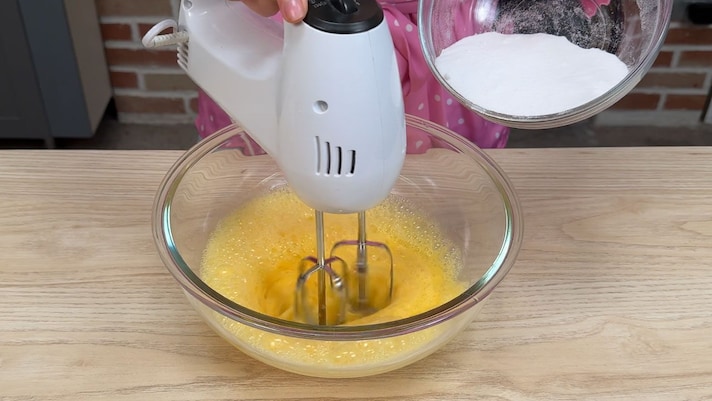
Crack the eggs into a mixing bowl, add the sugar, and whisk until the mixture becomes pale, smooth, and slightly frothy. Stir in the fresh lemon juice and finely grated zest until everything is evenly combined.
Crack the eggs into a mixing bowl, add the sugar, and whisk until the mixture becomes pale, smooth, and slightly frothy. Stir in the fresh lemon juice and finely grated zest until everything is evenly combined.
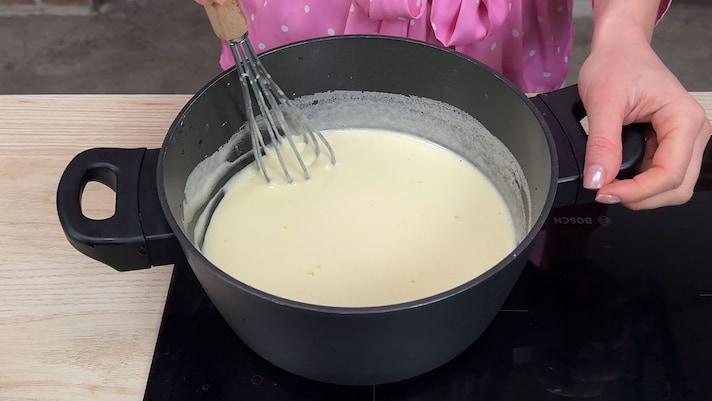
Pour the mixture into a heavy-bottomed saucepan and set it over low to medium-low heat. Cook gently, stirring continuously with a whisk or heatproof spatula, making sure to reach the corners and bottom of the pan. The cream will gradually thicken as the eggs cook.
Pour the mixture into a heavy-bottomed saucepan and set it over low to medium-low heat. Cook gently, stirring continuously with a whisk or heatproof spatula, making sure to reach the corners and bottom of the pan. The cream will gradually thicken as the eggs cook.
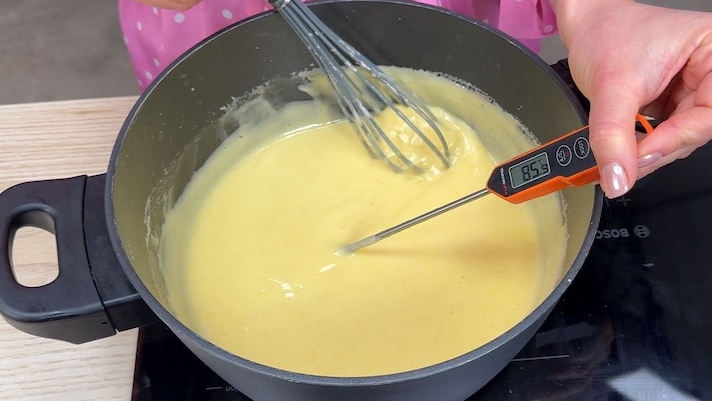
Continue cooking until the mixture reaches approximately 185°F (85°C) on a kitchen thermometer. Remove it from the heat immediately to prevent the eggs from overcooking.
Continue cooking until the mixture reaches approximately 185°F (85°C) on a kitchen thermometer. Remove it from the heat immediately to prevent the eggs from overcooking.

Squeeze the excess water from the softened gelatin sheets and stir them into the hot lemon cream until completely dissolved.
Squeeze the excess water from the softened gelatin sheets and stir them into the hot lemon cream until completely dissolved.

Allow the mixture to cool slightly, stirring occasionally. When it reaches approximately 105–120°F (40–50°C), begin adding the very cold butter, a few cubes at a time.
Allow the mixture to cool slightly, stirring occasionally. When it reaches approximately 105–120°F (40–50°C), begin adding the very cold butter, a few cubes at a time.
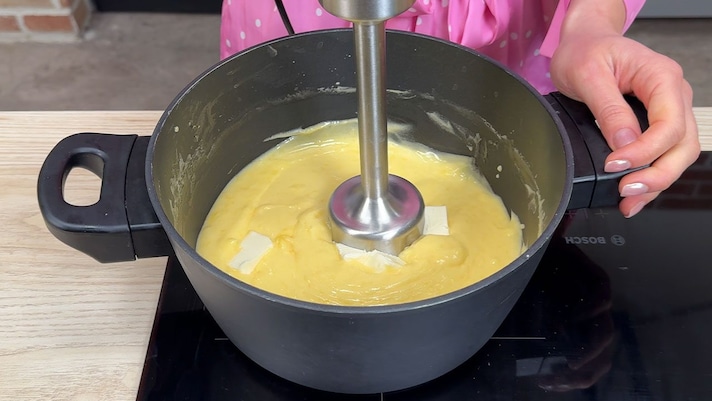
Blend with an immersion blender, keeping the blade submerged, until all the butter is incorporated and the lemon cream becomes thick, glossy, and perfectly smooth. If an immersion blender is unavailable, whisk vigorously as the butter is added gradually.
Blend with an immersion blender, keeping the blade submerged, until all the butter is incorporated and the lemon cream becomes thick, glossy, and perfectly smooth. If an immersion blender is unavailable, whisk vigorously as the butter is added gradually.
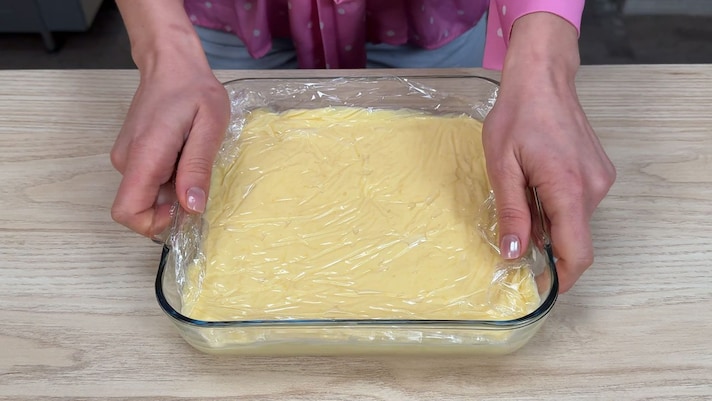
Transfer the finished cream to a shallow container and cover the surface directly with plastic wrap. Refrigerate for at least 1–2 hours, or until chilled and set to the consistency needed for serving.
Transfer the finished cream to a shallow container and cover the surface directly with plastic wrap. Refrigerate for at least 1–2 hours, or until chilled and set to the consistency needed for serving.
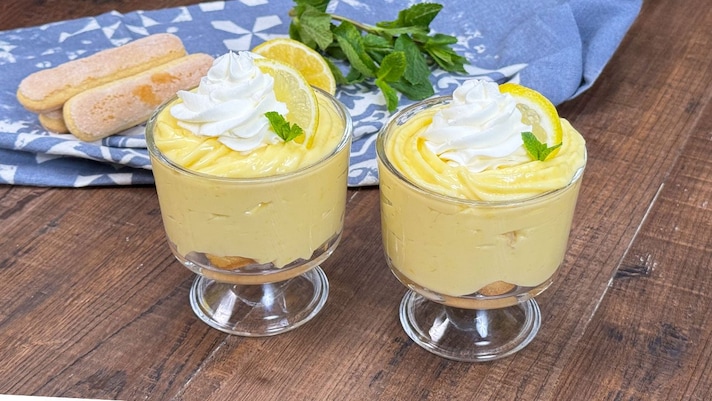
Once chilled, the lemon cream is ready to spoon into dessert glasses, spread into prepared tart shells, or use as a rich filling for homemade pastries.
Once chilled, the lemon cream is ready to spoon into dessert glasses, spread into prepared tart shells, or use as a rich filling for homemade pastries.


