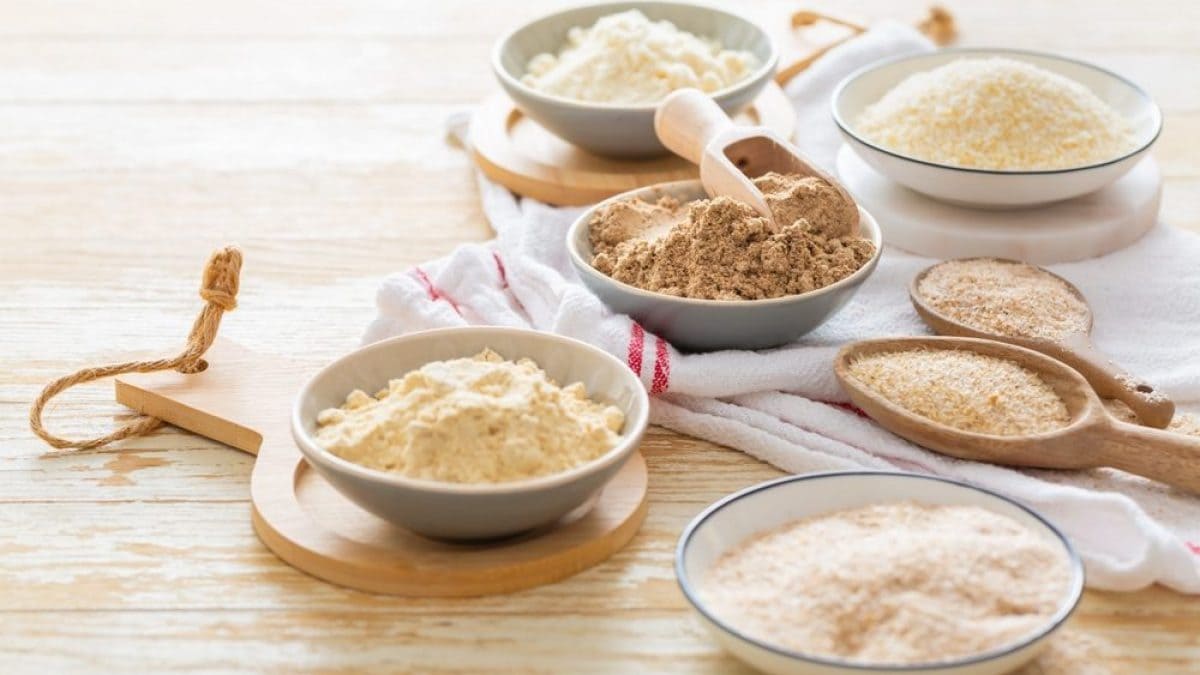
In recent years, supermarket shelves have seen a marked increase in gluten-free products, designed for those with celiac disease or gluten intolerance. Among these, gluten-free flours play a key role, offering valid alternatives to traditional all-purpose flour. Used in both sweet and savory preparations, these flours come in a wide variety and have very different nutritional and culinary characteristics.
Gluten is a protein that, when in contact with water, forms an elastic network that gives structure and softness to dough (like bread and pizza). It's thanks to gluten that dough rises well and holds its shape during baking. Those with celiac disease must completely eliminate gluten from their diet, as even small amounts can trigger an autoimmune reaction that damages the intestines. Gluten-free flours allow you to cook safely while maintaining flavor and variety, and to prepare many delicious and inviting gluten-free recipes.
Here's a detailed breakdown of gluten-free flours and how to best use them.
Gluten-Free Flours From Cereals and Pseudocereals
Not all grains contain gluten, and among the so-called pseudocereals, several are naturally gluten-free. Flours made from these ingredients are a valid alternative for those seeking versatile and nutritious gluten-free options. Here are the main ones:
- Rice flour. Among the most common, it is obtained by grinding the hulled grain: it is light, low in fat, and has a neutral flavor, ideal for all types of preparations such as desserts, pasta, bread, or biscuits.
- Amaranth flour. Derived from the seeds of this ancient plant, it is very rich in essential amino acids. Its intense flavor can be overwhelming, so it is recommended to mix it with more delicate flours like rice or quinoa.
- Corn flour. Often combined with polenta, it has a strong flavor and good protein content: it is also suitable for baking bread and focaccia.
- Quinoa flour. Excellent for those seeking a protein-rich, easily digestible food, it's perfect for savory recipes thanks to its legume-like flavor and low glycemic index.
- Millet flour. Less common but nutritionally very interesting, it's rich in vitamins A and B. Its delicate flavor makes it ideal for moist desserts like cakes and bundt cakes.
- Buckwheat flour. Despite its name, it's not a cereal but a pseudocereal. It has a rustic, bitterish flavor and is perfect for bread, fresh pasta, and crepes.
- Sorghum flour. Also known as "durra," it comes from the seeds of the sorghum plant and has a neutral flavor that makes it suitable for a variety of culinary uses, both sweet and savory.
- Teff flour. Whole grain, with a naturally sweet flavor, it is used for biscuits and flatbreads, as well as being a basic ingredient in injera, a typical Ethiopian bread.
- Oat flour. Rich in protein and slightly sweet, it's excellent for pancakes, cakes, and even savory dishes. Be careful though: it must be certified gluten-free, as it can be contaminated.
A note about oats. Although they don't contain gluten, their use is not recommended if they aren't guaranteed gluten-free (i.e., if the crossed-out wheat ear symbol isn't shown on the packaging). This is due to cases of secondary contamination: the crops or facilities where the grain is processed could come into contact with gluten from wheat ears.

Gluten-Free Flours From Legumes
Processing dried legumes yields naturally gluten-free flours, rich in plant-based proteins and fiber. Here are some of the most interesting:
- Chickpea flour. Widely used in Mediterranean cuisine for farinata and panelle, it's also excellent as a thickener in soups and cream soups. Rich in protein and minerals.
- Bean flour. Derived from dried beans, it has a strong flavor. It's best combined with other flours to tone down its intensity and improve workability.
- Lupin flour. High in protein, it has a neutral flavor and is often mixed with other flours for sweet or savory recipes.
- Lentil flour. Made from green lentils, it's an excellent source of protein, minerals, and complex carbohydrates. Excellent for homemade pasta, veggie burgers, or falafel.
- Pea flour. It has a bright color and a strong, distinctive flavor. It can be used in soups, breads, and savory dishes.
- Soy flour. Also called "vegetable meat" due to its extremely high protein content, it's perfect for bread, focaccia, and pizza.
- Fava bean flour. Obtained from dried beans, it has a good nutritional profile and is often used in baking in combination with other flours.

Gluten-Free Flours From Nuts and Seeds
Less common but highly prized for their taste and nutritional properties, these flours are often used to enrich sweet or savory doughs, combined with other, more neutral flours.
- Chestnut flour. Sweet and intensely flavored, it's one of the most versatile flours: excellent for gnocchi, bread, desserts, and even perfect for homemade.
- Coconut flour. More like a power ingredient than a true flour, it's very high in calories and is often used in small quantities in cakes and cookies.
- Pistachio flour. Fragrant and bright green, it's a refined choice for desserts and gourmet dishes. It's also excellent sprinkled on pasta dishes as an alternative to cheese.
- Almond flour. Very easy to make at home, it's perfect for desserts, cakes, and biscuits. Be careful: it's high in calories, so use wisely.
- Carob flour. There are two versions: one made from the pulp, similar to cocoa powder, and the other made from the seeds, used as a thickener for creams and desserts.
- Hazelnut flour. Genuine and flavorful, it's perfect for making rustic desserts, biscuits, and even flavored bread.
Beware of Fake Gluten-Free Products
Not all flours are suitable for celiacs. Some, such as kamut, spelt, barley, rye, and wheat, contain gluten, albeit in varying amounts. It's essential to always read labels and rely on certified products.
;Resize,width=767;)
