Roasting is one of the easiest and most useful cooking techniques for certain types of foods. It involves heating foods to high temperatures (sometimes up to 570°F/300°C), for a short time, and over high heat, without adding fat or other liquids. This allows roasted foods to release intense aromas, along with so-called bitter substances, making the product much more flavorful. It's no coincidence, for example, that coffee beans are roasted specifically to enhance their organoleptic qualities.
Not only that, but roasting dries out the liquids in foods and gives them their characteristic crunchy texture. It also releases the bitter substances within them, making them easier to digest. Roasting can be a very useful practice, but you need to learn how to do it perfectly. The high temperatures to which food is subjected always pose a risk of burning, which is definitely not good for you. What you want from roasting is its characteristic golden color and crunchy texture. How do you achieve perfect toasting without charring the food you're toasting, whether it's bread, nuts, or rice? Here's what you need to pay attention to and the most common mistakes to avoid.
General Mistakes to Always Avoid
Not all foods are suitable for toasting, and each of those that are suitable requires different precautions to avoid burning. Regardless of these two rules, however, there are some tips that always apply and that you should keep in mind to achieve perfect results.
In general, remember that:
- You shouldn't set the temperature too high or too low from the start of cooking: toasting food involves first exposing it to high heat and then lowering the heat; leaving the heat high throughout the toasting process will certainly burn it.
- You don't have to abandon the food you're toasting in the pan and devote yourself to something else, because the very principle of toasting involves rapid but intense cooking and frequent stirring, precisely to ensure you stop everything when you see that the product is golden brown to the right point.
- You shouldn't toast foods for too long: getting the timing wrong not only results in burnt food but also causes it to become too hard and not as pleasantly crunchy as it should be, thus ruining its consistency.
- You must use a nonstick pan, an essential tool for toasting because it prevents food from sticking to the bottom. Just remember that nonstick pans heat up much faster than traditional pans, so controlling the temperature and cooking time is essential to using the utensil correctly and achieving the perfect toasting.
Toasting Bread
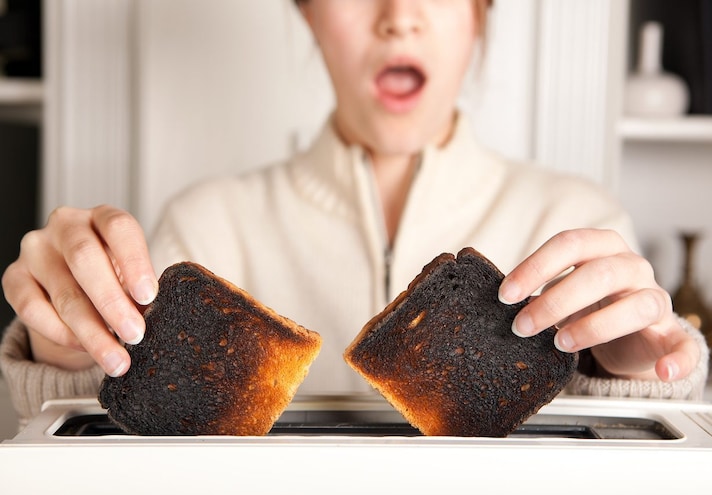
After discussing the general rules for toasting, let's analyze the foods that are best suited to toasting. Bread is one of the products we toast most often, and it's also the one that most often ends up burned, if not charred. How can you avoid this and instead get a nice, golden, crispy slice of bread? In this case, the rules and potential mistakes depend on the type of tool you use to toast the bread.
Using a toaster is the easiest and fastest way to make toast, because the appliance was designed specifically for this purpose. If you don't want to burn the bread, remember to use slices that aren't too thick or too high, otherwise the corners will tend to burn very quickly. The temperature, in this case, is preset by the appliance, but be careful how long the bread stays inside because it heats up, and therefore burns, very quickly.
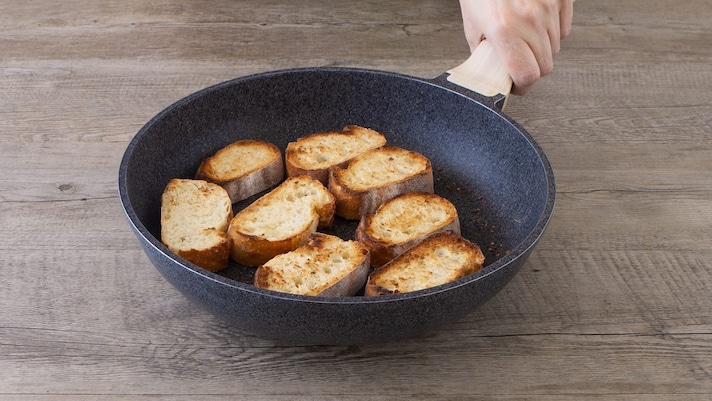
If you want to toast sliced bread for bruschetta or crostini, you can also use the oven: you can place it directly on the grill or on a lined baking sheet. In both cases, place them on the top rack and use the grill function. To avoid burning the bread, turn the oven on and preheat it to 350°F/180°C, then turn it off and place the slices of bread in the oven for 3 or 4 minutes per side.
You can also toast bread in a pan. In this case, the general advice we've given applies: use a non-stick pan, monitor the toasting constantly by adjusting the temperature, and turn the slices to ensure even cooking.
The final option, and the one that takes the longest, is to toast the bread on the barbecue: it's delicious, but it needs to be monitored constantly because, being cooked over an open flame, the risk of burning is even higher. To avoid mistakes, once the charcoal is lit, the key is not to position the grill too close to the coals, so that the slices of bread placed on top are in contact with the heat but not so close that they burn quickly; again, don't forget to turn the slices!
Toasting Nuts and Seeds
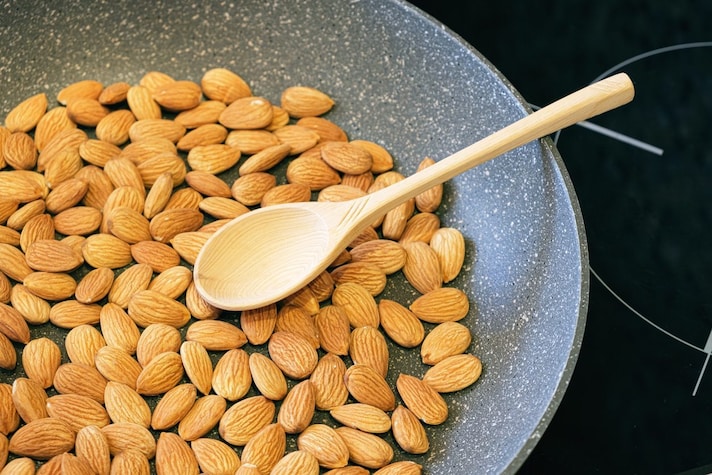
Roasting is a process that works for both nuts and seeds: much like coffee beans, nuts and seeds release their full aroma when roasted, becoming more flavorful and fragrant as well as crunchier. How do you toast nuts and seeds correctly? If you use the oven, remember to set it to a moderate temperature (210-250°F/100-120°C), spread them out in a single layer on a baking sheet lined with parchment paper, and stir frequently for even cooking. Alternatively, you can also use a pan: remember that it must be non-stick, the heat must be low, and you must stir constantly to prevent the nuts or seeds from burning.
Toasting Spices
Toasting spices is one of the most underrated cooking processes, but you should give it a try to discover just how beneficial it actually is: it's a great way to intensify their aroma, releasing their essential oils and enhancing the flavor of your dishes, but it's also a delicate process that risks ruining them if you're not careful.
First of all, remember not to toast pre-ground spices or spices added at the end of cooking, as it doesn't add anything to their aroma. Once you've chosen your whole spices, choose a perfectly dry cast iron or stainless steel pan and preheat it over medium heat: too high a heat will burn the spices and make them bitter.
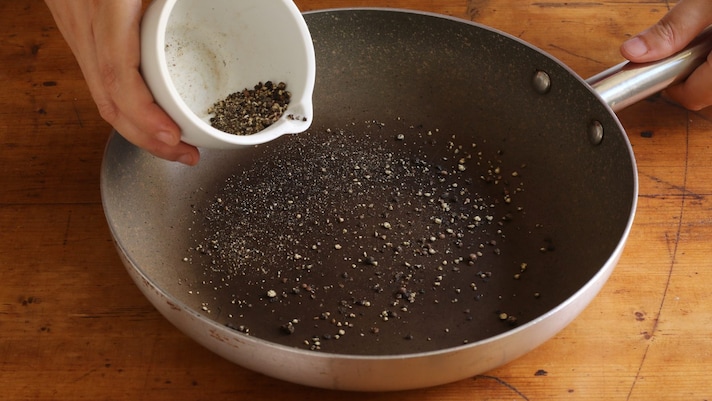
Add the spices only when the pan is very hot, and stir frequently with a wooden spoon. Not stirring them not only leads to a risk of burning, but also prevents even toasting. Finally, don't leave them on the heat for too little or too long; instead, check to see if they're ready by trusting your sense of smell: when you smell an intense aroma, a sign that the essential oils are being released, it's time to stop toasting. Remember that a well-roasted spice doesn't change color; it just has a more intense smell, so if you see it darkening, you're closer to burning than roasting.
Toasting Rice
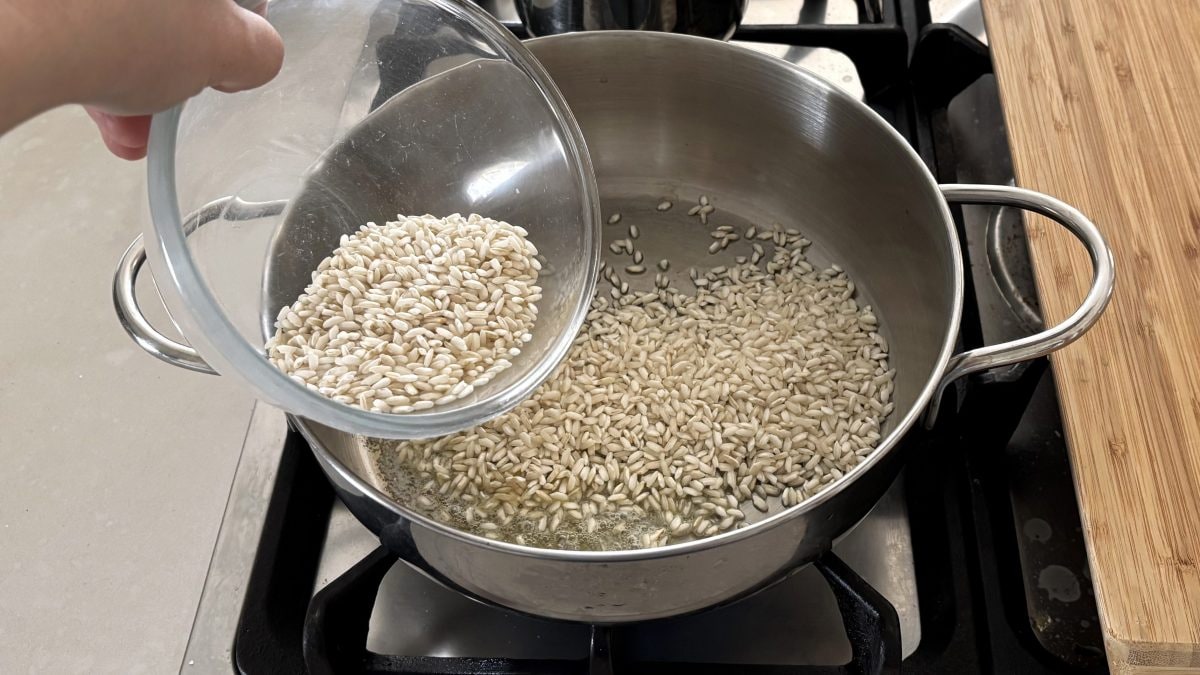
Risotto is a delicious main dish, but perhaps you didn't know that one of the secrets to getting it perfect is toasting the grains: toasting the rice is one of the three fundamental steps, along with stretching and stirring, to obtain a creamy risotto with just the right amount of grain. This is because, with toasting, the rice grains become more resistant and waterproof, preventing them from falling apart or becoming too soft during cooking. To toast the rice without burning it, use a saucepan with a thick bottom, stir the rice constantly and use a moderate or even medium-low heat; you don't necessarily have to use fats, but if you add them immediately (for example, butter or oil), be careful not to let them stick or overcook. Toasting the rice takes just a couple of minutes: it's toasted when it becomes slightly translucent; if it starts to darken, however, it's about to burn.

;Resize,width=767;)
