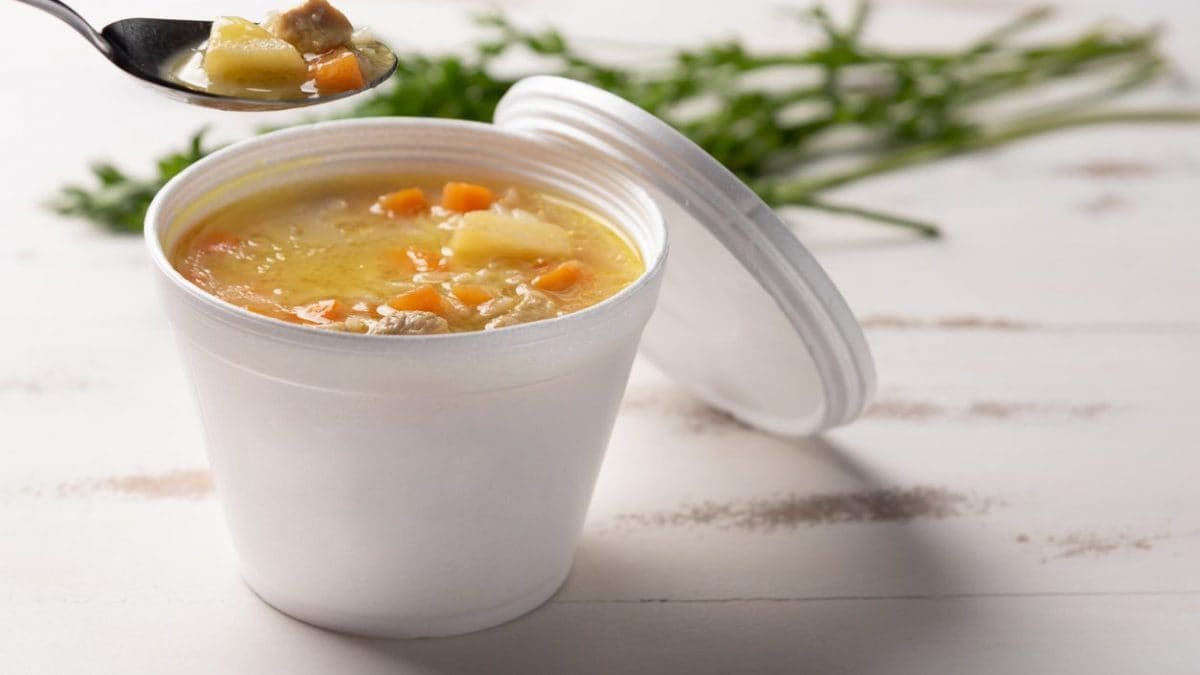
Between work, family, and various daily commitments, we have less and less time to devote to cooking, and for this reason, the temptation to rely on ready-made meals and fast solutions is very strong. In this scenario, ready-made soups and frozen minestrone soups seem like a lifeline we can rely on, especially on the most "difficult" evenings when we're especially tired. After all, we're still talking about vegetables, legumes, and sometimes grains—healthy ingredients that should be included in a varied and balanced diet.
However, we must not forget that these are industrial products and that they may contain ingredients that we should limit, or better yet avoid, as much as possible: high amounts of salt, flavorings, preservatives, thickeners, very low-quality oils, and other substances used to improve flavor and extend shelf life. So are these products bad for our health and should we eliminate them from our diets altogether? The answer, as often happens in the nutritional field, is: it depends.
With the help of our trusted expert, biologist and nutritionist Simone Gabrielli, we'll try to understand how to read the labels of soups and minestrone soups, to understand what they really contain, the risks of habitual consumption and, above all, how to learn to choose them consciously.
Are Ready-Made Soups and Frozen Minestrone Good or Bad For You?
The short and honest answer is: it depends on the product and how often we consume them. "They're not ‘junk food' by definition," Gabrielli explains. "They can be a practical solution when you don't have time to cook, and in some cases, they're more nutritionally decent than you might think. But they're not even the equivalent of homemade soup."
The real difference lies in the ingredients, their degree of processing, and their salt content. Generally speaking, ready-made soups and minestrones can be a good strategy for increasing fiber and vegetable intake where they are lacking, but it's important to pay attention to what you're buying and carefully read the ingredient list and nutritional information.
Many ready-made soups in the refrigerated section, for example, undergo pasteurization processes which, while ensuring the product is food-safe, also make it nutritionally poorer by reducing the availability of some thermolabile vitamins, such as vitamin C. Furthermore, to make these dishes more palatable, the industry often adds sugars, modified starches, or low-quality fats.
Therefore, they are not harmful in themselves, but an exclusive and unaware consumption of these foods can contribute to nutritional deficiencies and an excess of sodium, and in the long term be harmful to health.

What's in Ready-Made Soups and Frozen Minestrone?
Although seemingly similar, ready-made soups and frozen minestrone soups are actually two very different products, both in terms of ingredients and nutritional value. Therefore, a distinction must be made: frozen minestrone soups are generally made with pre-cleaned and chopped vegetables, and sometimes legumes and grains. They do not contain seasonings, added fats, or salt, except for those versions that are already "seasoned."
"Nutritionally speaking, they're simply frozen vegetables, and freezing is a preservation method that retains vitamins and minerals quite well. In fact, it makes little sense to ask whether fresh or frozen are better: the difference is made by the list of ingredients, not the storage temperature," explains the expert.
Ready-made soups vary considerably in composition, and the ingredient list can be quite extensive. They can contain vegetables, legumes, grains, but also vegetable oils, salt, flavorings, preservatives, and sometimes thickeners, stabilizers, or modified starches. The key is to understand how much salt they contain, whether fat has been added—and if so, in what quantity—and whether sugars or additives are present.
"The problem with additives isn't that they're dangerous in themselves, but if they're there, it means they need to correct something, perhaps a poor-quality ingredient or the flavor," the nutritionist points out. Of course, it's also worth noting that not all ready-made soups are the same: some have very clean ingredient lists, others decidedly less so, so it's important to learn to read labels carefully and consciously.
So, who wins the competition? The top spot goes to a simple frozen minestrone, made with just vegetables and nothing else: it's an excellent, practical, and convenient solution for those who are always on the go and have little time to dedicate to cooking. Salt and extra virgin olive oil are added only later in the cooking process, so they can be perfectly measured.
A ready-made soup made with simple ingredients and little salt can be an acceptable choice, and one that can be enjoyed occasionally. On the other hand, a very salty, oil-rich, and unclear ready-made soup isn't a nutritionally appealing option and should be limited or avoided as much as possible.
"It all depends on how often you consume it," Gabrielli continues. "If you occasionally eat a ready-made soup with less-than-top ingredients, it's fine, but if you consistently prefer these to vegetable-only soups, then it starts to become a problem."

How to Choose Ready-Made Soups and Frozen Minestrone
To make a truly informed choice, the only solution is to carefully read the ingredients list, which must first and foremost be short and clear. There are several elements to pay attention to.
- Order of ingredients: these are listed in decreasing order of quantity and therefore a good product should always have vegetables only in first place (they should make up at least 50-60 percent of the total);
- salt content: the World Health Organization recommends not exceeding 5 grams of salt per day and some ready-made soups already contain half the daily dose in a single portion (aim for products with less than 0.6-0.8 grams of salt per 100 grams);
- Presence of fats: it's preferable that they be free, but if we have no other choice, we should opt for products made with extra virgin olive oil, but in small quantities; avoid those with generic labels like "vegetable oils" or those containing cream and butter to give them a creamier texture;
- Additives and sugars: Added to preserve and improve the flavor, color, and texture of food, they should be avoided altogether; a good product, made with quality ingredients, doesn't need added sugars or flavor enhancers to be tasty.
What should a good ingredients list include? "Ideally, it should contain vegetables, legumes, grains, extra virgin olive oil (in small quantities), and salt; less ideal is the presence of generic flavorings, unnecessary thickeners, added sugars, and unspecified vegetable fats."
When we see monosodium glutamate among these, we put the product in question back on the shelf or in the refrigerated/frozen section: it is a flavor enhancer used to mask the poor quality of the raw materials used or the lack of flavor of the vegetables themselves; the same goes for dextrose and glucose syrup, sugars used to make the product even more appetizing, and modified starches, useful for giving a creamy and velvety texture even when the actual percentage of vegetables is low.
In conclusion, simple frozen minestrone soups are often a practical and nutritionally sound choice, excellent for our hectic daily routines. Ready-made soups are a bit different: they're not an absolute evil and can be fine, but labels should be read carefully. "It's not whether they're ‘ready-made' that makes them good or bad, but how processed they are, how much salt they contain, and how simple the ingredients are," concludes Gabrielli.
As always: a simple, well-formulated product is better than a seemingly “artisanal” alternative that's full of hidden salt and fat.
;Resize,width=767;)
