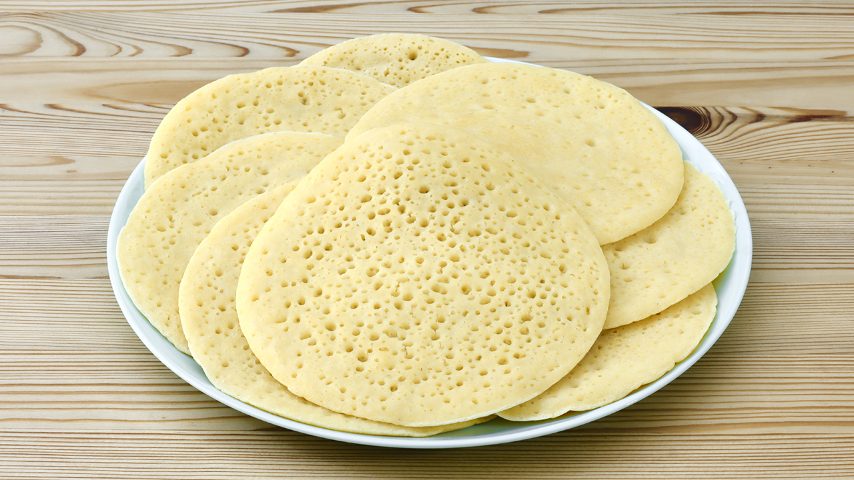
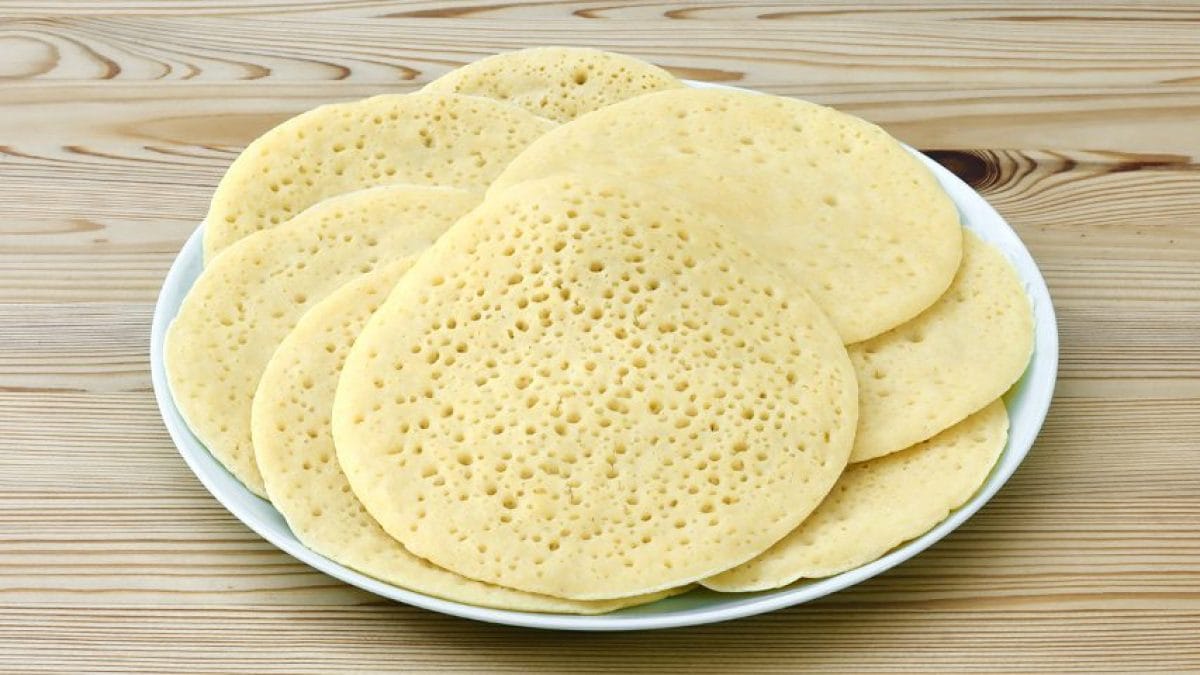
These Moroccan pancakes, which are recognizable by their signature constellation of tiny holes, are made from a simple batter. The batter is a mixture of semolina, a touch of flour, and yeast mixture. Then, the baghrir cooks on just one side, creating a sponge-like surface that eagerly soaks up whatever you drizzle on top. It thrives as a dish during breakfast, a tea-time spread, or as a light dessert.
What Is Baghrir?
Baghrir is a traditional Moroccan pancake often nicknamed “the thousand-hole pancake,” and yes, that’s not an exaggeration. Unlike typical pancakes, baghrir is cooked on only one side. Also, the holes on this dish aren’t just decorative, but they’re functional, acting like tiny pockets ready to absorb honey, syrup, or melted butter. Traditionally served during occasions like Ramadan, baghrir has become a symbol of comfort and hospitality.
Pro Tips for the Best Baghrir
- A smooth batter is essential. Any lumps will interrupt the formation of those iconic holes.
- Remember that medium heat is recommended because high heat will cause the bottom to cook quickly before holes form.
- A non-stick pan is non-negotiable. Baghrir cooks on one side only, so easy release matters.
- Don’t spread the batter too thin. A slightly thicker layer helps create deeper, more defined holes.
- Let each piece cool slightly before stacking to prevent sticking.
Frequently Asked Questions
Can I make baghrir without yeast?
Yeast is responsible for the airy structure and those signature holes. Without it, you’ll end up with something closer to a standard pancake.
Why are my baghrir not forming holes?
This usually comes down to heat or batter consistency. If your pan isn’t hot enough, bubbles won’t form properly. Also, check that your batter is smooth and not too thick.
Can I use only flour instead of semolina?
Semolina is what gives baghrir its unique texture. Using only flour will change the structure completely, making it softer and less porous. It may still cook, but it won’t have the same identity.
Is baghrir sweet or savory?
The base itself leans neutral, with just a hint of sweetness from sugar. This makes it flexible, and you can pair it with sweet toppings like honey or go in a savory direction with cheese or spreads.
Why is my baghrir sticking to the pan?
This often means your pan isn’t truly non-stick or hasn’t heated properly. A well-heated non-stick surface should allow easy release without oil.
How to Store Leftovers
Once cooled, stack them with parchment paper in between and keep them in an airtight container. At room temperature, they’ll last a day, and in the fridge, up to three days. Reheat gently in a pan or microwave, and just enough to warm them through without drying them out. You can also freeze them for longer storage.
Ingredients
How to Make Baghrir
;Resize,width=712;)
In a bowl, mix semolina, all-purpose flour, baking powder, and salt.
In a bowl, mix semolina, all-purpose flour, baking powder, and salt.
;Resize,width=712;)
In a separate bowl, pour in lukewarm water. Add the yeast and sugar, then stir until dissolved.
In a separate bowl, pour in lukewarm water. Add the yeast and sugar, then stir until dissolved.
;Resize,width=712;)
Add the dry ingredients to the liquid mixture, and whisk until the batter is smooth and lump-free. Allow the batter to sit for 15 minutes.
Add the dry ingredients to the liquid mixture, and whisk until the batter is smooth and lump-free. Allow the batter to sit for 15 minutes.
;Resize,width=712;)
Place a non-stick pan over medium heat. Pour a ladle of batter into the pan and gently spread it.
Place a non-stick pan over medium heat. Pour a ladle of batter into the pan and gently spread it.
;Resize,width=712;)
Once the surface is covered in holes and the color looks even, it’s done.
Once the surface is covered in holes and the color looks even, it’s done.
;Resize,width=712;)
Stack them up and serve.
Stack them up and serve.
;Resize,width=767;)
