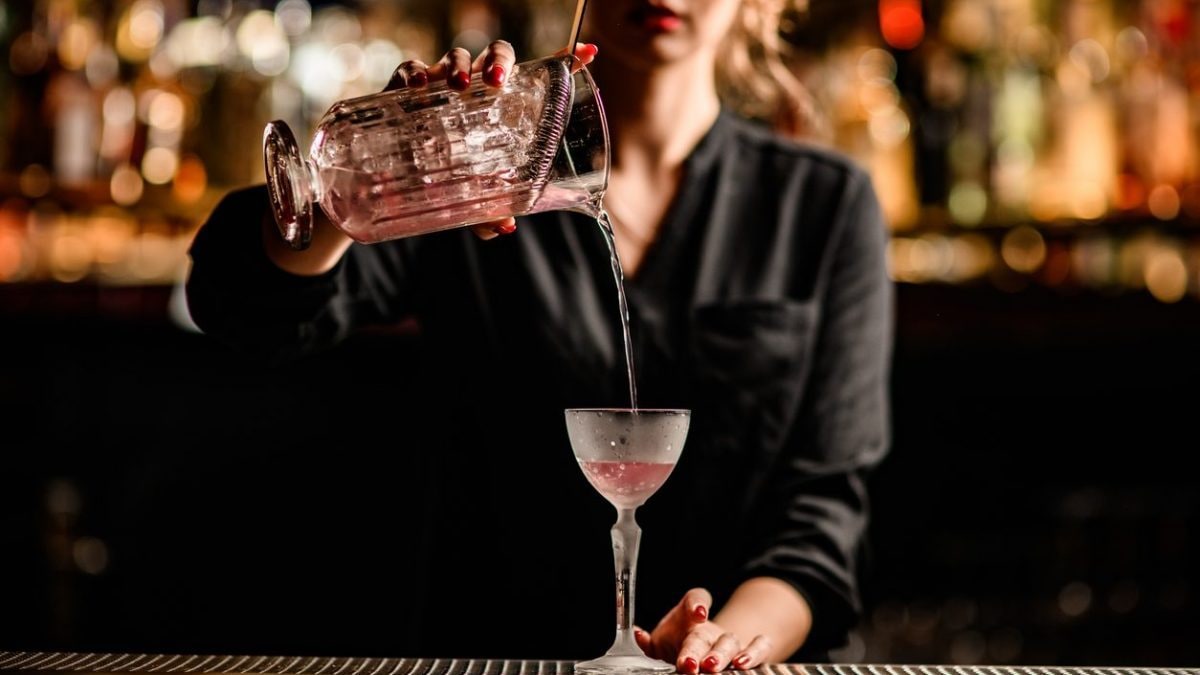
Thanks to an ever-increasing fascination with the world of cocktails, everything that revolves around a bar counter becomes a source of curiosity, including who works behind it. Barista, barman, and bartender are terms you've probably heard countless times, perhaps overlapping, used synonymously by those who have to refer to them, in whatever context they may be. In reality, these are roles with diverse nuances, with differences relating to the field they work in, the style, and the imagery they evoke. Let's get to know them better.
Barman, Barista and Bartender: What's The Difference?
"Shall we go to the bar?": a phrase that encompasses multiple alternatives, depending on the time of day. We have breakfast in the morning with a cappuccino and croissant, and a sandwich for lunch; in the evening we have an happy hour, and after dinner, we sip a few more drinks until late. We're talking about places like cafes or cocktail bars, but also counters found inside hotels and nightclubs. And, there will always be someone in front of us to serve us. Let's see who.
Barista, an Italian Icon
Let's start with the most commonly used term in Italy for those who work at the bar: the barista is a classic figure, a restaurant worker associated with more traditional activities, particularly those related to daytime coffee service, although his role can also be understood as a translation of barman or bartender. In the most general sense, he is the one who prepares coffee, cappuccinos, and small delicatessen items, who serves drinks and prepares simple aperitifs. But be careful: between latte art and specialty coffee, there's nothing banal here.

Barman, a Retro Charm
A widely used English word since the 1980s and 1990s, it refers to a typical beverage figure, an expert in making cocktails, including non-alcoholic ones, with a classical, old-school education. It literally means "bar man," with a gendered connotation: for this reason, feminine variants such as barlady, barmaid, or barwoman exist when the term is used by a woman. This term is especially used to refer to professionals who work in elegant lounge bars, hotels, and historic bars.
Bartender, Born in The USA
A term used internationally, it always refers to an expert in cocktails and long drinks: it is based on a style that comes from the United States, called American Bartending, which has established the contemporary rules for those who work behind the bar counter. In practice, both barmen and bartenders gravitate towards the world of nightclubs, with the former maintaining a retro allure, while the latter differs with a more modern approach, which involves greater speed and, at times, even a certain amount of spectacularity.

What About the Mixologist?
Within the cocktail world, he is a fine connoisseur of mixology, the art (and science) of mixing drinks. He ranks at an advanced level among bartenders, as his skills are characterized by an in-depth study of ingredients (spirits, bitters, infusions, spices, syrups, etc.), which leads him to seek out new combinations and techniques—a true experimenter.
;Resize,width=767;)
