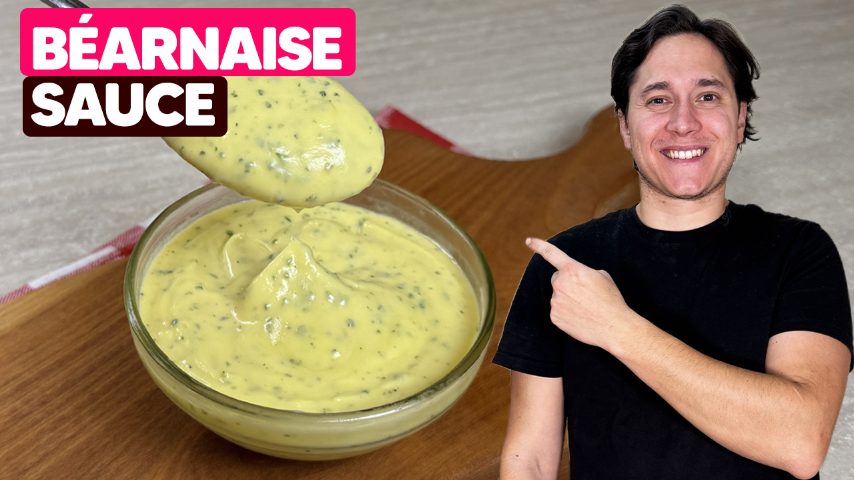
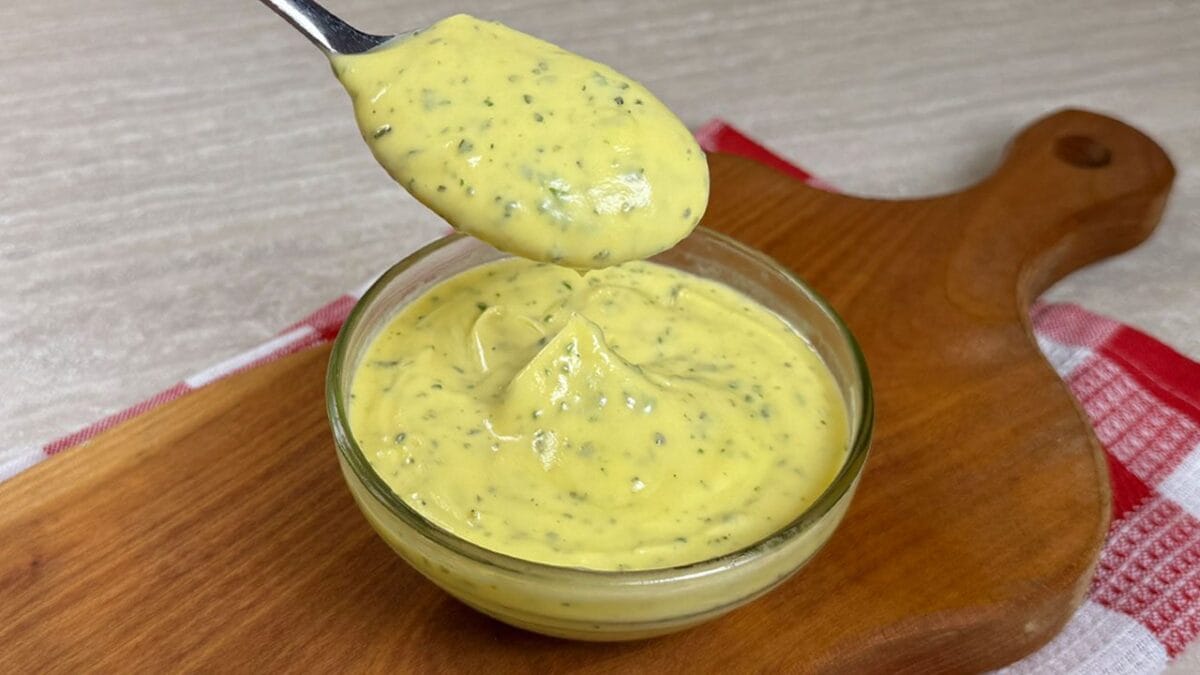
A perfectly cooked steak is delicious on its own, but a spoonful of homemade Béarnaise sauce can make it feel like something from a French restaurant.
Rich, buttery, and delicately tangy, this classic sauce gets its distinctive flavor from fresh tarragon, chervil, shallots, white wine, and vinegar.
The preparation begins with a fragrant herb reduction, followed by egg yolks gently whisked over heat. Clarified butter is then incorporated slowly to create a smooth, glossy emulsion.
The result is a luxurious French Béarnaise sauce with a creamy texture and a bright, aromatic finish.
Although the technique requires attention, the ingredients are simple, and the steps become much easier once you understand how the emulsion works.
Why Everyone Will Love This Recipe
The flavor is what makes Béarnaise so special. Fresh tarragon adds a delicate anise-like note, while white wine vinegar brings acidity that balances the richness of the butter.
Chervil contributes a gentle herbal freshness, and the shallot reduction gives the sauce additional depth without overpowering the other ingredients.
Another reason to love this recipe is its versatility. While Béarnaise is especially famous as a sauce for steak, it's also delicious with grilled fish, roasted vegetables, and other savory dishes.
And because the butter is clarified before being incorporated, the finished sauce has a smooth, refined texture.
It's an elegant preparation that can turn a simple meal into something memorable.
What Is Béarnaise Sauce?
Béarnaise sauce is a classic French emulsified sauce made with egg yolks, clarified butter, and a reduction of vinegar, wine, shallots, and herbs.
It's closely related to Hollandaise sauce, one of the five French mother sauces traditionally taught in classical cooking.
The main difference lies in the seasoning. Hollandaise is typically flavored with lemon juice, while Béarnaise uses a more complex reduction containing tarragon, shallots, and vinegar.
Béarnaise became popular in nineteenth-century French cuisine and remains a classic accompaniment to grilled meats, particularly beef.
Its signature ingredients are tarragon and butter, which create the unmistakable combination of herbal freshness and rich creaminess.
Despite its restaurant reputation, Béarnaise can be prepared at home with a whisk, a saucepan, and careful temperature control.
Tips for Making the Best Béarnaise Sauce
- Use gentle heat for the egg yolks. A bain-marie gives you more control than direct heat and reduces the risk of scrambling the eggs.
- Add the clarified butter slowly. Start with a thin drizzle while whisking continuously. Adding too much at once can cause the emulsion to separate.
- Reduce the wine and vinegar properly. Concentrating the liquid to about 1–2 tablespoons creates the characteristic tangy, aromatic flavor without making the sauce watery.
- Keep a little water nearby. If the sauce becomes overly thick, whisking in a teaspoon of water can help loosen it. If it has fully separated, however, a more thorough rescue may be needed.
Frequently Asked Questions
What Is the Difference Between Béarnaise and Hollandaise Sauce?
Both sauces are made with egg yolks and butter, but Béarnaise is flavored with a reduction of white wine, vinegar, shallots, tarragon, and other herbs. Hollandaise is generally simpler and traditionally uses lemon juice for acidity.
What Does Béarnaise Sauce Taste Like?
Béarnaise is rich and buttery with a pleasant tanginess and a distinctive herbal flavor. Tarragon gives it a subtle licorice-like aroma, while the vinegar and wine balance the richness.
What Is Béarnaise Sauce Traditionally Served With?
It's especially popular with grilled steak and other beef dishes. It also pairs beautifully with fish, asparagus, potatoes, and grilled vegetables.
Can You Make Béarnaise Sauce Without Tarragon?
You can make a similar butter-and-egg sauce using other herbs, but it won't have the characteristic flavor of classic Béarnaise. Tarragon is one of the defining ingredients.
Why Did My Béarnaise Sauce Split?
The sauce may have become too hot, or the butter may have been added too quickly. Both can destabilize the emulsion. Gentle heat and gradual incorporation of the butter are essential.
Can You Make Béarnaise Sauce Without Clarifying the Butter?
Some simplified recipes use melted whole butter, but clarified butter is the traditional choice and is specified in this recipe. Removing the milk solids and most of the water helps produce a more controlled emulsion.
How to Store
Béarnaise sauce is best prepared and served fresh. Its delicate emulsion and egg-based ingredients make it less suitable for extended storage than many other sauces.
For food safety, avoid leaving it at room temperature for more than 2 hours. If it won't be served promptly, cool it quickly and refrigerate it in a shallow, airtight container.
Use refrigerated leftovers within 24 hours as a conservative quality recommendation. Because this recipe uses gently cooked egg yolks, pasteurized eggs are a sensible choice, especially when serving people at higher risk of foodborne illness.
Reheating is difficult because excessive heat can cause the sauce to separate. If reheating, warm it very gently over a barely warm water bath while whisking, rather than placing it over direct heat.
How to Freeze
Freezing Béarnaise sauce isn't recommended.
The sauce is a delicate emulsion of egg yolks and butter, and freezing can cause its structure to break down.
After thawing, it may become grainy, oily, or separated, making it difficult to restore the original smooth texture.
For the best results, prepare the sauce fresh and serve it shortly after making it.
If you want to get ahead, prepare the herb reduction separately and refrigerate it until you're ready to finish the sauce.
Ingredients
How to Make Classic French Béarnaise Sauce

Begin by preparing the clarified butter.
Begin by preparing the clarified butter.
Cut the unsalted butter into small, evenly sized pieces and place them in a small saucepan over low heat.
Allow the butter to melt slowly without stirring aggressively. As it heats, a layer of white foam will form on the surface, while the milk solids begin to settle at the bottom.
Once the butter has melted completely and the layers have separated, carefully skim off the foam with a spoon.
Slowly pour the clear golden butter through a fine-mesh strainer, leaving the whitish milk solids behind in the saucepan.
Set the clarified butter aside and keep it warm but not hot while you prepare the rest of the sauce.
Next, make the tarragon and white wine reduction.
Peel the shallot and chop it very finely.
Pick the leaves from the fresh tarragon and finely chop both the leaves and tender stems. Finely chop the chervil as well.
Place the black peppercorns on a cutting board and crush them coarsely using the bottom of a heavy pan or a mortar and pestle.
The result should be a rough pepper mixture known in French cooking as a mignonette.
Combine the chopped shallot, 10 g of tarragon, 2 g of chervil, and crushed peppercorns in a small saucepan.
Pour in the white wine vinegar and dry white wine, using equal quantities of each.
Place the saucepan over medium-low heat and bring the mixture to a gentle simmer.
Allow it to reduce slowly until only approximately 1–2 tablespoons of concentrated liquid remain.
The reduction should be fragrant and tangy, with the flavors of the shallot, herbs, wine, and vinegar concentrated into a small amount of liquid.
Remove the saucepan from the heat and strain the mixture through a fine-mesh sieve, pressing the solids gently to extract the flavorful liquid.
Discard the strained solids and allow the reduction to cool slightly.

Cut the unsalted butter into small, evenly sized pieces and place them in a small saucepan over low heat.
Now prepare the egg yolk base.
Pour the strained reduction into a heatproof bowl or a small saucepan suitable for a bain-marie.
Add the 3 egg yolks and whisk until combined.
Place the bowl over a saucepan containing gently simmering water, making sure the bottom of the bowl doesn't touch the water.
Whisk continuously as the mixture warms.
The egg yolks will gradually become pale, frothy, and thicker, forming a light, airy base for the sauce.
Keep the heat gentle throughout this stage. If the bowl becomes too hot, lift it away from the steam briefly while continuing to whisk.
The goal is to thicken the yolks without allowing them to scramble. For a more reliable food-safety result, use pasteurized yolks, or heat the egg mixture to 160°F (71°C) while whisking continuously, taking care not to overcook it.
Once the yolk mixture has thickened, remove the bowl from the heat.

Allow the butter to melt slowly without stirring aggressively. As it heats, a layer of white foam will form on the surface, while the milk solids begin to settle at the bottom.
Begin incorporating the warm clarified butter, adding it in a very thin stream while whisking constantly.
Start slowly, allowing each small addition to blend completely into the yolks before adding more butter.
As the butter is incorporated, the sauce will gradually become thicker, smoother, and more glossy.
Continue whisking until all the clarified butter has been added and the mixture has formed a stable, creamy emulsion.
The finished sauce should be silky and spoonable, with enough body to coat food without feeling heavy or stiff.
If the Béarnaise becomes too thick, add 1 teaspoon of water and whisk gently to loosen it.
Season with fine salt, tasting carefully to balance the richness of the butter with the acidity of the reduction.
Finally, stir in the remaining 4 g of finely chopped fresh tarragon and 2 g of chopped chervil.
These fresh herbs add a bright finishing aroma that complements the deeper flavors developed during the reduction.
Give the sauce one final gentle stir, then serve immediately.

Once the butter has melted completely and the layers have separated, carefully skim off the foam with a spoon.
Spoon the homemade Béarnaise sauce over grilled steak, serve it alongside roasted fish, or drizzle it over asparagus and other grilled vegetables.
With its rich buttery texture, delicate acidity, and unmistakable tarragon fragrance, this classic French sauce is a beautiful way to elevate a simple meal.


