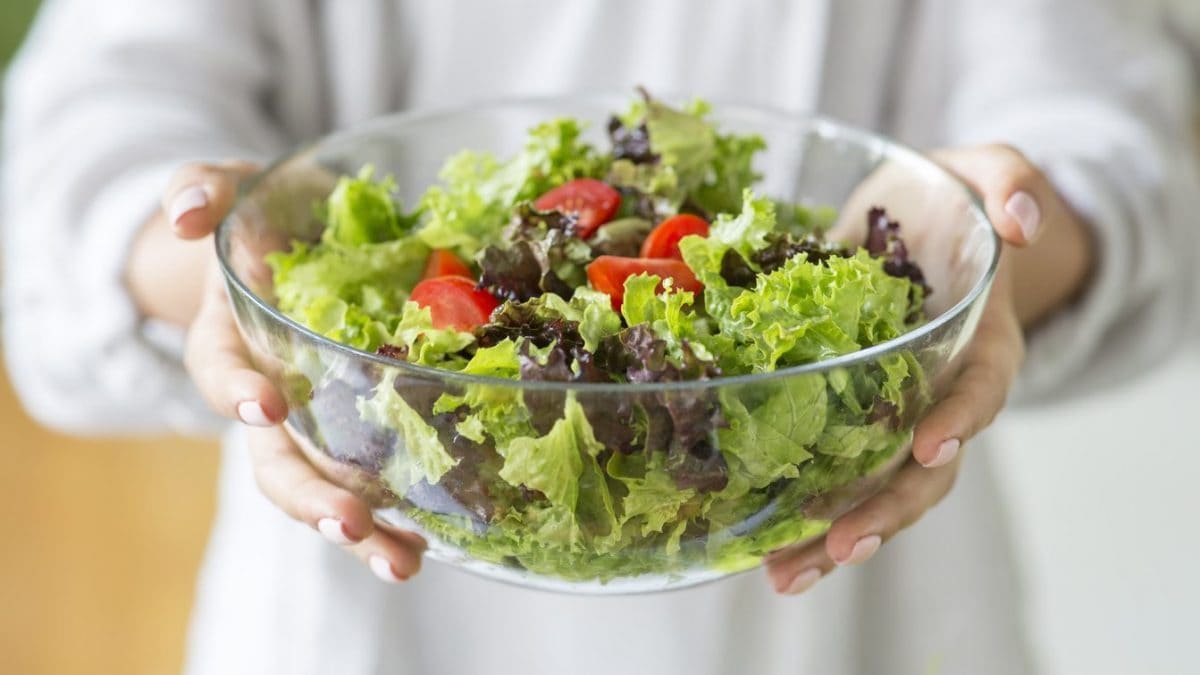
Fresh, crunchy, and incredibly practical, salad is one of the quintessential meal savers, especially on busy days: excellent alongside any meat, fish, or egg-based main course, it can also become a quick, complete, and nutritious one-pot meal. This is provided you pair it wisely, select it carefully, and consume it in the right quantities, following certain strategies.
Can you eat salad every day, and what's the maximum amount? Is it better for lunch or dinner, or at the end or beginning of a meal? We talked to an expert, who helped us shed some light on the topic.
The Benefits of Salad
The generic term "salad" refers, first and foremost, to green leafy vegetables. There are three types: lettuce , endive, and chicory (with a subcategory of radicchio). Among the best-known and most consumed, endive comes in many different varieties, each with its own unique characteristics: romaine, canasta, cabbage, iceberg lettuce, lollo lettuce, gentilina, pasqualina, and more. However, due to their high cellulose content, many people experience digestive problems.
Very crunchy and with a slightly bitter aftertaste, more pronounced than lettuce, the most commonly used endives are escarole, curly endive, and Belgian endive, which should be finely chopped with a knife. Chicories also include radicchio, both summer and autumn; these are more bitter greens, have a higher iron content, and are a powerful liver cleanser.
In addition to these, there are wild salads, wild herbs richer in antioxidants than cultivated ones, which can enrich dishes with ever-changing fragrances and nuances of flavor; examples include wild arugula, dandelion, nettle, borage, and so on. These can be added raw to salads or, once cooked, used to enhance risottos, frittatas, or savory pies.
With this necessary premise, it's safe to say that salad is undoubtedly a valuable ally for well-being and beauty. It's composed primarily of water, is very low in calories, and has a good fiber content. It also provides important micronutrients, such as folate, potassium, and vitamin K, which are essential for proper body function.
The high fiber content, combined with its water content, maintains regular intestinal transit, prevents constipation, and promotes satiety and digestion. This is particularly due to inulin, a prebiotic fiber that reduces intestinal gas production and combats gastritis and colitis. It also boasts excellent purifying and draining properties, essential for eliminating excess fluids and cleansing the body of waste and toxins.
A valuable source of antioxidants, it improves blood sugar regulation, helps prevent the onset of cancer, lowers bad cholesterol, and protects the cardiovascular system. This, like all vegetables in general, should never be missing from our diet.
Salad is ideal, especially if you're following a low-calorie diet and watching your weight: filling and pleasantly crunchy, it forces us to chew more, reducing appetite and making us feel very satisfied. A golden rule, in fact, is to start the meal, whether at home or at a restaurant, with a nice green or mixed salad: this will prevent us from overdoing it with the subsequent courses.

Is Eating Salad Everyday Really Good For You?
The answer is absolutely yes. "Eating salad every day is not only possible, but in many cases it can even be beneficial, especially on a low-calorie diet," explains the expert. Salads are rich in minerals and vitamins, micronutrients with a decisive antioxidant effect, fiber, and water, which contribute to regular intestinal transit, combat constipation and bloating, and help make meals satiating and satisfying.
Not only that: starting lunch or dinner with a portion of raw vegetables helps us to keep blood sugar levels more stable and to modulate insulin release more gently, preventing us from snacking or messing around during the rest of the day.
"That said, an important point needs to be made : we shouldn't think that eating salad every day automatically equates to ‘eating well,' "our expert points out. Salad is an excellent food, but it's not a complete food: it has a very specific and limited nutritional profile, so it shouldn't be the only vegetable in your diet.
To meet our vitamin and mineral needs, it's best to eat as much variety as possible, including a variety of vegetables, strictly seasonal and of different colors. "Fixing solely on salad—perhaps always the same one, like lettuce or iceberg lettuce—risks becoming an ineffective shortcut."
How and When to Eat Salad According to The Expert
If we want to transform the salad into a balanced and nutritious one-dish meal, the ideal is to pair it with a source of carbohydrates (such as whole wheat or spelt bread, a portion of potatoes, or even some rice), a source of protein with a high biological value (Category 0 eggs, tuna fillets, pre-cooked legumes, tofu, chicken, high-quality fresh cheeses), and a source of healthy fats, such as extra virgin olive oil, avocado, a few olives, and/or a mix of mixed seeds, such as pumpkin, sunflower, and flax.
"But be careful: dress it, yes, but don't drown it. Oil must be used wisely: a spoonful is more than enough. You don't need to turn the salad into a swimming pool to add flavor," the expert points out. Therefore, we can eat salad every day, but it shouldn't be the only vegetable in our diet and should be included in a complete dish, with balance and variety.
What's the right portion size? Obviously, there are no strict limits on the amount of salad you can consume: standard portions are about 80g for green leafy vegetables and 200g for raw or cooked vegetables, but these can vary depending on your diet and individual needs. "More than that isn't harmful, but for some people, excess fiber can cause intestinal bloating."
To preserve nutrients as much as possible, it's best to eat these vegetables raw. If you have digestive problems or suffer from intestinal irregularity, it's best to choose cooked vegetables. The feeling of heaviness and bloating could also be due to other mistakes, such as excessive use of extra virgin olive oil and other industrial sauces, or if the meal is consumed quickly, without proper attention and chewing.
This last aspect, too often overlooked, has a huge impact on our gut and overall well-being. When is the best time to eat salad? Obviously, there's no one meal better than another, so it depends on personal taste and preference. However, if you want to increase your feeling of satiety and control your appetite, it's a good idea to start with salad, then continue with proteins and carbohydrates: this way, we'll also be able to keep blood sugar levels more stable.
If, on the other hand, we want to transform it into a well-balanced and nutritious single dish, let's never forget to combine it with a portion of complex carbohydrates, a portion of noble proteins and a portion of good fats.

How to Make the Perfect Salad
To create a flawless, filling, and complete salad, and avoid some gross errors, here are the golden rules to follow:
- Start with a green base: choose the variety of salad you like best, such as lettuce, spinach, lamb's lettuce, radicchio, rocket… And try to vary it as much as possible, so that the meal is always different and satisfying, and never boring;
- Add a crunchy element: the crunch will give that extra twist to our salad, also making us feel fuller. Some examples? A few cucumber slices, grated carrots, diced celery, some watercress or broccoli sprouts;
- A touch of color: so some cherry tomatoes, strips of yellow pepper, radishes, a boiled and sliced beetroot. Mixing vegetables of different colors ensures that the antioxidant protection is exponentially greater than the sum of their antioxidant contents;
- Don't forget the protein source to make your meal truly filling and nutritious. Protein can come from both animal and plant sources, so you can opt for pre-cooked legumes like chickpeas or beans, organic eggs with firm whites and soft yolks, parmesan shavings, grilled chicken breast, jarred tuna, smoked wild salmon, feta, or primosale. Avoid canned meat, cured meats, and soft, fatty cheeses.
- for those who love contrasting flavors, you can add a handful of fresh fruit to the dish, such as strawberries, which go very well with goat cheeses and spinach, green apple, excellent with salmon or tuna, peach, delicious when paired with prawns;
- Fats: The advice is to avoid overdoing the dressing, to avoid slowing down digestion and making the salad a veritable calorie bomb. Consider using about a tablespoon of extra virgin olive oil per serving and, if desired, add another source of fat, such as a few cubes of avocado or a handful of mixed seeds. Avoid mixing more than two different types of fat: the heat and high temperatures would slow down the stomach's functioning.
- Other dressings: To enhance flavors, use lemon or orange juice, apple or pomegranate vinegar, as well as tamari sauce and umeboshi vinegar, two fermented products with excellent tonic and digestive properties. Avoid pre-made supermarket dressings, which are full of preservatives, stabilizers, and colorings. Alternatively, make a homemade dip with natural Greek yogurt or guacamole and use it to dress your salad.
- We harness the power of aromatic herbs, such as basil, mint, and chives, and for the savory component we use whole sea salt, preferably organic; rich in minerals, it is preferable to traditional refined or iodized salt.
;Resize,width=767;)
