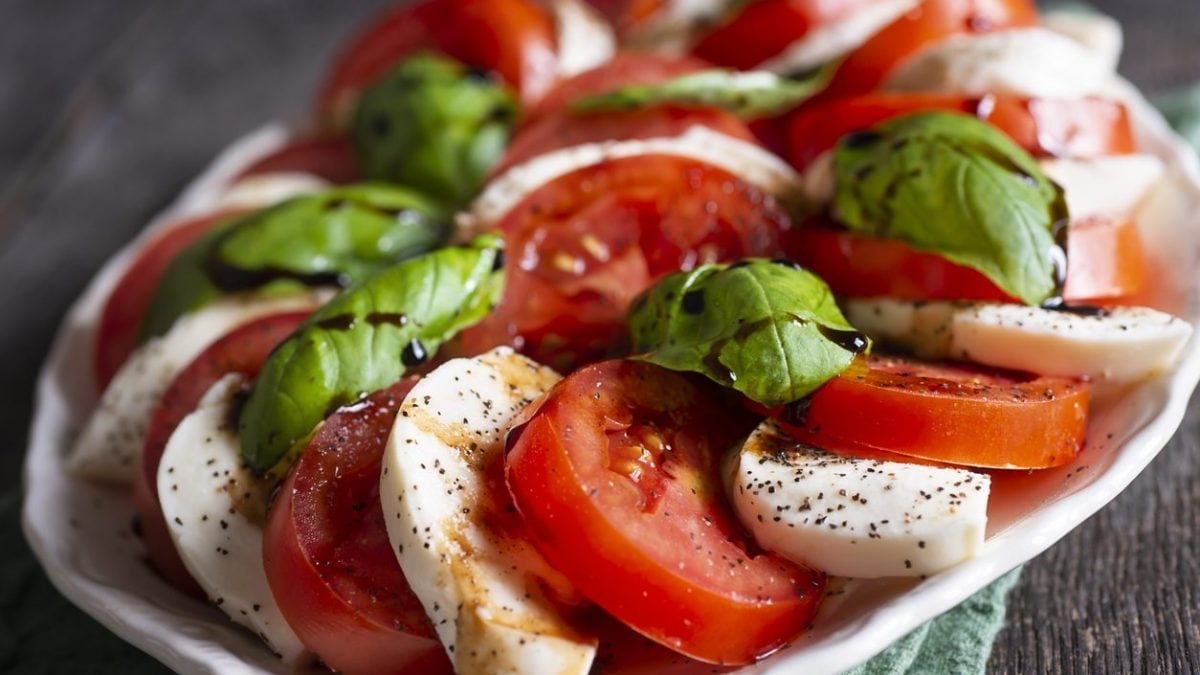
When the heat hits, the mere thought of turning on the stove puts us off cooking. It's on days like these that the caprese salad comes to the rescue with its simplicity. Tomato, mozzarella, basil, and a drizzle of olive oil: it almost seems banal, but instead it embodies the best of Italian cuisine, combining flavor, lightness, and conviviality. But who invented this iconic summer dish? Today, let's explore the history of the caprese salad through anecdotes, traditions, and transformations.
A Story of Myth, Identity and a Touch of Italian Avant-Garde
No cooking required, no special techniques, and no special culinary skills required, yet the caprese salad has nevertheless managed to enter the collective imagination as a symbol of our cuisine. Its colors are a tribute to the Italian flag, and somehow, simply placing it on the table brings instant cheer.
The origins of the caprese are shrouded in legend, and this very uncertainty makes it even more fascinating. It all revolves around Capri, where—according to one of the most widely accepted versions—in the 1920s a bricklayer asked for a sandwich celebrating the colors of the Italian flag: red tomato, white mozzarella, and green basil.
There is, however, another episode—unconfirmed by historical sources—that deserves to be told and that links the Caprese to the Futurist movement. In 1926, the famous Hotel Quisisana on Capri hosted a dinner in honor of Filippo Tommaso Marinetti, the father of Futurism, known for his personal war on pasta ("abbasso la pastasciutta!"). It seems that on that very occasion, amidst the enthusiasm for colors and innovative shapes, a tricolor dish of tomato, mozzarella, and basil was served: a small act of culinary rebellion, both modern and patriotic. We truly cannot understand Marinetti's hatred of pasta, but we can forgive him, considering that, at least in this case, he helped create not only a summer symbol, but also an aesthetic manifesto of Italianness projected towards the future.
But the real leap in popularity came in the 1950s, when the iconic salad won the heart (and palate) of King Farouk of Egypt, then in exile on Capri. He was apparently so enthusiastic that he ordered it every day, transforming what was once a simple island dish into an international phenomenon. From there, the caprese salad went from being a local idea to becoming a global superstar, making the rounds in trattorias and Michelin-starred restaurants, without ever losing its convivial, tricolor spirit.

Caprese Between Tradition, Creativity and Madness
What's surprising about caprese is its ability to be loved by everyone, despite being a no-cook dish. In Campania, you'll find it in different roles: some serve it as an appetizer, some consider it a main course, and some transform it into a main dish on hot days.
Over time, countless variations have developed around this simple dish. In addition to the classic version, some people like to pair it with anchovies, tuna, or bresaola, or they enjoy enriching it with olives and capers.
Imagination also runs wild when it comes to vegetables: in summer, Caprese salads with marinated raw zucchini or roasted eggplant are a hit, while the more imaginative can add dried fruit or try dried tomatoes. The reinterpretations don't stop there: for those following a vegan diet, there are plenty of versions based on plant-based cheeses, while those who are lactose intolerant can choose specific mozzarellas or replace the dairy product with parmesan for a stronger flavor, or similar. And what about pairings with fruit? In the most creative restaurants, you can find reinterpretations with burrata or fresh fruit, such as peaches or strawberries.
While these unusual and sometimes daring versions may be considered "heretical" by purists, the real question, the one that is fought every year at the table, is another: team fresh basil or team oregano? Which do you prefer?

How to Make the Most of Caprese Salad
There are no cooking rules here, but small preparation tips really make a difference. The cut must be calibrated: too thin slices will lose consistency, too thick will risk being heavy and unbalanced. The mozzarella must be very fresh, preferably freshly made, and should be allowed to drain for a few minutes before cutting to avoid the "flooded plate" effect. The tomato must be ripe but not overly so, fragrant, and with firm flesh: whether oxheart, ribbed, or datterino, the important thing is that it is seasonal and never bland.
Broad-leaf Neapolitan basil is the most typical, but as we mentioned, you can alternate (or add) a sprinkling of oregano. Choose a delicate, low-acid extra virgin olive oil so as not to overpower the other flavors. Remember: no vinegar, no refrigeration, and no advance preparation.

Caprese salad should be prepared and served at room temperature, freshly made, to maximize its aromas and textures. In short, quality ingredients, balanced cuts, and no excess: this way, even a seemingly simple dish truly delivers an explosion of flavor.
How to Plate it Elegantly for a Special Occasion
Caprese salad lends itself to a thousand playful combinations of colors and shapes. To wow your guests, you can arrange slices of tomato and mozzarella in a fan shape on a serving platter, garnish with fresh basil leaves, and add a drizzle of quality extra virgin olive oil. If you're feeling daring, try serving it in individual glasses or transforming it into finger food with mini mozzarella balls and cherry tomato skewers. For an even more spectacular version, opt for a deconstructed caprese salad: diced mozzarella, chopped cherry tomatoes, and a few drops of basil emulsion. The wow factor is guaranteed, even without cooking. After all, the real show is seeing who can resist mopping up the bread.

;Resize,width=767;)
