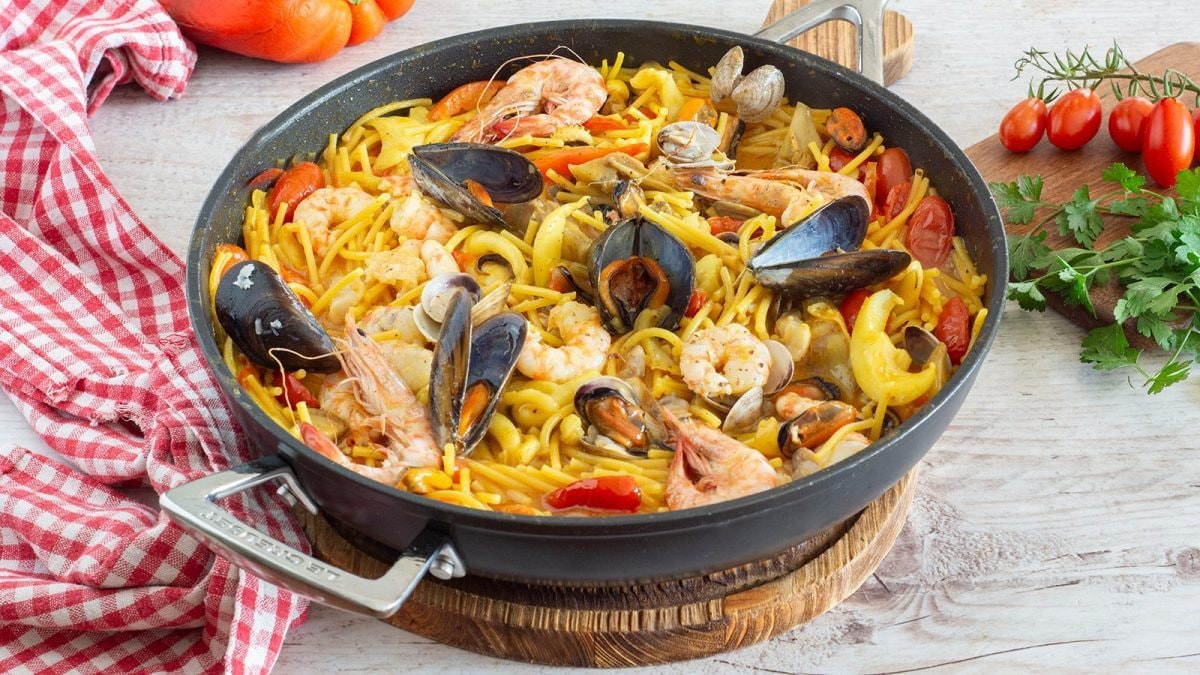
Fideuà Valenciana is a typical recipe, as the name suggests, from Valencia, a Spanish city already known for its characteristic paella. It is a rich and flavorful first course, in which rice is replaced by fideos, short, thin spaghetti, risottoed in a pan with fish stock, peppers, artichokes, cherry tomatoes, and cuttlefish, enriched with tomato paste and saffron, and then topped with shrimp, mussels, clams, and scorpionfish fillet.
The result is an incredibly fragrant seafood dish, a true explosion of colors and flavors, perfect to bring to the table, in the same pan used for cooking, for a Sunday lunch with the family or for a dinner with special guests.
Fideuà Valenciana Vs. Paella
Paella uses rice, traditionally short-grain varieties like Bomba or Calasparra, which absorb liquid while staying separate and slightly firm. Fideuà, on the other hand, swaps rice for short, thin noodles (usually a type of toasted pasta similar to vermicelli). The noodles soak up seafood broth in a different way, creating a texture that’s slightly denser and sometimes lightly crisped on top. While paella can feature everything from rabbit to chicken to shellfish, fideuà is most commonly associated with seafood along Spain’s Mediterranean coast.
Fideuà Valenciana Recipe Variations
You can customize the recipe as you like and vary the type of fish used in the sauce. For example, squid or calamari would work perfectly in place of cuttlefish; you can also add white-fleshed fish such as monkfish, grouper, cod, and so on. Depending on the season, you can enrich the sauce with fresh peas, asparagus tips, zucchini, carrots, and other vegetables of your choice.
Ingredients
How to Make Fideuà Valenciana

To prepare fideuà Valenciana, start by cleaning the clams. If you didn't buy them pre-cleaned, place them in a bowl, cover them with cold water, add a teaspoon of salt, and let them drain for about 2 hours.
To prepare fideuà Valenciana, start by cleaning the clams. If you didn't buy them pre-cleaned, place them in a bowl, cover them with cold water, add a teaspoon of salt, and let them drain for about 2 hours.
;Resize,width=712;)
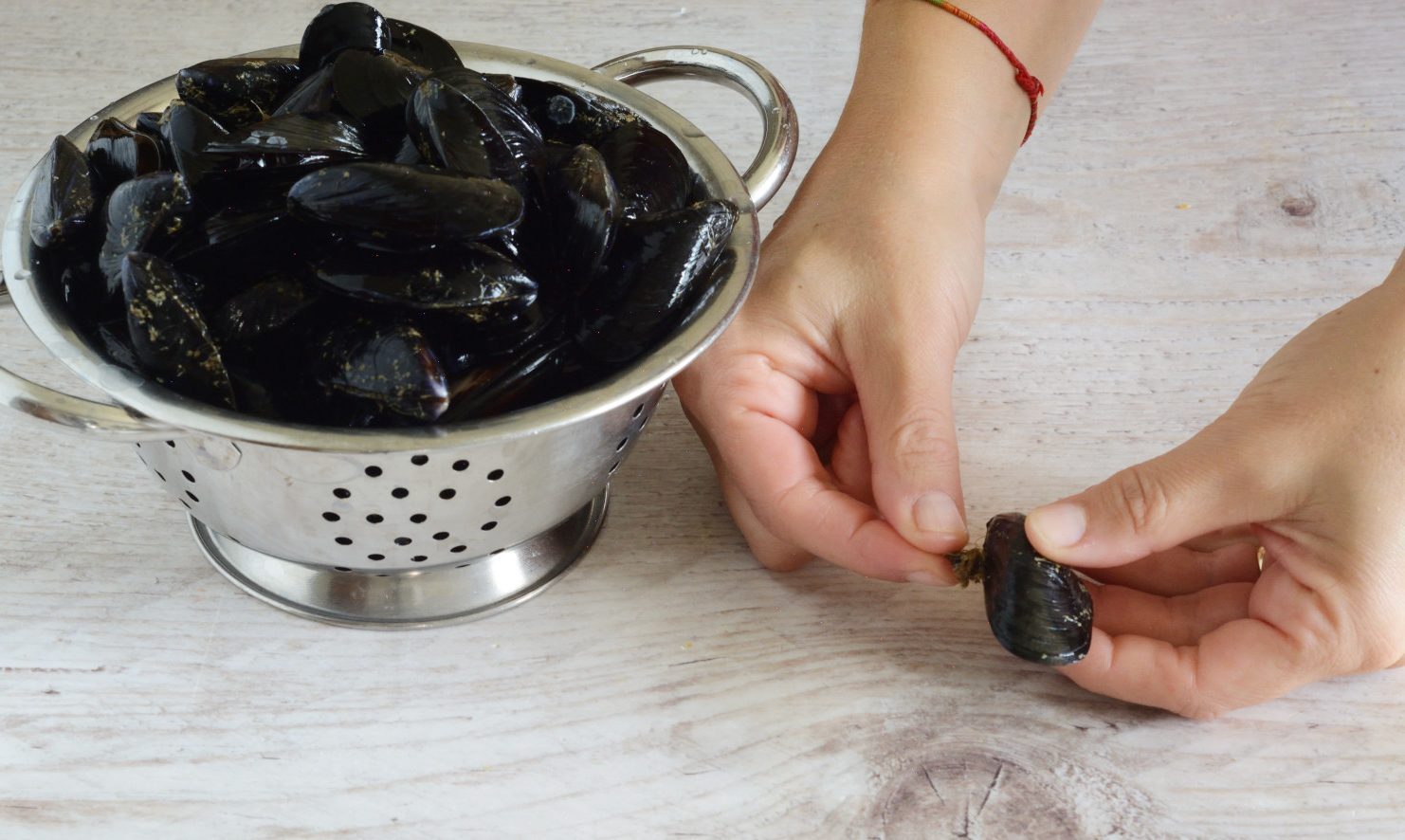
Meanwhile, clean the mussels: remove the byssus, pulling it with a sharp tug, then brush the shells thoroughly, removing any cracked or open ones. Finally, rinse the mussels under cold running water.
Meanwhile, clean the mussels: remove the byssus, pulling it with a sharp tug, then brush the shells thoroughly, removing any cracked or open ones. Finally, rinse the mussels under cold running water.

Pour a drizzle of oil into a large pan, heat it, and add the mussels. Cover with a lid and cook over high heat, shaking the pan occasionally, for about 5 minutes, until they're all open.
Pour a drizzle of oil into a large pan, heat it, and add the mussels. Cover with a lid and cook over high heat, shaking the pan occasionally, for about 5 minutes, until they're all open.
;Resize,width=712;)
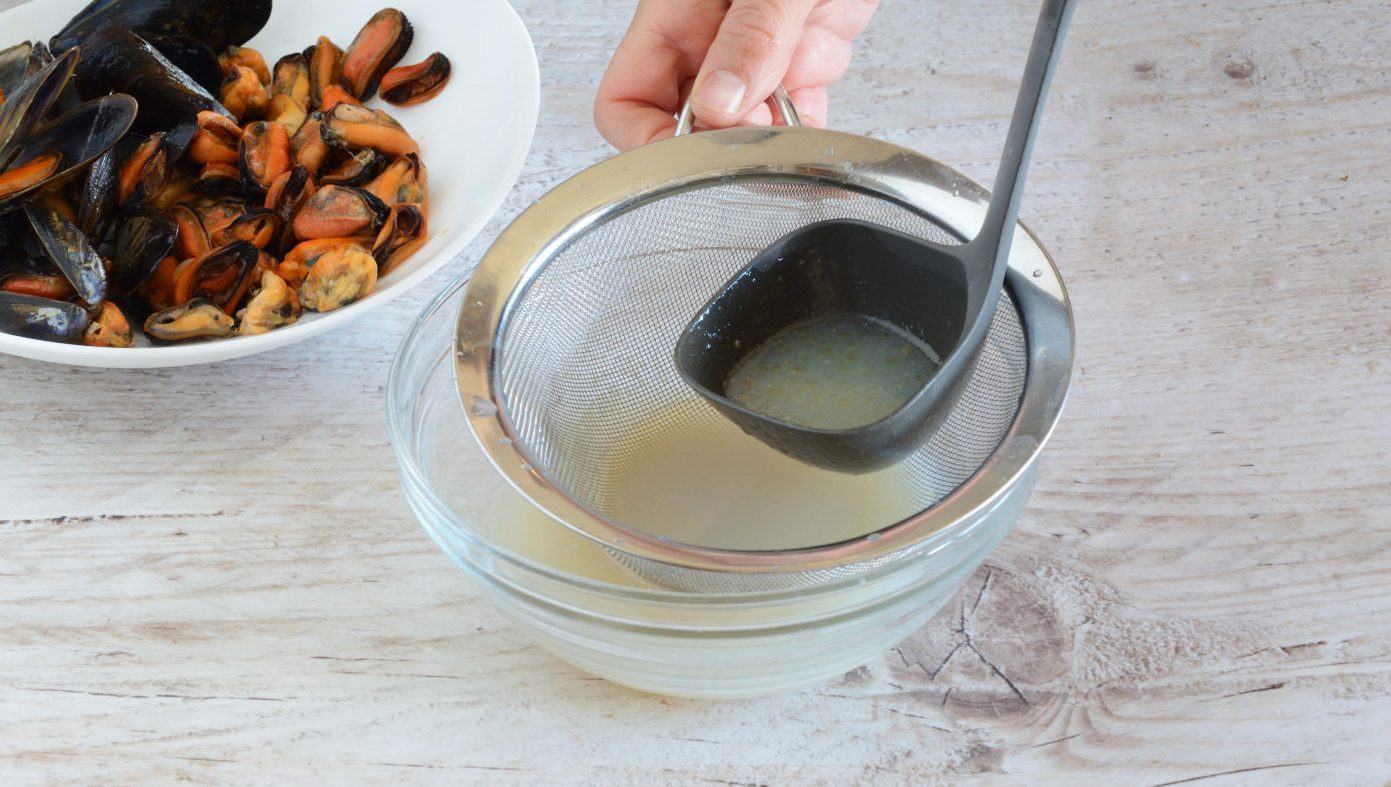
Once ready, shell them, leaving a few intact aside for decoration. Then filter the cooking liquid and collect it in a bowl.
Once ready, shell them, leaving a few intact aside for decoration. Then filter the cooking liquid and collect it in a bowl.
;Resize,width=712;)
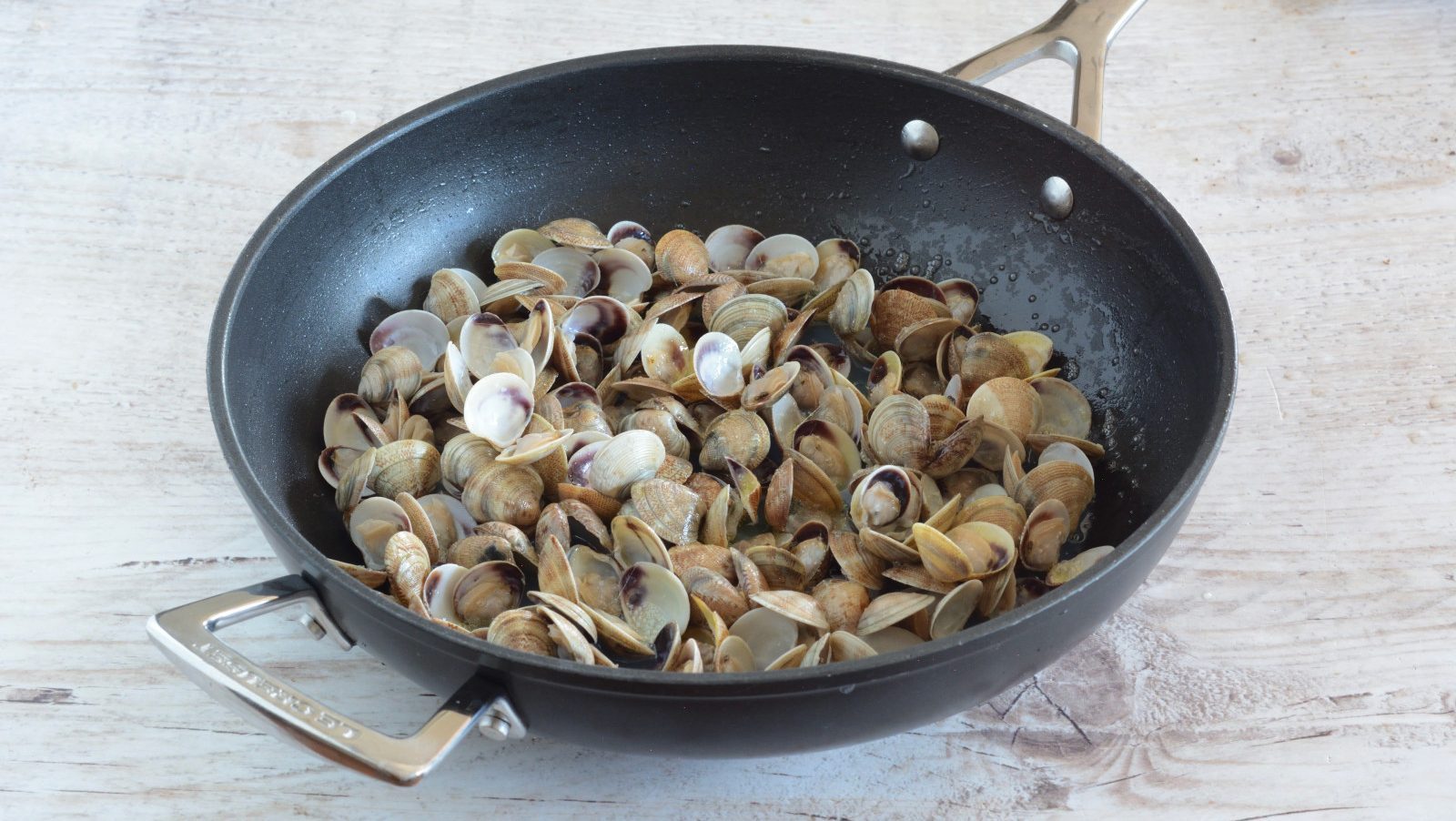
Once the clams have rested, rinse them and transfer them to the pan to open them over a high heat. Once opened, shell them, keeping a few whole ones aside, and filter the liquid, adding it to the mussel liquid: you will need the mixture while cooking the pasta.
Once the clams have rested, rinse them and transfer them to the pan to open them over a high heat. Once opened, shell them, keeping a few whole ones aside, and filter the liquid, adding it to the mussel liquid: you will need the mixture while cooking the pasta.

Shell most of the prawns, leaving some whole, and, using a wooden toothpick, remove the black thread from the back.
Shell most of the prawns, leaving some whole, and, using a wooden toothpick, remove the black thread from the back.

Then clean the cuttlefish: remove the cartilage from the body, remove the ink sac, taking care not to break it, then separate the head and discard the innards. Then, cut off the horny beak and eyes using kitchen scissors. Finally, make a small incision in the outer skin and peel it off with your hands to ensure a more tender and uniform meat during cooking. Then, rinse the cuttlefish under running water and cut it into strips.
Then clean the cuttlefish: remove the cartilage from the body, remove the ink sac, taking care not to break it, then separate the head and discard the innards. Then, cut off the horny beak and eyes using kitchen scissors. Finally, make a small incision in the outer skin and peel it off with your hands to ensure a more tender and uniform meat during cooking. Then, rinse the cuttlefish under running water and cut it into strips.

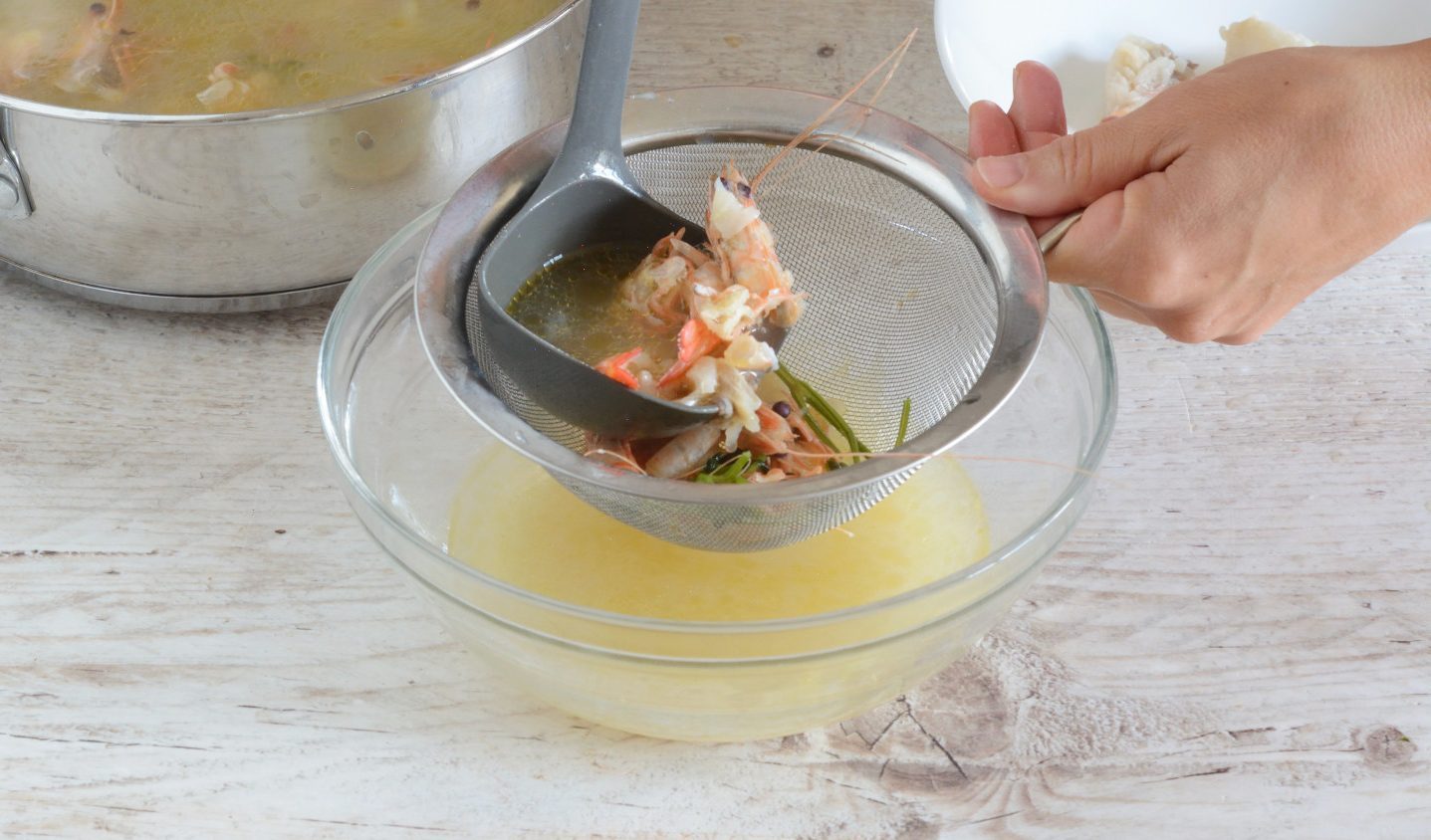
Prepare the fish stock: collect the shrimp scraps, scorpion fish, garlic, parsley, peppercorns and a pinch of salt in a saucepan, cover with about 2.5 liters of water and bring to a boil. Then cover and cook for about 30 minutes.
Prepare the fish stock: collect the shrimp scraps, scorpion fish, garlic, parsley, peppercorns and a pinch of salt in a saucepan, cover with about 2.5 liters of water and bring to a boil. Then cover and cook for about 30 minutes.
;Resize,width=712;)
Once cooked, remove the scorpionfish from the water and filter the resulting stock and set it all aside.
Once cooked, remove the scorpionfish from the water and filter the resulting stock and set it all aside.

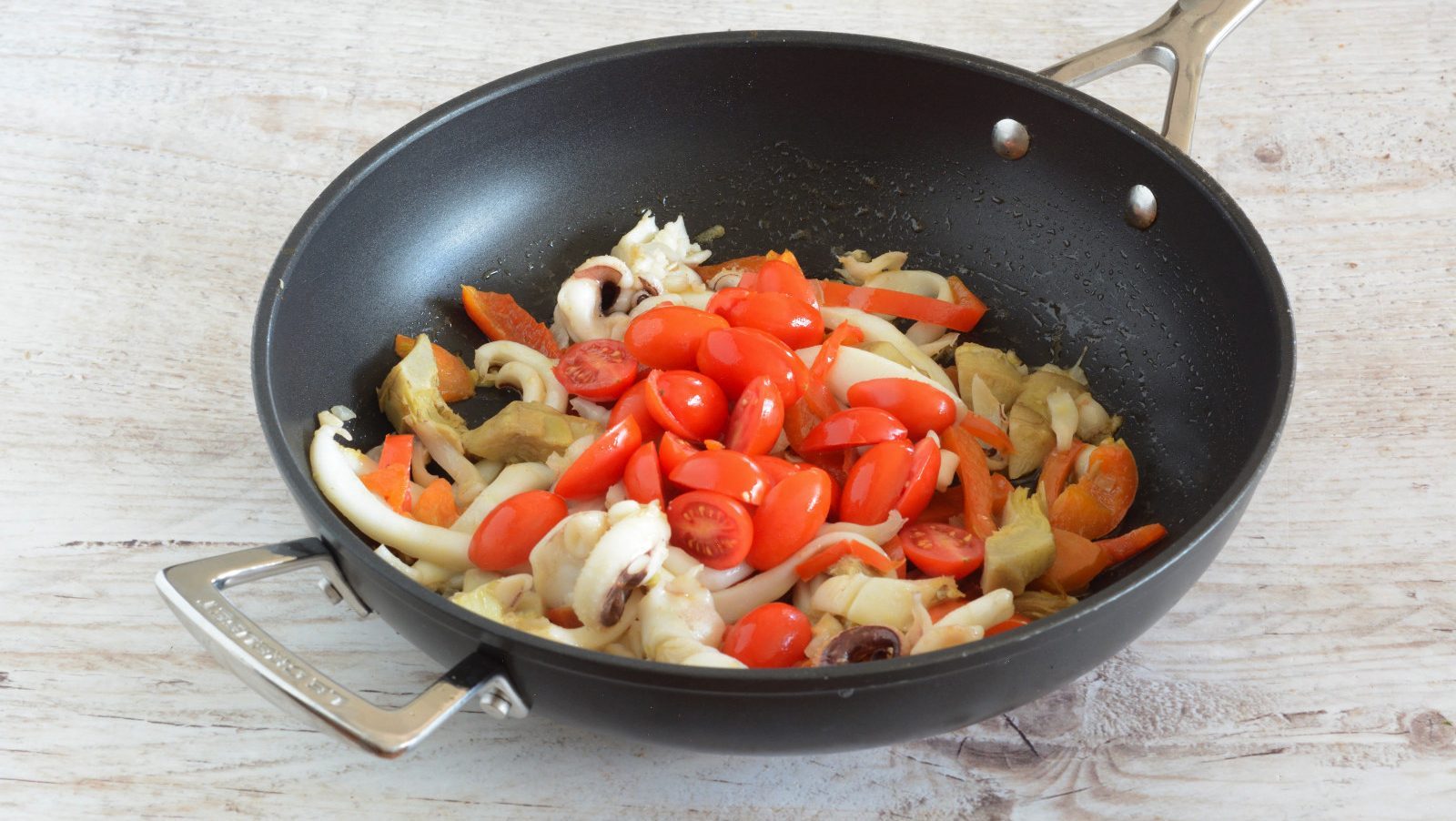
Now, take care of the vegetables: wash the cherry tomatoes and cut them in half, then clean the peppers and cut them into strips, then cut the artichoke hearts into wedges. In a saucepan, heat a drizzle of oil and gently sauté the chopped shallot with a pinch of chili pepper, then add the peppers and artichokes.
Now, take care of the vegetables: wash the cherry tomatoes and cut them in half, then clean the peppers and cut them into strips, then cut the artichoke hearts into wedges. In a saucepan, heat a drizzle of oil and gently sauté the chopped shallot with a pinch of chili pepper, then add the peppers and artichokes.

Mix and cook for 2-3 minutes, then add the cuttlefish and let it cook until the peppers are tender, but still intact.
Mix and cook for 2-3 minutes, then add the cuttlefish and let it cook until the peppers are tender, but still intact.
;Resize,width=712;)
Blend with the white wine, let the alcohol evaporate, then add the cherry tomatoes. Mix well, season with a pinch of salt and cook for another 5-6 minutes over medium heat.
Blend with the white wine, let the alcohol evaporate, then add the cherry tomatoes. Mix well, season with a pinch of salt and cook for another 5-6 minutes over medium heat.
;Resize,width=712;)
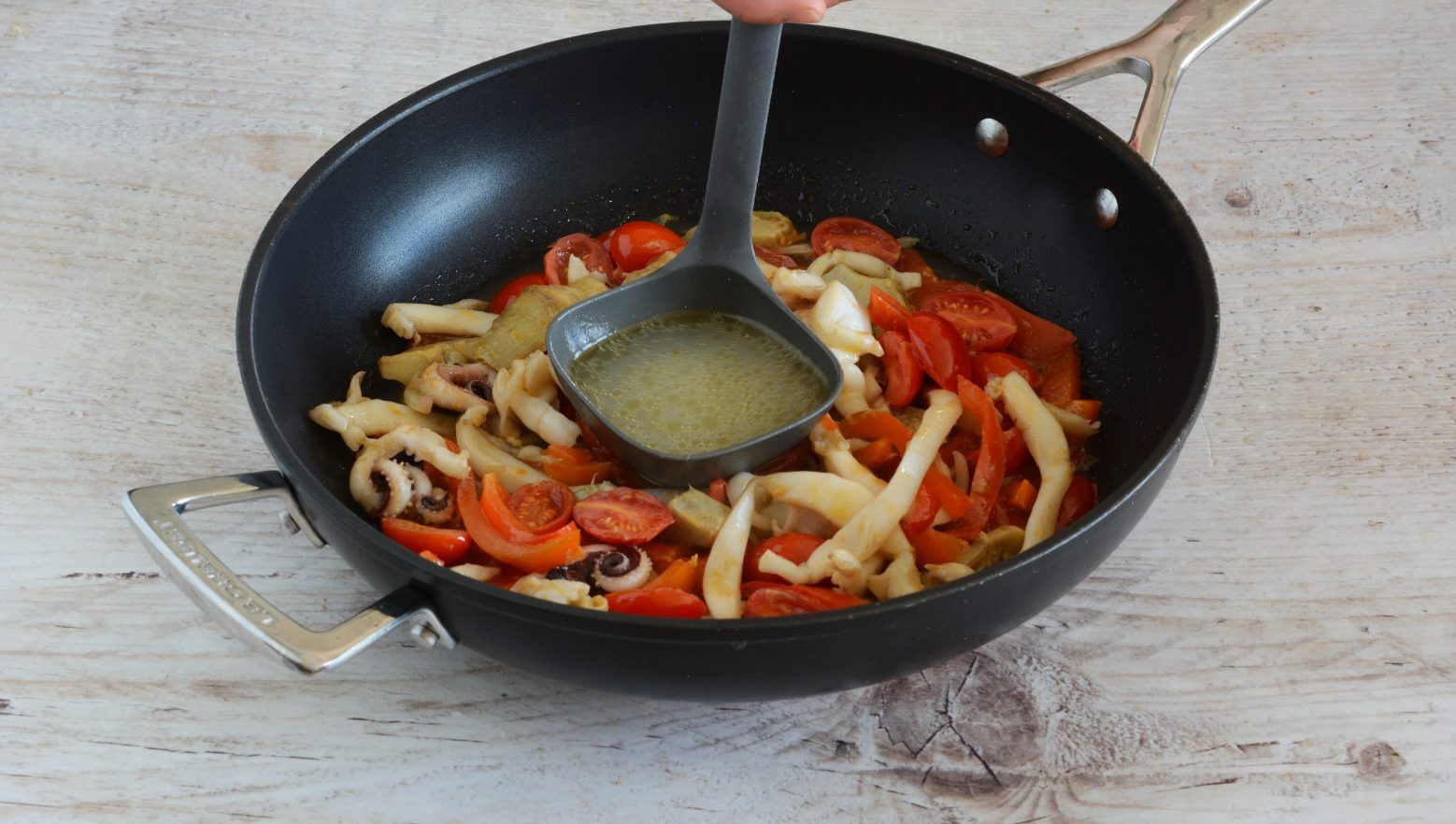
Pour a couple of ladles of stock.
Pour a couple of ladles of stock.
;Resize,width=712;)
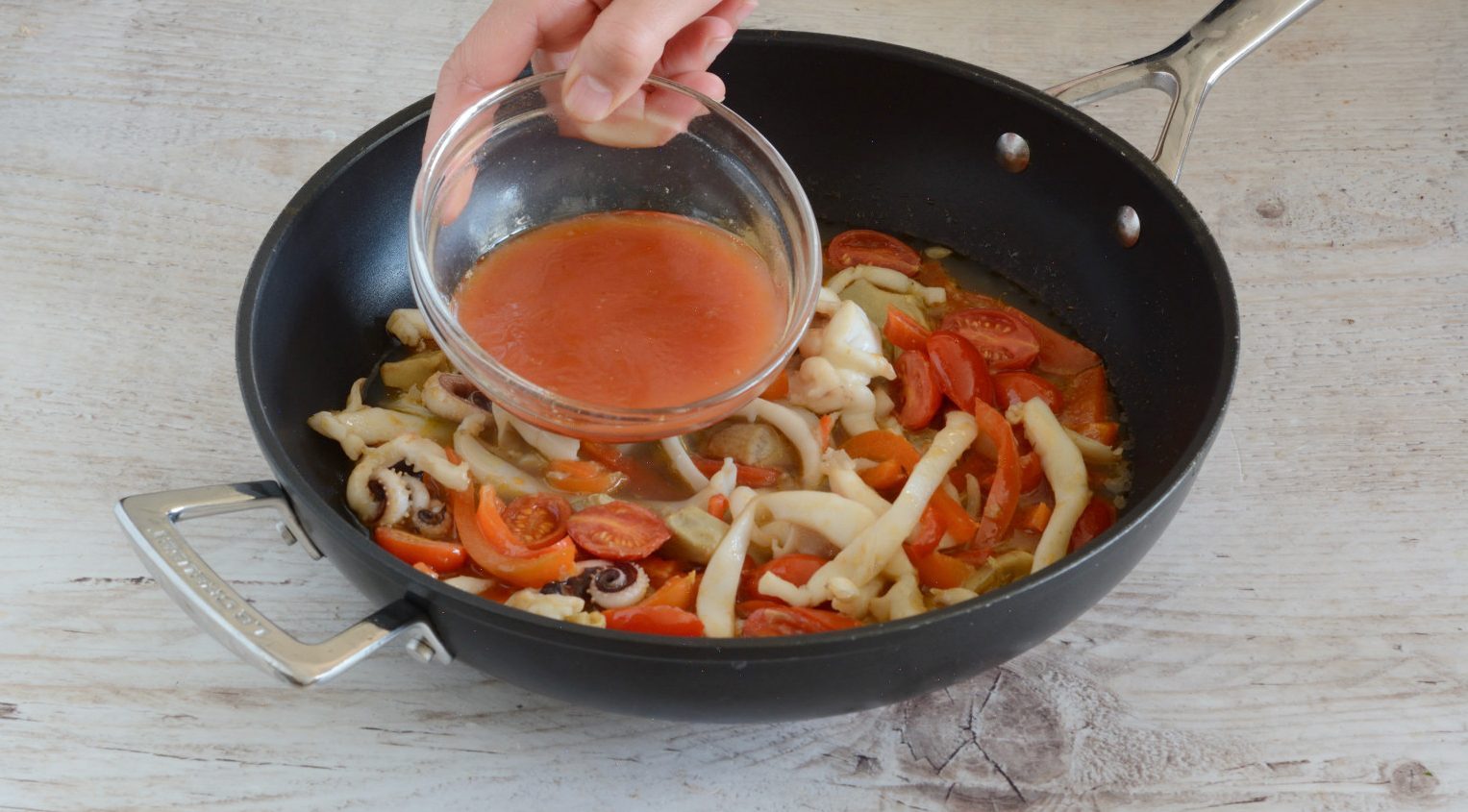
Dilute the tomato paste in a bowl with a little fish stock and a drop of the mussel and clam liquid; do the same with the saffron powder. Then, pour the two mixtures into the pan and mix everything well.
Dilute the tomato paste in a bowl with a little fish stock and a drop of the mussel and clam liquid; do the same with the saffron powder. Then, pour the two mixtures into the pan and mix everything well.
;Resize,width=712;)
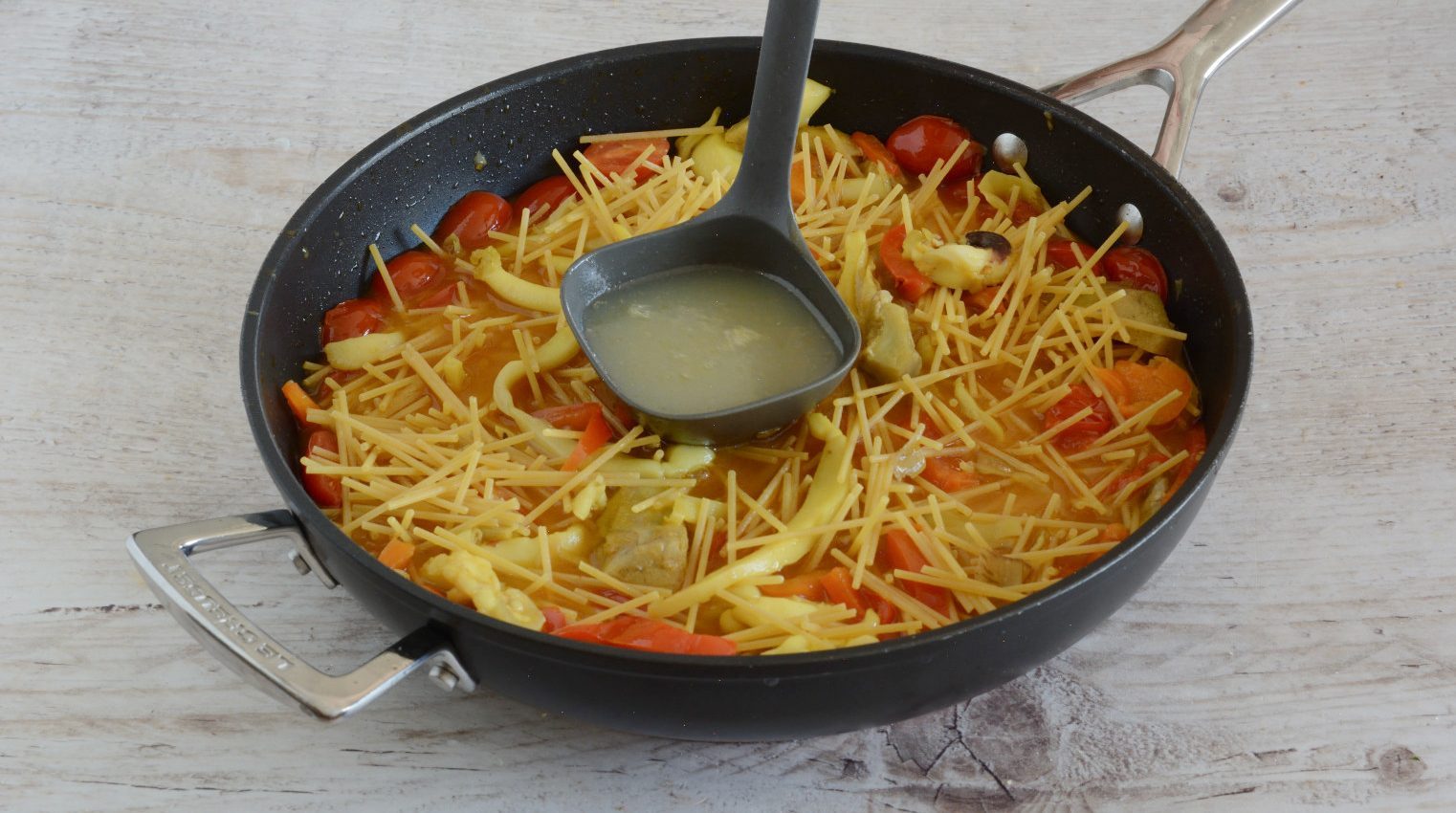
Break the spaghetti or vermicelli into lengths of about 3 cm, then transfer them to the pan and cook them like a risotto, adding a little hot stock at a time as this is absorbed.
Break the spaghetti or vermicelli into lengths of about 3 cm, then transfer them to the pan and cook them like a risotto, adding a little hot stock at a time as this is absorbed.

Five minutes before the pasta is cooked, add the shelled prawns.
Five minutes before the pasta is cooked, add the shelled prawns.

After about two minutes, add the mussels, clams and scorpion fish meat. Season with salt and pepper, and continue cooking until the sauce is thick and creamy. Then, arrange the reserved mussels and clams in their shells on the surface. Add the whole shrimp, previously seared briefly in a separate pan.
After about two minutes, add the mussels, clams and scorpion fish meat. Season with salt and pepper, and continue cooking until the sauce is thick and creamy. Then, arrange the reserved mussels and clams in their shells on the surface. Add the whole shrimp, previously seared briefly in a separate pan.

Bring to the table and enjoy piping hot!
Bring to the table and enjoy piping hot!
;Resize,width=767;)
