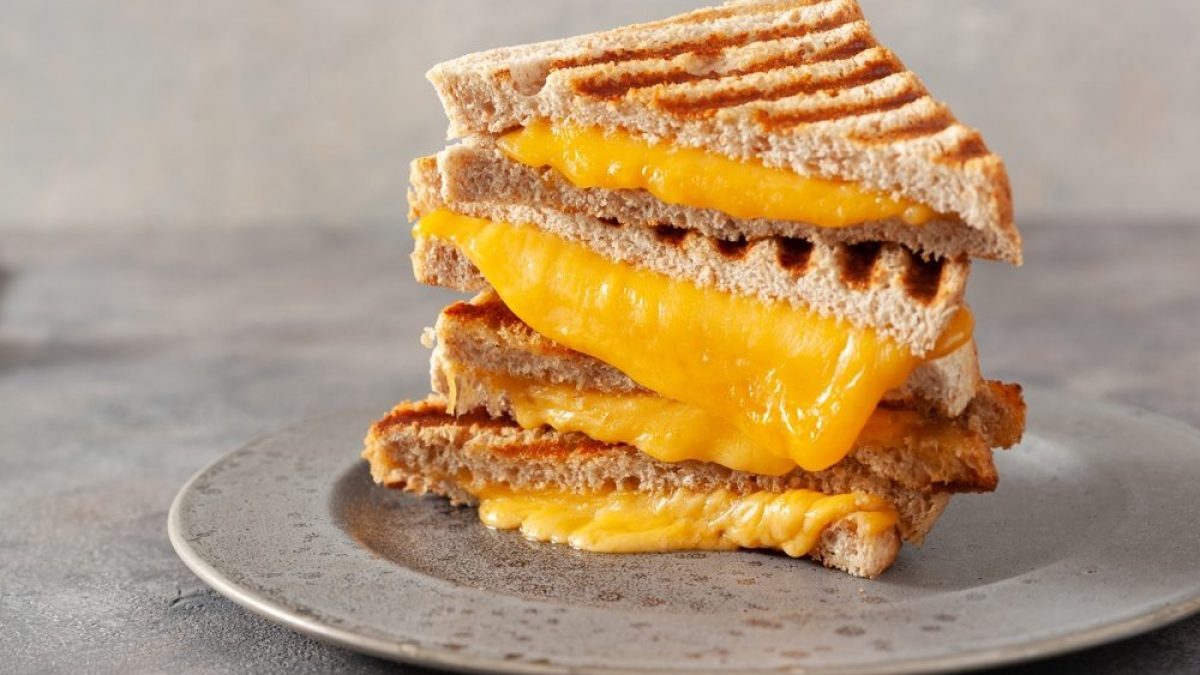
Few cheeses have such a strong history and personality that they've spanned centuries and continents without losing their appeal: cheddar is one of them. Born in a small village in southwest England, it has had an astonishing journey: from the cool caves of Somerset to the tables of pubs and council houses, to become the star ingredient of American burgers, gourmet recipes, and global comfort foods.
Its firm texture, golden or orange color, and flavor that evolves from sweet and creamy to bold and tangy make it irresistible to anyone who loves cheeses with character. But behind this icon of flavor lies a fascinating history of tradition, experimentation, and, above all, a passion for quality.
An Origin Between Legends and Caves
Cheddar owes its name to the village of Cheddar, Somerset, where production has been documented since the 12th century. Legend has it that its creation was the result of a fortunate accident: a bucket of milk forgotten in a cave was transformed into an extraordinary-tasting cheese thanks to the constant temperature and natural humidity.
Over the following centuries, the caves of Cheddar Gorge became the heart of its maturation process, and even today some producers continue to use them to give the cheese its unmistakable aroma. During the Victorian era, thanks to the skill of masters like Joseph Harding —considered the father of modern cheddar —production became standardized, ensuring consistent quality and paving the way for exports throughout the British Empire. It was during this period that cheddar began its international ascent, finding fertile ground in America, Australia, and New Zealand.
The Secret Lies in The "Cheddaring"
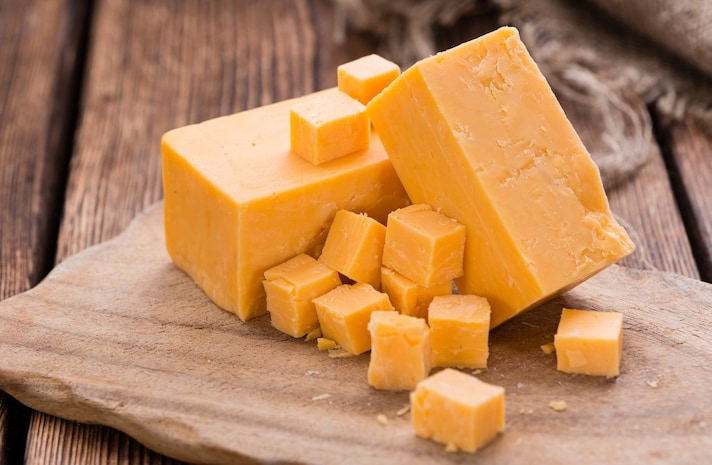
Unlike other cheeses, cheddar owes its texture and flavor to a unique process called cheddaring. After coagulation and cutting, the curds are stacked and turned several times to remove excess whey. The result is a compact paste, ready to be salted, pressed, and aged for periods ranging from a few months to several years.
The natural color is creamy white, but it is often enriched with annatto, a natural dye extracted from achiote seeds, which gives it its typical orange hue. The flavor evolves over time: when young, it is buttery and delicate; once aged, it becomes crumbly, intense, and with slightly spicy notes.
The Thousand Varieties of Cheddar
Not all cheddars are created equal: the only one to enjoy the Protected Designation of Origin is West Country Farmhouse Cheddar, produced exclusively in the counties of Somerset, Dorset, Devon, and Cornwall. It must be made with local whole milk, handcrafted using the traditional cheddaring method, and matured for at least nine months. It is the most authentic and faithful version of this legendary cheese.
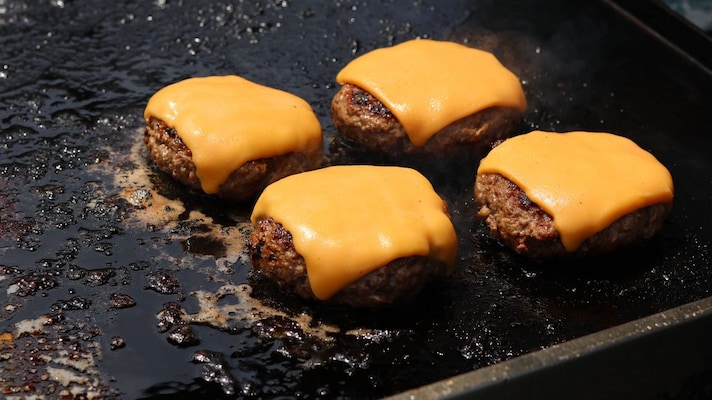
In the dairy world, cheddar isn't actually a single entity but a whole family of cheeses, distinguished by their intense flavor, texture, and even their origin. The differences arise primarily from the length of aging, the type of milk used, and the techniques adopted in different regions of the world. Alongside the more classic versions, there are others that play with colors, aromas, and additional ingredients, offering unique interpretations of a cheese born centuries ago but always capable of reinventing itself. Here are the main types of cheddar:
For seasoning:
- Mild cheddar: short maturation (3–6 months), sweet and creamy flavor.
- Medium cheddar: more flavorful, around 6–9 months.
- Mature cheddar: 9 to 18 months, intense and slightly spicy flavor.
- Vintage or extra mature cheddar: over 18 months, very crumbly and with a strong flavor.
By origin:
- Traditional British (including West Country Farmhouse Cheddar Dop).
- American Cheddar, often softer and bright orange in color.
- Cheddar from other countries (Canada, Australia, New Zealand) with slightly different styles and flavors.
For production peculiarities:
- Raw or pasteurized milk.
- Natural white color or colored with annatto.
- Flavored (e.g. with herbs, chili pepper, garlic, beer).
How to Pair and Use Cheddar in The Kitchen
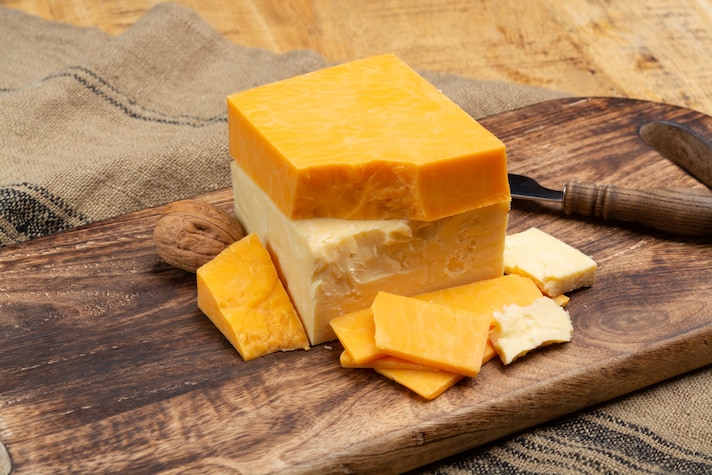
Cheddar is one of those cheeses that can adapt to any table setting. In a simple sandwich on rustic bread, it reveals all its creaminess when young; on crispy toast, it melts perfectly, providing that stringy sensation that makes you want another bite. In hot dishes, it becomes a real ace up the sleeve: melted on a burger or hot dog, it adds depth; in mac & cheese, it transforms into the golden drizzle that made this comfort food famous; while in a potato or vegetable gratin, it brings a savory and enveloping note.

Drink pairings are equally interesting: a young cheddar pairs well with dry cider or light beers, while an aged one finds its soulmate in amber beers, stouts, and soft red wines like a Merlot or a Cabernet Sauvignon that isn't too tannic. For a more rustic experience, you can pair it with apple or pear chutney, which enhances its spicy, buttery notes. And if you want to surprise it, pair it with smoked cured meats or English mustard: the contrast will be unforgettable.
;Resize,width=767;)
