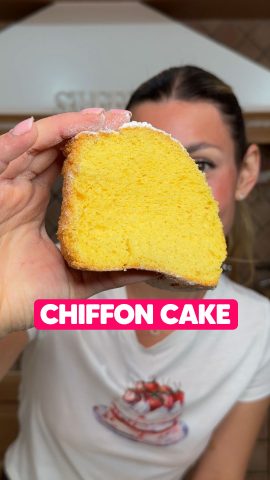
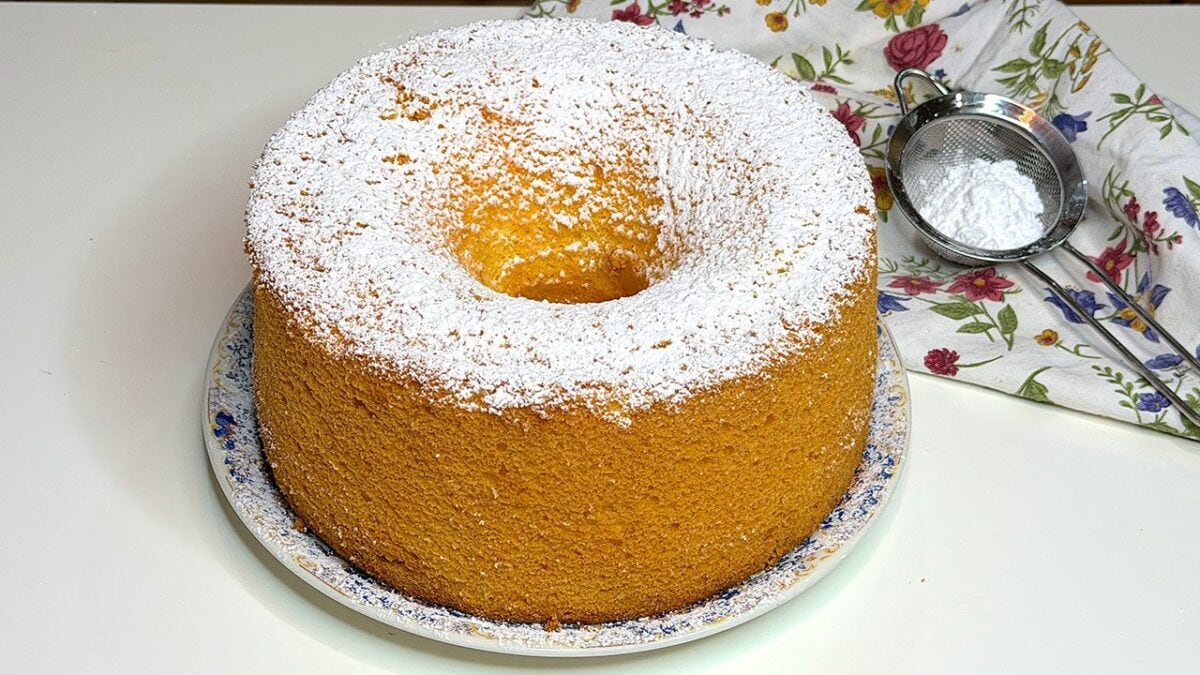
Some cakes impress with layers of frosting or elaborate decorations. A great chiffon cake needs neither. Its beauty lies in its remarkable texture: tall, airy, delicate, and so soft that each slice seems to melt in your mouth.
This chiffon cake recipe combines a light vanilla-and-lemon batter with carefully whipped egg whites. Sunflower oil keeps the crumb tender, while the meringue gives the cake its signature height and cloudlike consistency.
But there's another secret to getting it right. Unlike most cakes, chiffon cake is baked in an ungreased tube pan and cooled completely upside down.
These simple techniques help the cake rise high and maintain its structure as it cools.
The result is a beautiful homemade cake that's delicious on its own, with just a dusting of powdered sugar.
What Is Chiffon Cake?
Chiffon cake is an American-style cake known for its unusually light texture and impressive height.
It was developed in the United States in the twentieth century and became especially popular for its combination of sponge-cake lightness and the moistness of an oil-based cake.
Unlike traditional butter cakes, chiffon cake uses vegetable oil as its main fat.
Its airy structure comes from whipped egg whites, which are folded into the batter to create tiny air pockets that expand during baking.
Chiffon cake is also different from angel food cake. Angel food cake uses egg whites but no egg yolks or added fat, while chiffon cake includes both yolks and oil for a richer, more tender crumb.
It's typically baked in a tall tube pan with a central opening that helps distribute heat through the batter.
The pan is left ungreased so the batter can cling to its sides as it rises. After baking, the cake is inverted until completely cool to help prevent it from collapsing.
Why Everyone Will Love This Recipe
The texture is what makes chiffon cake unforgettable. It's incredibly light and fluffy, yet moist enough to stay pleasantly soft without frosting or filling.
Fresh lemon zest adds a subtle citrus fragrance, while vanilla gives the cake a delicate sweetness that works for almost any occasion.
Another advantage is its versatility. Serve it for breakfast with coffee, enjoy a slice as an afternoon snack, or dress it up with fresh berries for dessert.
Because the recipe uses sunflower oil instead of butter, the crumb remains tender even after the cake has cooled.
And despite its impressive height, the ingredient list is made up of familiar baking staples.
Tips for Making the Best Chiffon Cake
- Don't grease the pan. Chiffon batter needs to grip the sides of the mold as it rises. Greasing the pan can interfere with that process.
- Whip the egg whites carefully. They should be glossy and hold firm peaks without becoming dry or grainy. Overwhipped whites are harder to fold into the batter.
- Fold gently, but thoroughly. Use a spatula and lift the batter from the bottom of the bowl. Avoid vigorous stirring, which can deflate the whipped whites.
- Cool the cake upside down. This is essential for maintaining its height and delicate structure. Don't remove the cake from the pan until it has cooled completely.
Frequently Asked Questions
What Is the Difference Between Chiffon Cake and Sponge Cake?
Both cakes have a light, airy texture, but chiffon cake contains vegetable oil, which makes it particularly moist and tender. Traditional sponge cakes often rely more heavily on whipped eggs for their structure and may contain little or no added fat.
Why Does Chiffon Cake Need an Ungreased Pan?
The batter needs to cling to the sides of the pan as it rises. This helps support the cake's structure and allows it to reach its characteristic height.
Why Do You Cool Chiffon Cake Upside Down?
Chiffon cake is very delicate while hot. Cooling it upside down helps support its airy structure and reduces the risk of the cake shrinking or collapsing under its own weight.
Can You Make Chiffon Cake Without Cream of Tartar?
Cream of tartar helps stabilize whipped egg whites. Although other acidic ingredients can sometimes serve a similar purpose, this recipe is designed around the specified amount, so it's best to use it for consistent results.
Why Did My Chiffon Cake Collapse?
A chiffon cake can collapse if the egg whites were improperly whipped, the batter was overmixed, the cake was underbaked, or it wasn't cooled upside down. Using an unsuitable or greased pan can also affect the final height.
Can You Bake Chiffon Cake in a Regular Cake Pan?
A traditional chiffon cake pan is strongly recommended. Its tall sides and central tube help the batter bake evenly and provide support during rising and cooling. A standard cake pan may produce a different texture and height.
How to Store
Allow the chiffon cake to cool completely before storing it.
Once removed from the pan, place the cake in an airtight cake container or wrap it carefully to prevent it from drying out.
Store at room temperature in a cool, dry place for up to 2–3 days.
If your kitchen is particularly warm or humid, refrigeration may be preferable, although it can make the cake slightly firmer.
For the best texture, allow refrigerated slices to come to room temperature before serving.
Avoid leaving the cake uncovered, as its delicate crumb can dry out quickly.
How to Freeze
Chiffon cake freezes well when properly wrapped.
Make sure the cake has cooled completely, then cut it into individual slices or leave it whole.
Wrap the cake tightly in plastic wrap, followed by a layer of aluminum foil or a freezer-safe bag.
Freeze for up to 2 months for the best quality.
When ready to serve, allow the cake to thaw while still wrapped, either overnight in the refrigerator or at room temperature for a shorter period.
Once thawed, unwrap it and add a fresh dusting of powdered sugar before serving.
Ingredients
How to make Chiffon Cake

Begin by preheating the oven to 320°F (160°C) using the conventional, non-fan setting.
Prepare a chiffon cake pan with a central tube, making sure it's completely clean and dry.
Do not grease or flour the pan.
In a large mixing bowl, sift together the all-purpose flour and baking powder.
Add the superfine sugar and a small amount of fine salt, then mix gently to distribute the dry ingredients evenly.

Next, separate the 7 eggs, placing the yolks in one bowl and the whites in another.
Place the egg whites in the refrigerator while you prepare the yolk mixture.
Next, separate the 7 eggs, placing the yolks in one bowl and the whites in another.
Place the egg whites in the refrigerator while you prepare the yolk mixture.

Add the water, sunflower oil, finely grated lemon zest, and seeds from ½ vanilla bean to the egg yolks.
Whisk until the ingredients are thoroughly combined and the mixture looks smooth and uniform.
Add the water, sunflower oil, finely grated lemon zest, and seeds from ½ vanilla bean to the egg yolks.
Whisk until the ingredients are thoroughly combined and the mixture looks smooth and uniform.

Pour the liquid mixture into the bowl containing the flour, sugar, and baking powder.
Mix gently with a whisk until you obtain a smooth, lump-free batter.
The mixture should be creamy and pourable, without visible pockets of dry flour.
Pour the liquid mixture into the bowl containing the flour, sugar, and baking powder.
Mix gently with a whisk until you obtain a smooth, lump-free batter.
The mixture should be creamy and pourable, without visible pockets of dry flour.

Remove the egg whites from the refrigerator and begin whipping them with an electric hand mixer or stand mixer fitted with the whisk attachment.
Start at medium speed until the whites become foamy and begin to increase in volume.
At this stage, add the cream of tartar.
Remove the egg whites from the refrigerator and begin whipping them with an electric hand mixer or stand mixer fitted with the whisk attachment.
Start at medium speed until the whites become foamy and begin to increase in volume.
At this stage, add the cream of tartar.

Continue whipping until the egg whites become firm, glossy, and stable, forming peaks that hold their shape when the whisk is lifted.
Continue whipping until the egg whites become firm, glossy, and stable, forming peaks that hold their shape when the whisk is lifted.

Take a small portion of the whipped egg whites and add it to the main batter.
Mix gently to lighten the consistency. This first addition makes it easier to incorporate the remaining egg whites without deflating them.
Take a small portion of the whipped egg whites and add it to the main batter.
Mix gently to lighten the consistency. This first addition makes it easier to incorporate the remaining egg whites without deflating them.

Add the rest of the whipped whites gradually, folding them into the batter with a large spatula.
Use slow, sweeping movements, lifting the batter from the bottom of the bowl and folding it over the egg whites.
Add the rest of the whipped whites gradually, folding them into the batter with a large spatula.
Use slow, sweeping movements, lifting the batter from the bottom of the bowl and folding it over the egg whites.
Be careful not to overmix. The goal is to preserve as much of the incorporated air as possible.

Be careful not to overmix. The goal is to preserve as much of the incorporated air as possible.
Once the batter is ready, pour it gently into the ungreased chiffon cake pan.
Distribute it evenly around the central tube, taking care not to knock out too much air.
Place the pan in the preheated oven and bake at 320°F (160°C) for approximately 60 minutes.
Avoid opening the oven door unnecessarily during the early stages of baking, as sudden temperature changes can interfere with the cake's structure.
Remove the pan from the oven and immediately turn it upside down.
If the chiffon cake pan has built-in feet, rest it on those supports. Otherwise, use a stable, heat-safe support designed for the pan, ensuring the cake has enough space beneath it and cannot tip over.
Allow the cake to cool completely upside down.
Remove the cake gently, taking care not to tear its soft, airy crumb.
Transfer the homemade chiffon cake to a serving plate and finish with a light dusting of powdered sugar, if desired.

Remove the cake gently, taking care not to tear its soft, airy crumb.
Transfer the homemade chiffon cake to a serving plate and finish with a light dusting of powdered sugar, if desired.
Slice with a serrated knife, using gentle sawing movements rather than pressing down on the cake.
Slice with a serrated knife, using gentle sawing movements rather than pressing down on the cake.
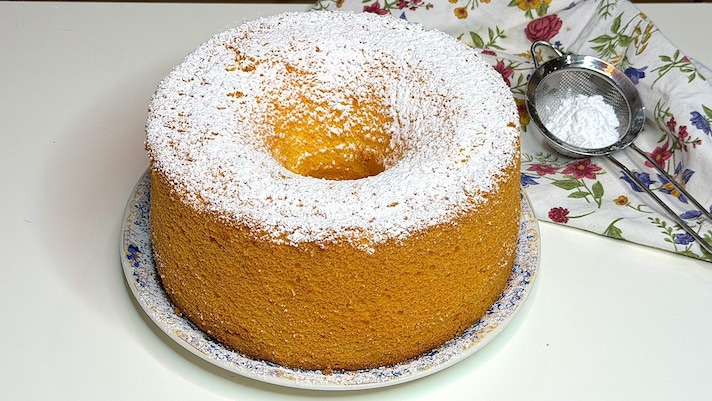
The finished chiffon cake should be beautifully tall, soft, and fluffy, with a delicate vanilla-and-lemon aroma and a light texture that makes every bite irresistible.


