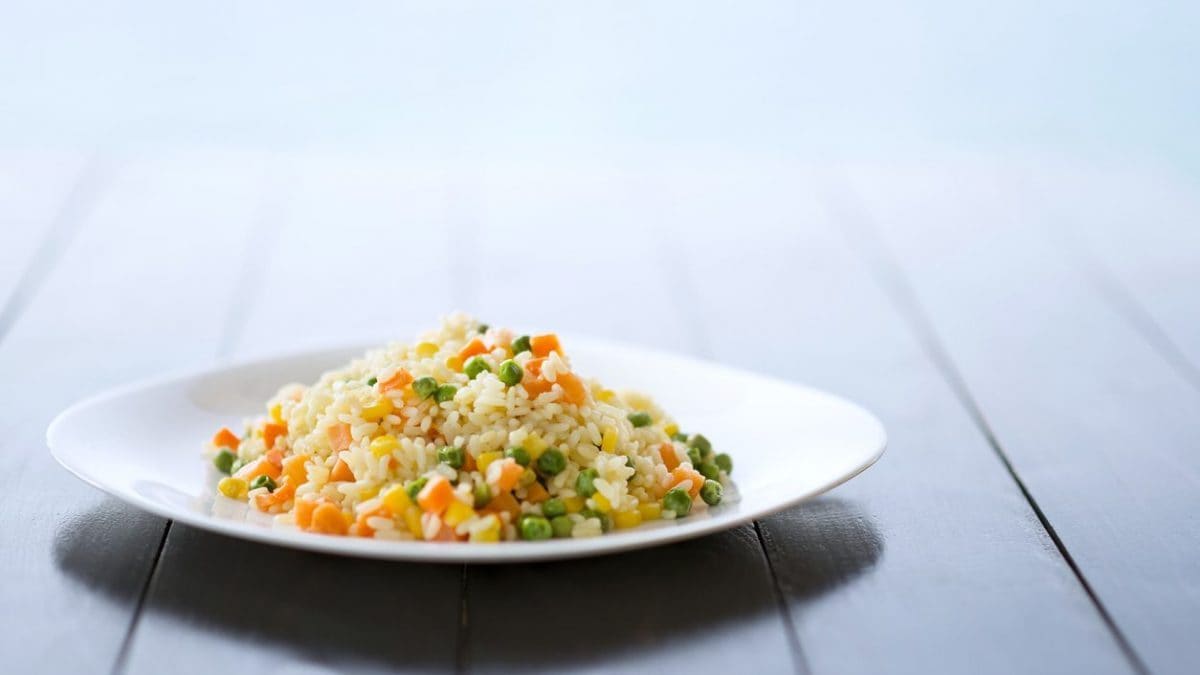
For years now, science has been investigating what we eat and how our bodies react to certain foods. Recently, however, the focus has shifted beyond the food itself to the way it is prepared and consumed. New research highlights a particularly interesting aspect: refrigerated carbohydrates appear to contribute to blood sugar control, inflammation reduction, and weight management, thanks to the action of resistant starch. Let's take a closer look at what this is and what the researchers discovered.
What The Research Says
Published in Frontiers in Nutrition, the review analyzed the role of resistant starch and sought to understand how it is absorbed by our body and what effects it can have. The results were surprising: this type of carbohydrate appears to help reduce blood sugar spikes, promote a greater sense of satiety, reduce inflammation, and improve cholesterol. All of this translates into a healthier, less inflamed, and potentially more protected gut for the long term.
To achieve these results, what should we eat? As we said at the beginning of this article, resistant starch is found in starchy foods that are cooked and then left to cool: some common examples are rice and pasta salads, or even cold or boiled roast potatoes in salad. This particular type of starch is actually also naturally present in some foods that are already part of our daily diet, such as legumes, bananas, or potatoes.

What is Resistant Starch?
This is a type of carbohydrate that is not digested by the small intestine, reaching the colon intact. Here, it becomes the preferred food of intestinal bacteria, taking on a role similar to that of fiber. Unlike the starch commonly found in carbohydrates, resistant starch does not immediately convert to glucose and then enter the bloodstream. For this very reason, it helps reduce blood sugar spikes after meals and promotes the production of certain beneficial substances for the intestine. There are five types of resistant starch:
- RS1: This type of starch is found in foods such as unrefined grains, legumes, and seeds and is "trapped" in their structure, where digestive enzymes cannot reach it;
- RS2: contained in unripe bananas and raw potatoes in which the particular compact conformation of the starch hinders its digestion;
- RS3: This type of starch is created in starchy foods, such as pasta, potatoes or rice left to cool, thanks to the so-called starch retrogradation, in which the starch rearranges the molecules of which it is composed, becoming less digestible.
- RS4: these are starches altered through chemical and technological processes, used above all in the food industry to improve the consistency of products and reduce the glycemic impact;
- RS5: the most recent category studied for its functional properties, it is formed by bonds between amylose – one of the polysaccharides that make up starch – and fats that reduce its digestibility.

Previous Research
This isn't the first time resistant starch has been the subject of a scientific study. In previous years, it had been the focus of numerous studies that highlighted its surprising properties. Several scientific reviews had already shown how resistant starch can help improve the glycemic response after meals, better controlling blood sugar levels. A 2024 study, however, highlighted how its consumption positively contributes to the action of the intestinal microbiota, increasing the production of short-chain fatty acids, capable of nourishing colon cells. The possible effects on satiety, weight control, and fat metabolism were also illustrated, reiterating that the effects depend on the type of starch, the quantities consumed, and also on individual characteristics. Another 2022 study, finally, analyzed data from the US National Health and Nutrition Examination Survey, conducted from 1999 to 2018, and showed that a higher consumption of resistant starch led to a decrease in mortality from cancer and from all causes, with the exception of cardiovascular disease.
;Resize,width=767;)
