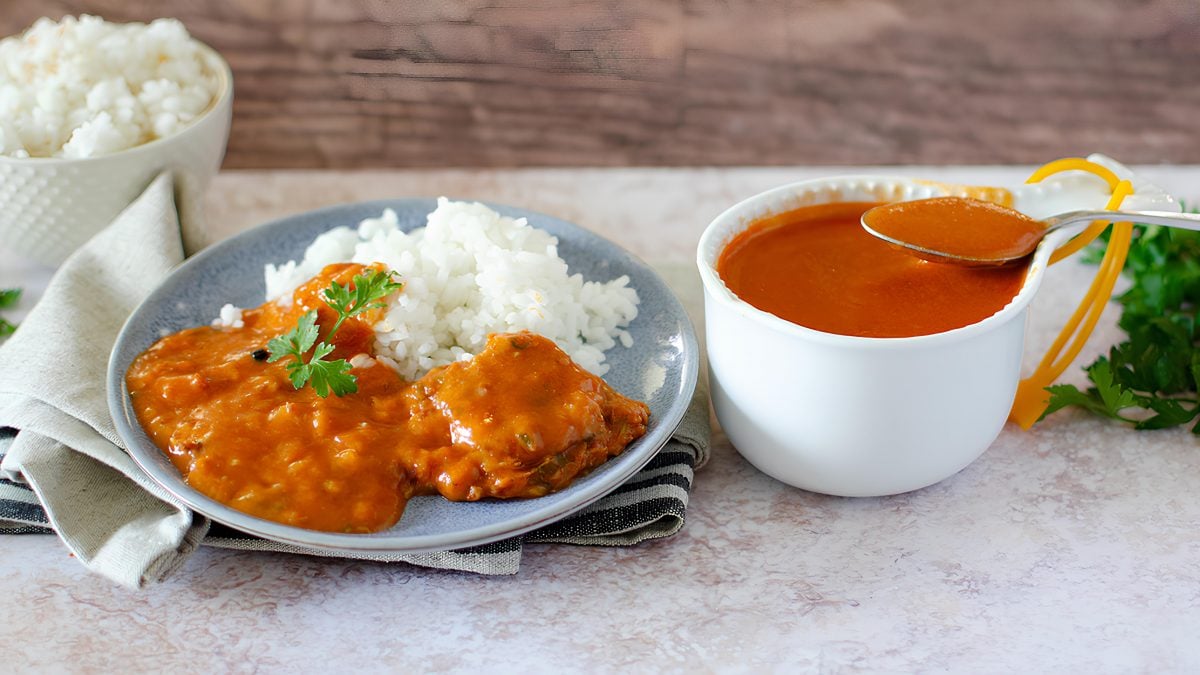
Espagnole Sauce, also known as brown sauce, is a typical basic preparation in French gastronomy. It is made with brown stock and roux, and is considered one of the five mother sauces of international cuisine, along with the more well-known béchamel and mayonnaise.
The traditional recipe calls for brown stock, also known as dark stock, a thick and flavorful reduction made from the bones and scraps of beef or veal, to which vegetables, tomato paste, and herbs are added.
Brown stock is ideal for making sauces, soups, and creams, but its preparation is quite time-consuming and laborious. For this reason, we used a reduced beef broth, combined with the roux, which will help give the sauce its characteristic golden color: the flour is toasted in butter until it turns a hazelnut brown.
Add chopped onion, parsley, and prosciutto to this mixture and cook for about 2 hours, until you obtain a very thick and creamy sauce. Then, strain it through a sieve and serve it with your favorite dishes.
Espagnole Sauce History
Despite its name, salsa espagnole actually originates from France. A favorite of 17th-century royalty, it was apparently first prepared for the wedding of Prince Louis XIII to the future Queen Anne of Austria, daughter of Philip III, King of Spain. At the time, the sauce was sweetened with a puree of Spanish tomatoes, which gave the dish its distinctive flavor.
Espagnole Sauce Vs. Demi-Glace
Espagnole is one of the five classic French “mother sauces,” made from brown stock, mirepoix, tomato, and a roux, and it serves as a foundational base in classical cuisine. Demi-glace, on the other hand, is a finished, more refined sauce made by combining espagnole with additional brown stock and then slowly reducing it by half until it becomes rich, glossy, and intensely flavored.
Cooking Tips
- Espagnole sauce should always be served hot, so if necessary it will need to be reheated in a bain-marie before being used.
- Dried porcini mushrooms, previously soaked in warm water, and a bunch of aromatic herbs can also be added to the preparation.
- Espagnole sauce goes perfectly with poached eggs, and is also an excellent accompaniment to boiled white rice.
What Can I Serve Espagnole Sauce With?
Espagnole sauce is always served hot, usually paired with macaroni pie, poached eggs, boiled rice, potatoes, or egg pasta.
Ingredients
How to Make Espagnole Sauce

Chop the onion, parsley and prosciutto with a knife.
Chop the onion, parsley and prosciutto with a knife.

Melt the butter in a pan, add the flour, and sauté until you obtain a hazelnut-colored roux. Dilute a cup of reduced beef broth into the roux and mix until well absorbed.
Melt the butter in a pan, add the flour, and sauté until you obtain a hazelnut-colored roux. Dilute a cup of reduced beef broth into the roux and mix until well absorbed.

Also add the chopped onion, parsley and prosciutto.
Also add the chopped onion, parsley and prosciutto.

Also add a pinch of salt and black peppercorns and a clove.
Also add a pinch of salt and black peppercorns and a clove.

Add the rest of the broth.
Add the rest of the broth.

Let it cook on low heat for about 2 hours.
Let it cook on low heat for about 2 hours.

In the end the sauce should have reduced a lot and become creamier.
In the end the sauce should have reduced a lot and become creamier.

Pass the sauce through a sieve and place it in a gravy boat.
Pass the sauce through a sieve and place it in a gravy boat.

Bring to the table and serve with boiled white rice.
Bring to the table and serve with boiled white rice.
Can I Freeze Espagnole Sauce?
Yes, espagnole sauce freezes very well, which is one of the reasons it’s often made in large batches in professional kitchens. To freeze it properly, let the sauce cool completely, then transfer it to airtight containers or freezer-safe bags. You can also portion it into small containers or even ice cube trays, which makes it easy to thaw only what you need later. Stored this way, it will keep for about 2 to 3 months without losing much quality.
When you’re ready to use it, thaw the sauce in the refrigerator and gently reheat it on the stovetop, stirring occasionally. You may need to add a small splash of stock or water to loosen the texture, as it can thicken slightly after freezing.
Storage Instructions
Espagnole sauce can be stored in the refrigerator for 2-3 days in an airtight container. Always reheat it in a bain-marie before using.
;Resize,width=767;)
