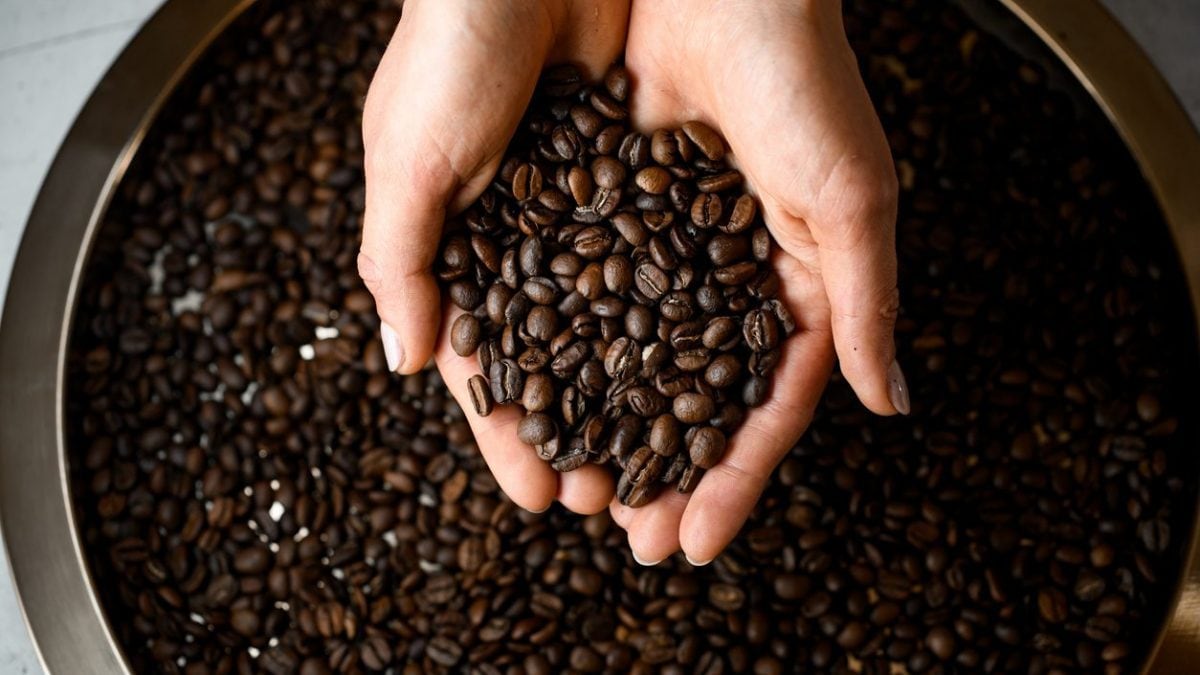
Coffee is not just a beverage, but a true daily ritual, popular and loved throughout the world. For this very reason, it needs to be protected: the climate crisis is putting its production at risk. A recent analysis published by Climate Central revealed that high temperatures are making traditionally cultivated lands increasingly unsuitable, with potentially irreversible effects on the global coffee industry.
Major Producing Countries Amid Extreme Heat and Falling Yields
Climate Central, an independent scientific organization dedicated to climatology, analyzed climate data from 25 coffee-producing countries, which represent approximately 97% of global production. All have experienced rising temperatures, detrimental to the health of the plants, especially the Arabica variety. To reach these results, experts analyzed meteorological data between 2021 and 2025 in the reference areas, comparing them with conditions that would have existed without carbon emissions from human activity. They confirmed that global warming has added dozens of more days with damaging temperatures, exceeding 86°F/30°C. Above this threshold, plants can enter heat stress, which leads to a slowdown in photosynthesis, increased energy consumption for survival, and reduced flower and fruit production. The result? An even smaller harvest and lower-quality beans, as well as an increase in diseases and pests that make the plants even more fragile.
The report shows that the five largest producing countries, responsible for around 75% of global production – Brazil, Vietnam, Colombia, Indonesia and Ethiopia – experience an average of more than 140 days per year with damaging heat, 57 more days than would occur without human-induced climate change. The country most affected was El Salvador with 99 additional days of damaging heat, while the number drops slightly for Brazil – the world's largest producer with around 37% of total production – reaching 70 days with temperatures exceeding 86°F/30°C. Ethiopia, on the other hand, which accounts for 6.4% of global production, recorded 34 days.

Rain, Disease and Insects are Other Factors That Complicate Cultivation
The report presented by Climate Central also highlights additional issues that can compromise coffee production. Variations in rainfall, for example, are another factor that jeopardizes the growth of plants, which, instead, require regular and abundant rainfall: if water is scarce, yields consequently decrease. Added to this are parasites and diseases, such as leaf rust and the coffee bean borer, whose spread has been favored primarily by temperature fluctuations.
In this context, therefore, farmers, who are often smallholders who depend solely on this crop, are forced to adapt, even if adequate funding is lacking. According to one study, these farmers, who produce 60% to 80% of coffee, received only 0.36% of the funds needed to adapt to the impacts of the climate crisis in 2021. The risk is that without adequate interventions, the area suitable for production could be reduced by as much as 50% by 2050. According to experts, the danger is not only a decrease in the harvest, but also the geographical shift of cultivation: producers could seek cooler areas at higher altitudes, with the threat of further deforestation.
Among the most effective strategies, Climate Central itself highlights sustainable agricultural practices, such as growing trees that shade the coffee plants, protecting them from excessive heat and improving soil quality, even though production could be significantly lower than growing them in full sun.

The Effect on Coffee Costs
For us consumers, all of this translates into an increase in the price of coffee. According to World Bank data, the cost of Arabica and Robusta beans will almost double between 2023 and 2025. This trend is also confirmed by the International Coffee Organization, which in its report recorded a historic record in the global composite price in February 2025 – which summarizes the trend of international coffee prices in a single number – signaling an increasingly unstable and vulnerable market. It is not easy to predict how the situation will evolve and how much further the price of coffee will increase, but research published last June in the journal Agricultural Systems states that, over the next decade, coffee yields could decline in several areas: estimates predict a decrease of between 23% and 35% in Latin America, while in Africa the decline could be between 16% and 21%.
;Resize,width=767;)
