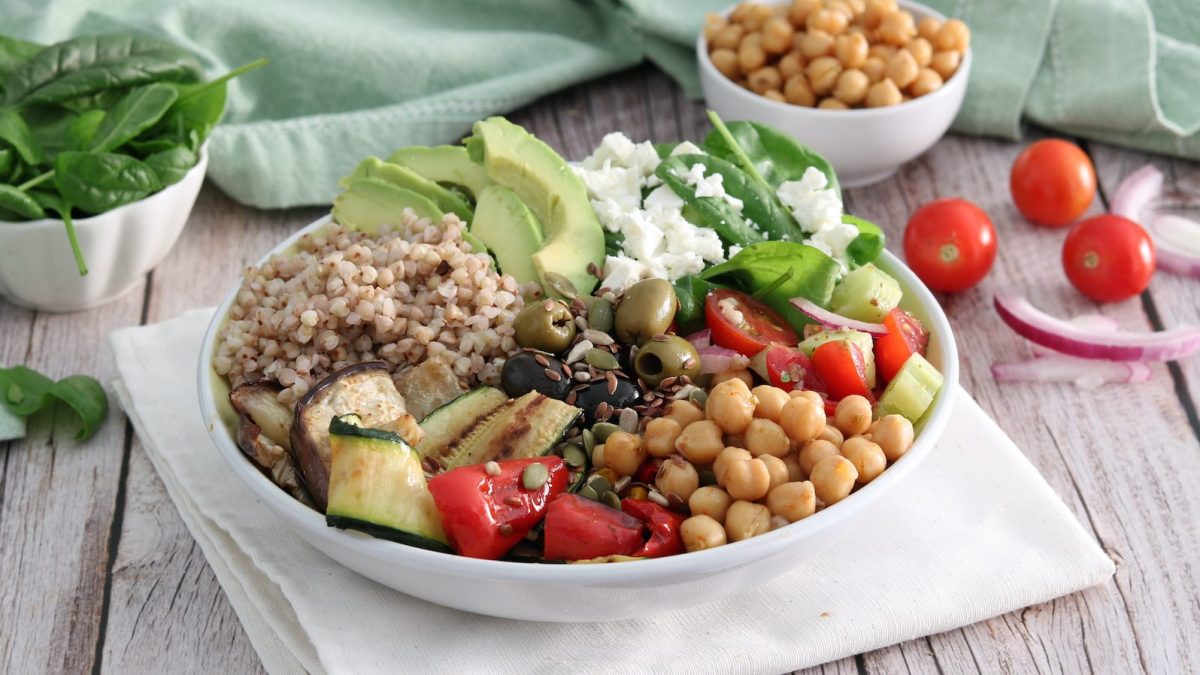
The Buddha Bowl is a nutritious and colorful one-pot meal, whose name refers, according to some theories, to the perfectly balanced ingredients it contains.
The dish typically features a grain, whether whole or pseudocereal, a portion of legumes, a portion of cooked or raw seasonal vegetables and fruit, oilseeds, and finally a source of protein, such as tofu, seitan, feta, and other cheeses, or chicken, turkey, and fish.
Ready in minutes, the Buddha bowl is perfect for a family lunch or to take with you for a quick lunch at the office or in the park.
What You'll Need for Our Buddha Bowl
We offer a super filling and balanced option, with hulled buckwheat, grilled zucchini, peppers, and eggplant, a salad of onions, cucumbers, and cherry tomatoes, fresh spinach, crumbled feta, cooked chickpeas, avocado slices, olives, and mixed seeds.
Buddha Bowl Recipe Variations
Of course, you can customize the Buddha bowl however you like, using ingredients available at home and seasonal vegetables and fruits. Instead of buckwheat, rice, quinoa, and other grains will work just fine; as for the chickpeas, you can omit them and add kidney beans, lentils, fava beans, edamame, and so on.
For a vegan variation, replace the feta with a plant-based cheese or diced tofu; instead of summer vegetables, you can use baked pumpkin, mushrooms, and radicchio for a fall version, steamed broccoli and cauliflower for a winter version, or snow peas, asparagus, and artichoke hearts for a spring version.
Should You Eat Buddha Bowl Warm or Cold?
Buddha bowls can be eaten either hot or cold — and that flexibility is part of their appeal. Because they’re built around grains, vegetables, proteins, and sauces, they adapt easily to temperature. A warm bowl with freshly roasted vegetables and just-cooked grains feels hearty and comforting, especially in cooler months. A chilled version, built with leftover grains, crisp raw vegetables, and a bright dressing, works just as well for lunch or meal prep. In most cases, it comes down to how the ingredients were prepared and what you’re in the mood for — there’s no rule, only preference.
Ingredients
How to Make This Buddha Bowl

To prepare the Buddha bowl, cut the zucchini into thin slices and set aside, then clean the peppers by removing the seeds and internal filaments and cut the pulp into pieces. Finally, slice the eggplants into rounds about half a centimeter thick.
To prepare the Buddha bowl, cut the zucchini into thin slices and set aside, then clean the peppers by removing the seeds and internal filaments and cut the pulp into pieces. Finally, slice the eggplants into rounds about half a centimeter thick.

Grill the mixed vegetables on a hot griddle, turning them often, until they are lightly browned on both sides. Transfer the grilled vegetables to a bowl, season with salt and extra virgin olive oil, then cover with plastic wrap and set aside.
Grill the mixed vegetables on a hot griddle, turning them often, until they are lightly browned on both sides. Transfer the grilled vegetables to a bowl, season with salt and extra virgin olive oil, then cover with plastic wrap and set aside.

Cook the buckwheat according to the instructions on the package, then drain it and place it in a container and let it cool.
Cook the buckwheat according to the instructions on the package, then drain it and place it in a container and let it cool.

Meanwhile, slice the red onion, peel the cucumber and cut it into cubes, then divide the cherry tomatoes into wedges.
Meanwhile, slice the red onion, peel the cucumber and cut it into cubes, then divide the cherry tomatoes into wedges.

Collect the vegetables in a dish and season them with extra virgin olive oil, salt and dried oregano, then mix everything well.
Collect the vegetables in a dish and season them with extra virgin olive oil, salt and dried oregano, then mix everything well.

In another bowl, combine the already boiled and well-drained chickpeas, the cumin, the paprika and the oil, then mix to distribute the dressing over the legumes.
In another bowl, combine the already boiled and well-drained chickpeas, the cumin, the paprika and the oil, then mix to distribute the dressing over the legumes.

Once the various elements are ready, assemble the Buddha bowl: arrange the buckwheat and mixed grilled vegetables on half of a large deep plate or bowl.
Once the various elements are ready, assemble the Buddha bowl: arrange the buckwheat and mixed grilled vegetables on half of a large deep plate or bowl.

Place the chickpeas, cucumber, onion and cherry tomato salad, then continue with the baby spinach and crumbled Greek feta.
Place the chickpeas, cucumber, onion and cherry tomato salad, then continue with the baby spinach and crumbled Greek feta.

Complete with avocado slices and mixed seeds and the pitted black and green olives, placing the latter in the center.
Complete with avocado slices and mixed seeds and the pitted black and green olives, placing the latter in the center.

The Buddha bowl is ready: bring it to the table and enjoy it!
The Buddha bowl is ready: bring it to the table and enjoy it!
Storage Instructions
Ideally, you should store the components separately in airtight containers in the refrigerator for up to three to four days. Keep the buckwheat and grilled vegetables together, but store delicate ingredients like spinach, cucumber, tomatoes, and especially avocado on their own to prevent sogginess and browning (add avocado just before serving if possible). Crumbled feta, olives, and seeds can be kept in small separate containers and sprinkled on at the end. If the bowl is already assembled, cover it tightly and refrigerate, but expect the fresh vegetables to soften slightly by the next day.
;Resize,width=767;)
