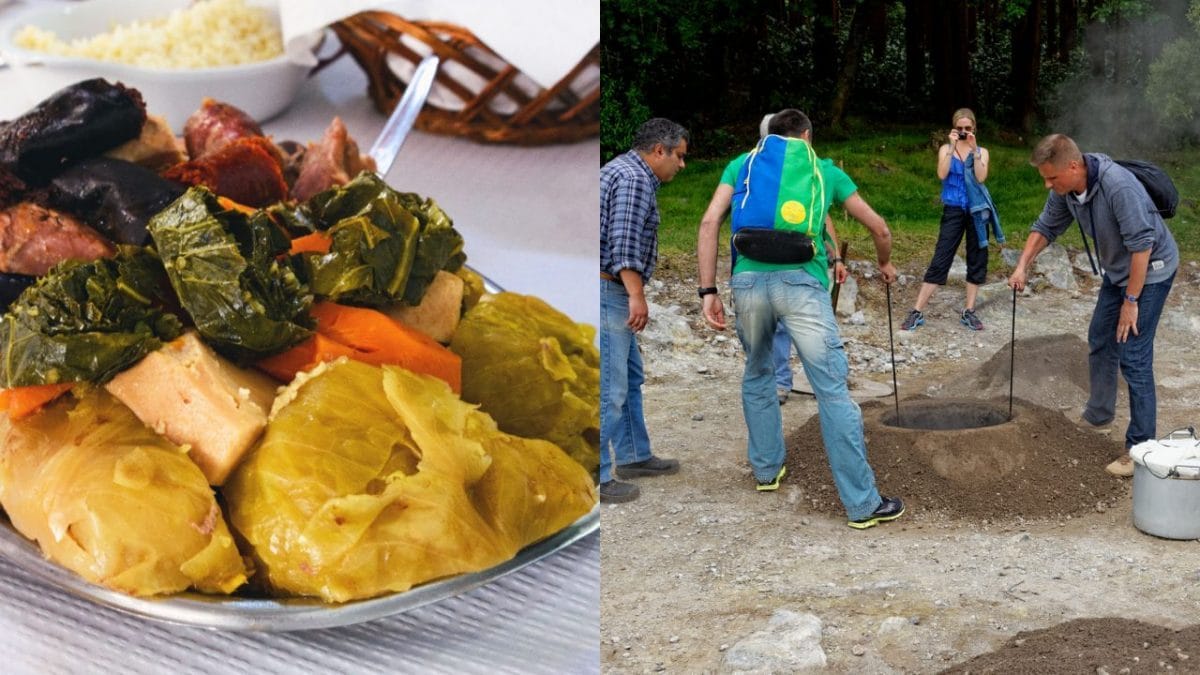
Lunch that comes from the earth: cozido das Furnas, cooked in the heart of a volcano. No stove or barbecue: on the island of São Miguel in the Azores, the meal cooks itself thanks to the heat of the earth. A unique experience combining gastronomy, geology, and slow living.
The dish is called cozido das Furnas and is a traditional stew that cooks slowly for hours in the earth. Geothermal energy plays the chef: a natural, constant heat that transforms a pot full of ingredients into a rich, aromatic, and unique dish. More than a recipe: a small ritual of nature.
How Does It Work?
This isn't the first restaurant to harness the energy of a volcano: in Lanzarote, in the Canary Islands, cooking is also done on the "mountain of fire." In the Azores, however, a specific dish is prepared: cozido das Furnas. Every morning, local chefs and restaurateurs head to the caldeiras, an area dotted with holes in the ground from which boiling steam rises. Inside each, large metal pots are lowered, tightly closed and sealed, filled with meat, sausages, potatoes, cabbage, carrots, and spices.

Once buried in the volcanic sand, the pots are left there for about six hours, pampered by the constant heat coming from underground, between 195/90 and 210°F/100°C. No flames, no electricity, just the patience of nature.
Around lunchtime, the pots reemerge, shrouded in steam. The aroma is already a foretaste: rich, deep, earthy. And when the cozido arrives at the table, the result is surprising: perfectly blended flavors, soft yet firm textures, a mineral aroma that speaks of the full strength of the earth.
The Dish's History
Cozido isn't a tourist trap. It's an ancient peasant recipe, born from the need to exploit every available resource in a remote, volcanic archipelago. Today, it's become the signature dish of Furnas, a hamlet of San Miguel, but it retains a deep connection with the local community.

Each restaurant interprets it in its own way: some use more vegetables, some prefer beef, some even add local pineapple. But the basis remains the same: a dish cooked without hands, served piping hot and plentiful, accompanied by bread and Azorean wine. You can simply order it at one of the village restaurants, or book a complete experience: from a visit to the caldeiras to the final lunch, including explanations about geothermal energy, the history of the place, and the preparation process.

The beauty? Even as a spectator, watching cooks lower pots into the steaming earth, with gloves and shovels, is a silent spectacle, somewhere between geology and the theater of food.
In a world where everything is accelerated, cozido forces you to slow down: it's a way of eating that teaches you to wait, to respect nature's rhythms and to trust its wisdom. And to discover that, if you let the earth do its thing, it might just know how to cook really well.
;Resize,width=767;)
