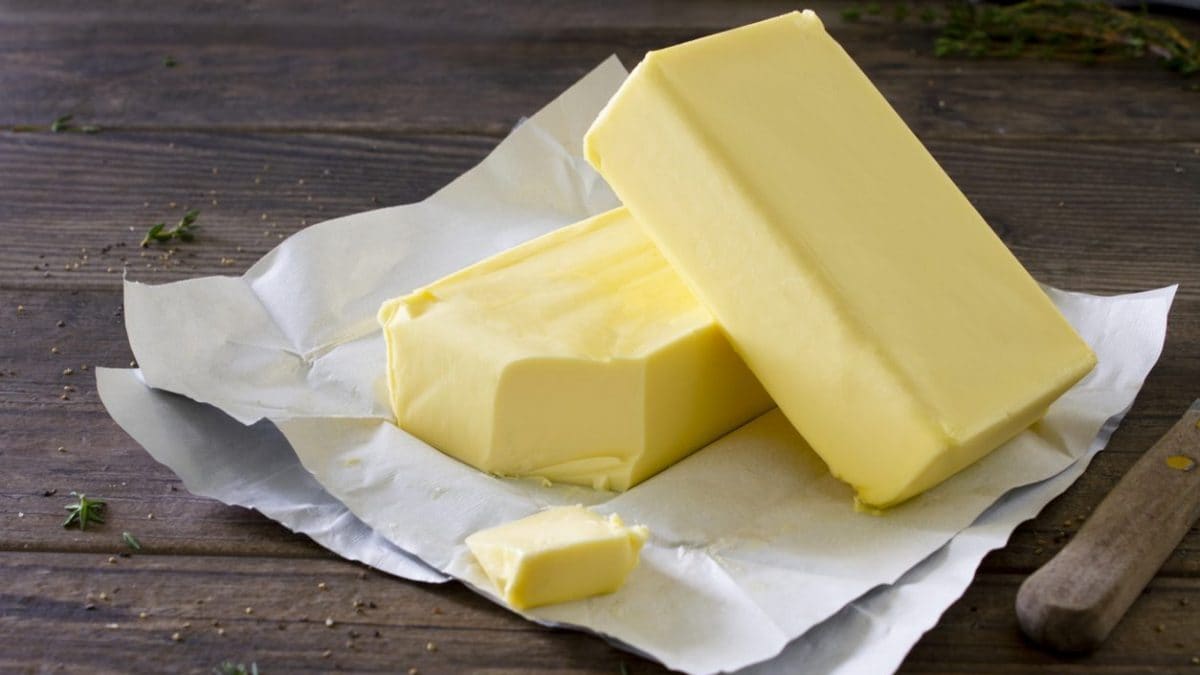
Butter is one of the most common ingredients in our kitchens, yet we rarely stop to ask where it really comes from and what determines its flavor. Not all butter is the same: it's not just the milk that makes the difference, but also the way the cream is separated before becoming butter. This is where the distinction between creamed butter and centrifugal butter comes from, two products obtained from the same raw material but through different processes, capable of influencing taste, consistency, and use in the kitchen. Understanding them helps you choose the right butter for every preparation and enhances even the simplest gestures, like buttering a slice of bread. Here's everything you need to know about creamed butter and centrifugal butter: how they're made, what characteristics they have, and which is the best choice for each occasion.
How is Butter Made
Butter is the result of the transformation of the fat part of milk, but its quality depends crucially on the method used to separate the cream. The distinction between creamed butter and centrifugal butter arises precisely at this stage and reflects two different production approaches: one based on time and natural processes, the other on speed and technological control. Understanding this difference helps not only to guide your purchase, but also to make informed choices about how to use butter in the kitchen.
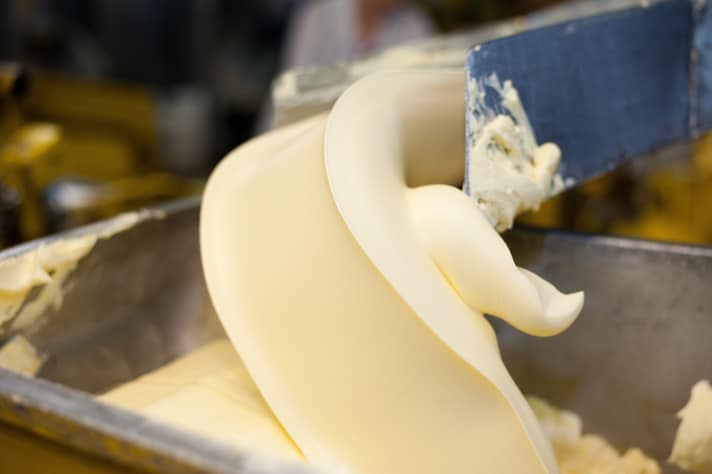
In both cases, the final stage of the process is churning, the mechanical action that breaks down the fat globules in the cream and causes them to clump together into a solid mass. What's different is everything that happens beforehand, when the milk is prepared to release its fat fraction.
Creamed Butter, Natural Separation and Fermentation
In cream butter, the cream is obtained by letting the milk rest for several hours in large, shallow containers. Due to the difference in density, the fat slowly rises to the surface. This waiting time is not neutral: during the rest, spontaneous lactic fermentations are activated, modifying the cream even before it is churned.
From a technical and sensorial point of view, these fermentations translate into:
- a slightly higher acidity;
- a more complex flavor profile;
- greater variability between one production and another.
These characteristics make cream butter particularly interesting when butter needs to stand out. It's a suitable choice for raw use, for creaming risottos, or to accompany simple preparations, where its lactic and slightly acidic notes can emerge without being masked. However, it's less suitable when extreme consistency or consistent results over time are required, as in some pastry making.
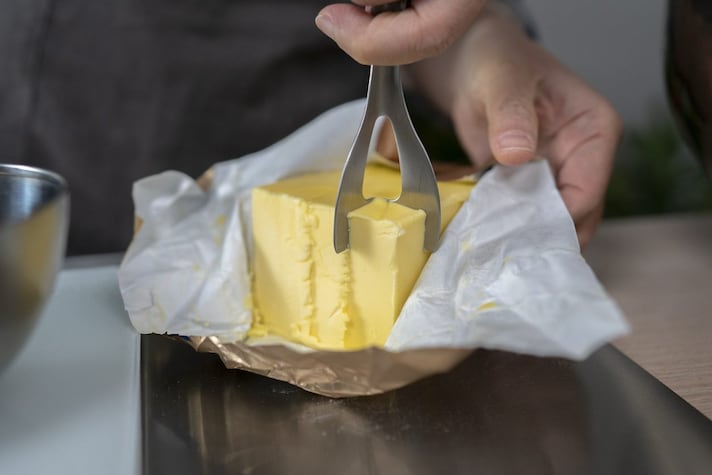
Centrifugal Butter, Control, Freshness and Standardization
Centrifugal butter is the result of a faster and more controlled process. The milk is separated almost immediately after milking using a centrifuge, which separates the cream from the skimmed milk in just a few moments. This drastically reduces the resting time and limits spontaneous fermentation.
The result is a butter with very consistent characteristics, generally attributable to:
- low acidity;
- a sweet, clean flavor;
- a regular and predictable structure.
These qualities make it particularly reliable in technical preparations. In pastry making, for example, a centrifuged butter allows for better control over the crispness of a shortcrust pastry or the layering of a puff pastry. Even in everyday cooking, it's a sensible choice when the butter doesn't need to dominate the dish, but rather perform a structural or supporting function, such as in long cooking or in sauces.
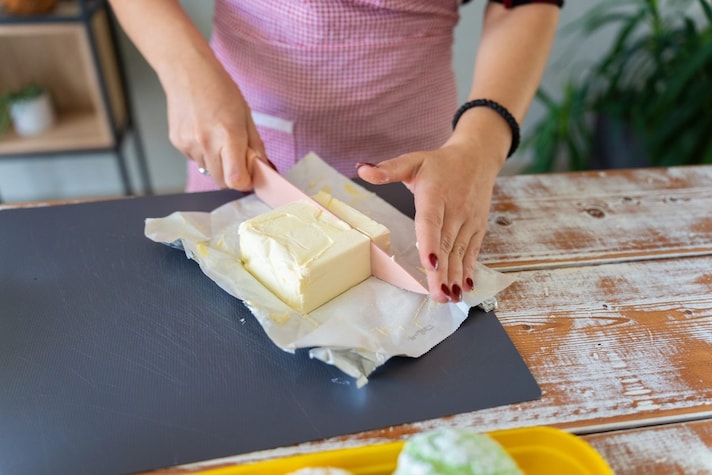
Which Should You Choose for Cooking, and Why?
The comparison between creamed butter and centrifugal butter isn't a question of absolute quality, but of method. The former incorporates time as a production factor and accepts a certain variability as part of its identity. The latter focuses on control, safety, and repeatability.
In the kitchen, having both means being able to choose the tool best suited to the task. A butter that makes its presence felt when character is needed, and a more subtle one when precision is crucial. It is with this understanding that a daily gesture like spreading butter on bread ceases to be banal and becomes, silently, a technical choice.
When tasted, especially raw, the difference between the two butters becomes more evident. The creamed butter has a more pronounced personality and greater aromatic depth, while the centrifuged butter is more linear and neutral, with a more regular melting. In practice, this distinction can easily guide your choice:
- if the butter is to characterize the dish, cream butter is often the most effective choice;
- if it needs to integrate without emerging, centrifuged butter guarantees greater balance.
Taking this aspect into account helps to avoid inharmonious combinations, especially in recipes where butter is present in significant quantities.
;Resize,width=767;)
