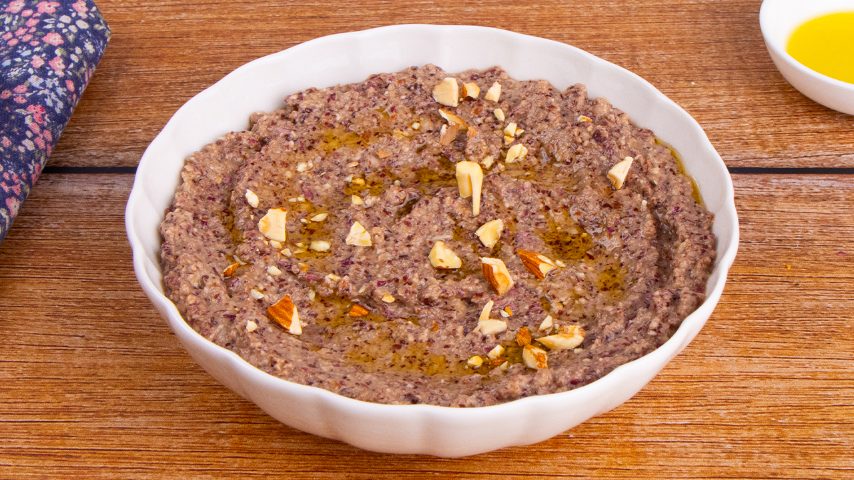
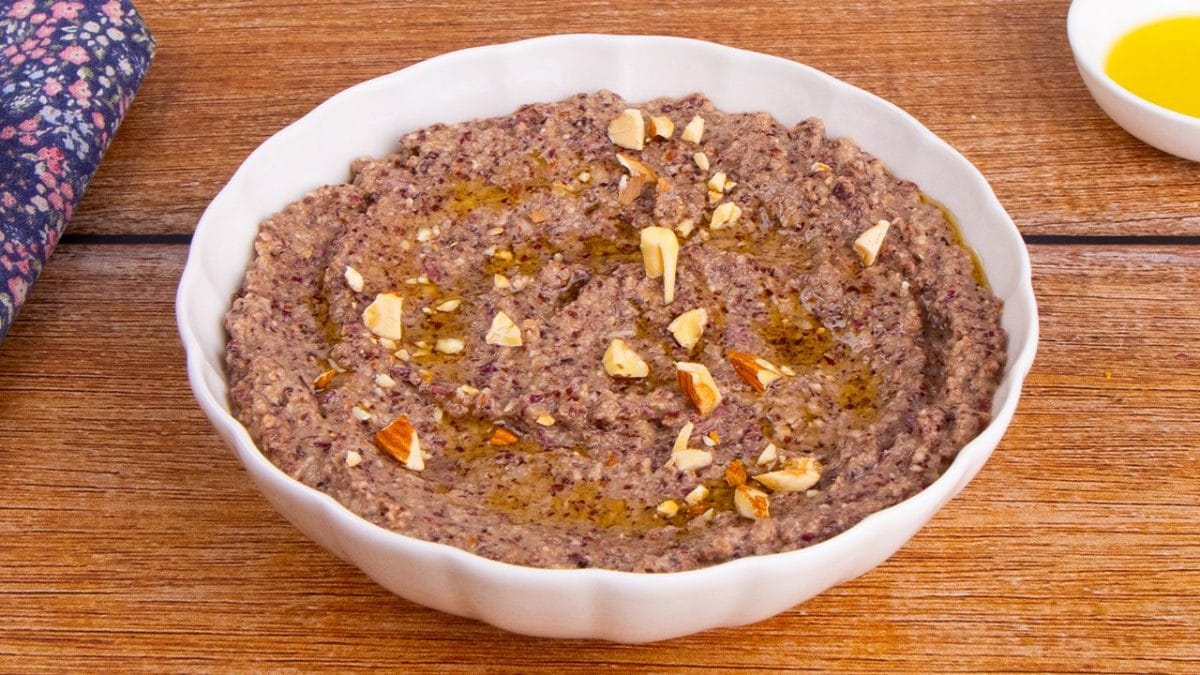
Radicchio Pesto is a colorful and flavorful alternative to classic basil pesto, made with fresh radicchio, almonds, pine nuts, Parmesan, and extra virgin olive oil.
The slightly bitter flavor of radicchio is balanced by the richness of Parmesan and nuts, while olive oil turns everything into a smooth, creamy sauce. Soaking the radicchio before blending also helps soften its more assertive notes.
Ready without cooking, this versatile pesto can be tossed with pasta, spread over toasted bread, spooned onto sandwiches, or served alongside roasted vegetables and cheeses.
Why Everyone Will Love This Recipe
Radicchio pesto has a more distinctive flavor than traditional herb-based sauces. The radicchio gives it a pleasantly bitter edge, while almonds add body and sweetness and pine nuts contribute their delicate, buttery flavor.
Parmesan adds savory depth and helps bring all the ingredients together, while extra virgin olive oil creates the creamy texture.
It is also exceptionally quick. Once the radicchio has soaked and dried, everything goes into the food processor and is blended in minutes. The result is a versatile condiment that can instantly transform a simple bowl of pasta or a slice of toasted bread.
What Is Radicchio Pesto?
Radicchio Pesto is a modern variation on the Italian tradition of pesto, a term that refers broadly to sauces made by crushing or blending ingredients together. The best-known example is pesto alla Genovese, the Ligurian sauce traditionally associated with basil, pine nuts, cheese, garlic, and extra virgin olive oil. Over time, the same basic technique has inspired countless variations made with vegetables, herbs, and different nuts.
Radicchio is a type of chicory strongly associated with northeastern Italy, particularly the Veneto region, where several prized varieties are cultivated. Its characteristic flavor ranges from mildly bitter to more pronounced depending on the variety. Using radicchio in pesto creates a sauce that combines that distinctive bitterness with the richness of almonds, pine nuts, Parmesan, and olive oil.
Cooking Tips
- Choose radicchio with crisp, brightly colored leaves because fresh radicchio will give the pesto a cleaner flavor and more attractive color.
- Soak the chopped radicchio for the full 30 minutes because this simple step can help mellow some of its natural bitterness before blending.
- Dry the radicchio extremely well after soaking because excess water can dilute the pesto and prevent the olive oil and cheese from creating a rich, creamy consistency.
- Toast the almonds and pine nuts lightly if you prefer a deeper nutty flavor, but let them cool completely before adding them to the food processor.
- Add the extra virgin olive oil gradually if you want greater control over the texture, stopping once the pesto becomes smooth but still thick enough to cling to pasta or bread.
- Blend in short pulses initially because this helps break down the nuts and radicchio evenly without overheating the mixture.
- Taste before adding too much salt because Parmesan already contributes considerable saltiness.
- If the radicchio is particularly bitter, a little extra Parmesan or a few additional almonds can help soften the flavor without hiding its characteristic taste.
- For pasta, loosen the pesto with a spoonful of warm pasta cooking water because this makes it creamier and helps it coat the pasta more evenly.
- Avoid heating the pesto directly over high heat because excessive cooking can dull its fresh flavor and alter the texture of the Parmesan and olive oil.
Frequently Asked Questions
What Type of Radicchio Is Best for Pesto?
Several varieties can work, including round Chioggia radicchio and longer Treviso types. Milder varieties create a softer pesto, while more bitter radicchio produces a stronger, more distinctive sauce, so the best choice depends on your personal preference.
Why Do You Soak the Radicchio Before Blending It?
Soaking helps mellow some of radicchio's characteristic bitterness. It also refreshes the leaves, but it is important to dry them very thoroughly afterward so additional water does not thin the pesto.
Can I Replace the Almonds or Pine Nuts?
Yes. Walnuts, hazelnuts, cashews, or pistachios can all be used to create different variations. Almonds give this pesto body and mild sweetness, while pine nuts have a softer flavor, so changing the nuts will noticeably alter the final taste.
Can I Make Radicchio Pesto Without Parmesan?
Yes, although Parmesan provides both saltiness and body. For a dairy-free variation, omit it and adjust the quantity of nuts and olive oil as necessary; you can also use a suitable plant-based savory alternative if desired.
What Can I Use Radicchio Pesto For?
It is excellent tossed with pasta, gnocchi, or risotto, but it also works as a spread for crostini, sandwiches, and savory pastries. Try serving it with roasted potatoes, grilled vegetables, or mild cheeses for a simple appetizer.
How Can I Make the Pesto Less Bitter?
Start by soaking the radicchio as directed and choose a milder variety if possible. Additional almonds, Parmesan, or a little more olive oil can round out the flavor, but add them gradually so the pesto still retains its distinctive radicchio character.
How to Store
Transfer the Radicchio Pesto to a clean airtight jar or container and keep it in the refrigerator for up to 2–3 days. Smooth the surface and add a very thin layer of extra virgin olive oil before sealing if desired, which helps limit contact with air. Always use a clean spoon when taking pesto from the container.
How to Freeze
Radicchio Pesto can be frozen in small portions for up to 1–2 months. Spoon it into an ice cube tray or small freezer-safe containers so you can thaw only the amount you need. Once frozen solid, the cubes can be transferred to a sealed freezer bag. Thaw the pesto overnight in the refrigerator, then stir well and add a little fresh extra virgin olive oil if necessary to restore its creamy consistency.
Ingredients
How to Make Radicchio Pesto

To make radicchio pesto, remove any damaged outer leaves from the radicchio, then cut the head into pieces (removing the core) and transfer them to a bowl. Cover with water and leave them to soak for 30 minutes: this way, the typically bitter flavor of radicchio will fade.
To make radicchio pesto, remove any damaged outer leaves from the radicchio, then cut the head into pieces (removing the core) and transfer them to a bowl. Cover with water and leave them to soak for 30 minutes: this way, the typically bitter flavor of radicchio will fade.

After this time, drain the radicchio well and pat it dry with a clean cloth. Then, transfer it to a food processor and add the grated Parmesan cheese.
After this time, drain the radicchio well and pat it dry with a clean cloth. Then, transfer it to a food processor and add the grated Parmesan cheese.

Also add the pine nuts and shelled almonds, or, if you prefer, the peeled ones.
Also add the pine nuts and shelled almonds, or, if you prefer, the peeled ones.

Complete with oil, salt and ground pepper.
Complete with oil, salt and ground pepper.

Start the mixer and blend all the ingredients for a few minutes, until you obtain a smooth and homogeneous cream. Then transfer it to a plate and garnish it with a drizzle of raw oil and a handful of coarsely chopped almonds.
Start the mixer and blend all the ingredients for a few minutes, until you obtain a smooth and homogeneous cream. Then transfer it to a plate and garnish it with a drizzle of raw oil and a handful of coarsely chopped almonds.

The radicchio pesto is ready: use it to enrich your favorite recipes. Enjoy!
The radicchio pesto is ready: use it to enrich your favorite recipes. Enjoy!


