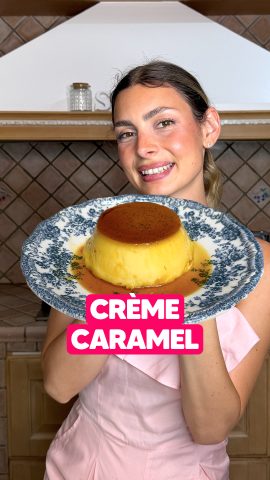
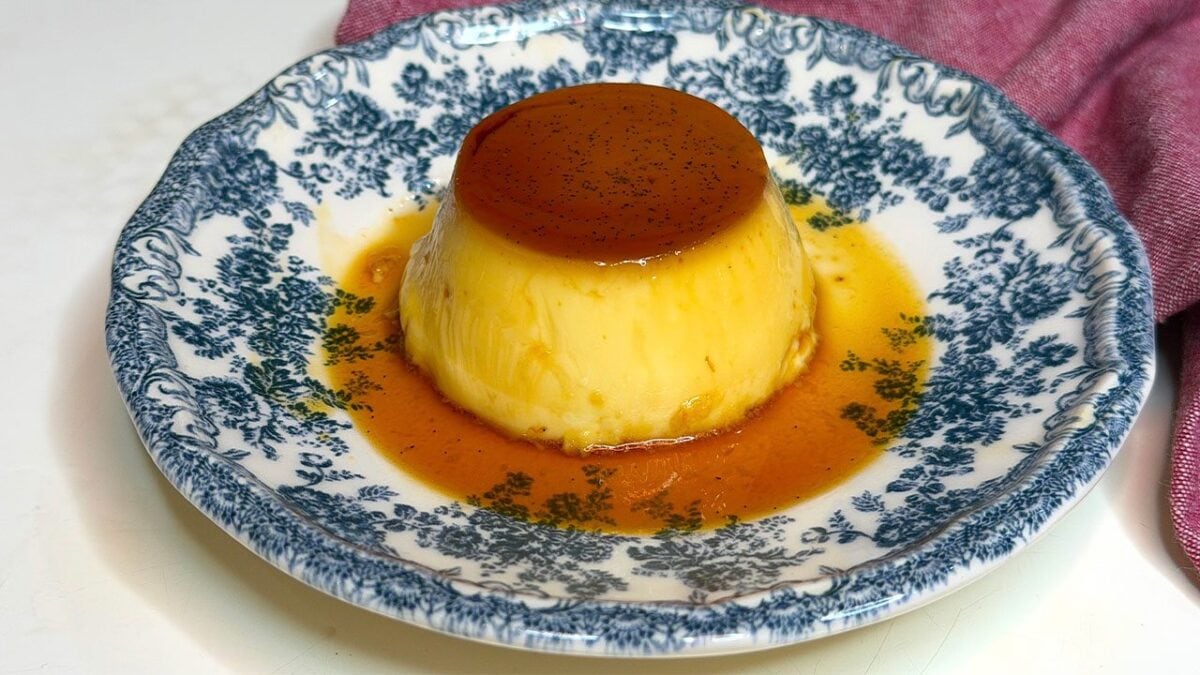
Smooth, delicate, and covered in glossy caramel sauce, this crème caramel recipe is a classic dessert that never goes out of style. Beneath its beautiful amber topping is a silky vanilla custard made with whole milk, fresh cream, eggs, and real vanilla bean.
Despite its elegant appearance, homemade crème caramel requires only a handful of ingredients and a few simple techniques.
The caramel is prepared first and poured into individual molds. A creamy vanilla custard goes on top, and everything is gently baked in a water bath until just set.
After several hours in the refrigerator, the custards are turned upside down onto serving plates, allowing the caramel to flow over the surface.
Perfect for dinner parties, holidays, or a special family dessert, classic crème caramel is wonderfully rich without feeling heavy.
What Is Crème Caramel?
Crème caramel is a classic custard dessert associated with French cuisine and enjoyed in many countries around the world.
It's made by pouring a mixture of eggs, milk, sugar, and vanilla over a layer of caramelized sugar, then baking it gently until set.
Once chilled, the custard is inverted onto a plate. The caramel, which softens during baking and refrigeration, becomes a liquid sauce that flows over the dessert.
Crème caramel is sometimes called caramel custard or flan, although recipes and terminology vary by country.
Unlike crème brûlée, which has a hard caramelized sugar crust on top, crème caramel has a soft, liquid caramel sauce.
The defining characteristic is its texture: tender enough to wobble gently but firm enough to hold its shape when unmolded.
Why Everyone Will Love This Recipe
The contrast between the silky custard and the slightly bittersweet caramel makes this dessert irresistible.
The vanilla filling is smooth and delicate, while the caramel adds sweetness and a deeper, toasted flavor. Once unmolded, the caramel becomes a beautiful sauce that coats every spoonful.
It's also an excellent make-ahead dessert. Crème caramel needs at least four hours in the refrigerator, but chilling it overnight gives the custard plenty of time to set.
Another advantage is its simplicity. No pastry, complicated decorations, or special ingredients are required. Just a few pantry staples and careful baking.
Tips for Perfect Crème Caramel
- Don't stir the caramel with a spoon. Let the sugar and water cook undisturbed, gently swirling the pan only if necessary to encourage even caramelization.
- Avoid incorporating too much air into the custard. Whisk the eggs and sugar gently rather than beating them until foamy.
- Always strain the custard mixture. Passing it through a fine-mesh sieve helps remove lumps and produces a smoother texture.
- Use a water bath and avoid overbaking. The custard should be set around the edges but still slightly wobbly in the center.
Frequently Asked Questions
What Is the Difference Between Crème Caramel and Crème Brûlée?
Both are custard-based desserts, but their caramel layers are completely different.
Crème caramel is baked over a layer of caramel that becomes a liquid sauce when the dessert is unmolded. Crème brûlée has a crisp caramelized sugar topping that's typically created just before serving.
Why Is My Crème Caramel Full of Holes?
Small holes or bubbles usually indicate that the custard was cooked at too high a temperature or that too much air was incorporated into the egg mixture.
Whisk gently, strain the custard, and bake it in a water bath for a smoother result.
Why Is My Crème Caramel Not Setting?
The custard may need more baking time. It should be set around the edges with a gentle wobble in the center before being removed from the oven.
Remember that it continues to firm up as it cools and chills in the refrigerator.
Can Crème Caramel Be Made Without Cream?
Yes. Some traditional versions use only milk, eggs, and sugar. However, the cream in this recipe creates a richer, silkier consistency.
Replacing it entirely with milk will produce a lighter custard with a slightly different texture.
How Do You Know When Caramel Is Ready?
The caramel is ready when the melted sugar turns a rich amber color.
Avoid cooking it until very dark brown, as it can quickly become bitter. Remove the saucepan from the heat as soon as the desired color is reached.
How Do You Unmold Crème Caramel Without Breaking It?
Make sure the custard is thoroughly chilled first.
Run a thin knife gently around the inside edge of the mold, place a serving plate over it, and carefully invert both together.
If the custard doesn't release immediately, give the mold a gentle shake or allow a little air to enter along the edge.
How to Store
Keep homemade crème caramel in the refrigerator until ready to serve.
Cover the individual molds carefully and refrigerate for up to 3 days. For the best presentation, leave the custards in their molds and unmold them just before serving.
Crème caramel should be served chilled and should not be left at room temperature for more than 2 hours.
How to Freeze
Freezing crème caramel is not recommended.
The delicate egg custard can become grainy or watery after freezing and thawing, losing the smooth, silky consistency that makes this dessert special.
For the best results, prepare it up to a day or two in advance and keep it refrigerated until serving.
Ingredients
How to make Crème Caramel

Begin by preparing the caramel. Place the granulated sugar and water in a small, heavy-bottomed saucepan.
Begin by preparing the caramel. Place the granulated sugar and water in a small, heavy-bottomed saucepan.

Set the saucepan over medium heat and allow the sugar to melt without stirring with a spoon. As the mixture heats, it will begin to bubble and gradually change color.
Set the saucepan over medium heat and allow the sugar to melt without stirring with a spoon. As the mixture heats, it will begin to bubble and gradually change color.

Continue cooking until the caramel becomes a beautiful amber shade. Remove it from the heat immediately to prevent it from becoming too dark or bitter.
Continue cooking until the caramel becomes a beautiful amber shade. Remove it from the heat immediately to prevent it from becoming too dark or bitter.

Carefully pour a small amount of hot caramel into the bottom of each individual custard mold, tilting the molds slightly to distribute it evenly. Work quickly, as the caramel will begin to harden as it cools. Set the molds aside and allow the caramel to cool completely.
Carefully pour a small amount of hot caramel into the bottom of each individual custard mold, tilting the molds slightly to distribute it evenly. Work quickly, as the caramel will begin to harden as it cools. Set the molds aside and allow the caramel to cool completely.

Meanwhile, prepare the vanilla custard. Pour the whole milk and heavy cream into a saucepan.
Meanwhile, prepare the vanilla custard. Pour the whole milk and heavy cream into a saucepan.

Slice the vanilla bean lengthwise and scrape out the seeds with the tip of a knife. Add both the seeds and the empty pod to the milk-and-cream mixture.
Slice the vanilla bean lengthwise and scrape out the seeds with the tip of a knife. Add both the seeds and the empty pod to the milk-and-cream mixture.

Heat gently over low heat until the mixture is hot but not boiling. Remove the saucepan from the heat and discard the vanilla pod.
Heat gently over low heat until the mixture is hot but not boiling. Remove the saucepan from the heat and discard the vanilla pod.

In a large mixing bowl, combine the whole eggs, egg yolks, and granulated sugar.
Whisk gently until the ingredients are well combined, taking care not to incorporate too much air. The mixture should be smooth rather than light and foamy.
In a large mixing bowl, combine the whole eggs, egg yolks, and granulated sugar.
Whisk gently until the ingredients are well combined, taking care not to incorporate too much air. The mixture should be smooth rather than light and foamy.

Gradually pour the warm milk-and-cream mixture into the eggs while whisking continuously. Adding the liquid slowly helps prevent the eggs from scrambling.
Gradually pour the warm milk-and-cream mixture into the eggs while whisking continuously. Adding the liquid slowly helps prevent the eggs from scrambling.

Once everything is combined, pour the custard through a fine-mesh strainer to remove any lumps and ensure a smooth texture.
Preheat the conventional oven to 320°F (160°C).
Once everything is combined, pour the custard through a fine-mesh strainer to remove any lumps and ensure a smooth texture.
Preheat the conventional oven to 320°F (160°C).

Carefully divide the vanilla custard among the prepared molds, pouring it over the hardened caramel.
Carefully divide the vanilla custard among the prepared molds, pouring it over the hardened caramel.

Arrange the molds inside a deep baking dish or roasting pan. Pour hot water into the surrounding pan until it reaches approximately halfway up the sides of the molds, creating a water bath, also known as a bain-marie. Arrange the molds inside a deep baking dish or roasting pan. Pour hot water into the surrounding pan until it reaches approximately halfway up the sides of the molds, creating a water bath, also known as a bain-marie.
Arrange the molds inside a deep baking dish or roasting pan. Pour hot water into the surrounding pan until it reaches approximately halfway up the sides of the molds, creating a water bath, also known as a bain-marie. Arrange the molds inside a deep baking dish or roasting pan. Pour hot water into the surrounding pan until it reaches approximately halfway up the sides of the molds, creating a water bath, also known as a bain-marie.

Remove the molds from the water bath and place them on a heatproof surface. Allow them to cool, then refrigerate promptly once they are no longer steaming, without leaving them at room temperature for more than 2 hours. Chill for at least 4 hours, preferably overnight, until completely set.
Remove the molds from the water bath and place them on a heatproof surface. Allow them to cool, then refrigerate promptly once they are no longer steaming, without leaving them at room temperature for more than 2 hours. Chill for at least 4 hours, preferably overnight, until completely set.

When ready to serve, gently run a thin knife around the inside edge of each mold to loosen the custard.
When ready to serve, gently run a thin knife around the inside edge of each mold to loosen the custard.

Place a serving plate over the mold and carefully turn both upside down. Lift the mold slowly, allowing the crème caramel to slide onto the plate.
The golden caramel sauce will flow over the silky vanilla custard, creating its signature glossy finish.
Place a serving plate over the mold and carefully turn both upside down. Lift the mold slowly, allowing the crème caramel to slide onto the plate.
The golden caramel sauce will flow over the silky vanilla custard, creating its signature glossy finish.

Serve the homemade crème caramel chilled, with plenty of caramel sauce spooned over the top.
Serve the homemade crème caramel chilled, with plenty of caramel sauce spooned over the top.


