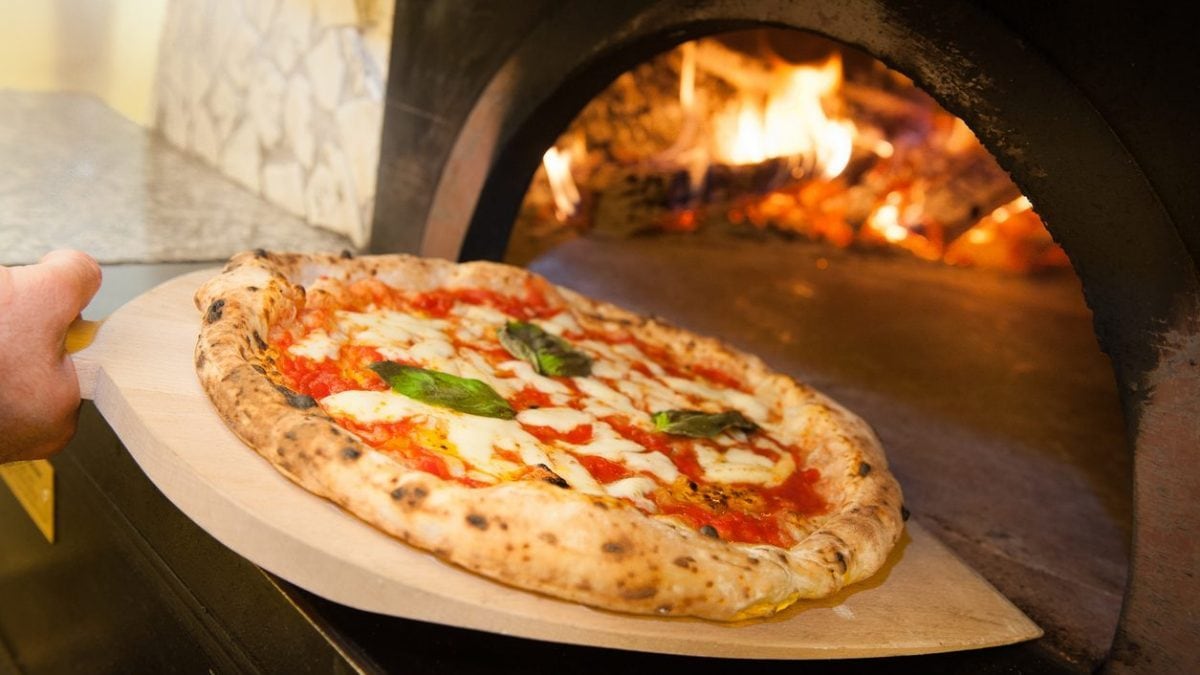
Unlike all other pizza styles, the "Neapolitan pizza" type is protected by the TSG label, or Traditional Specialities Guaranteed. This means that there are specifications to follow: unlike DOP and DOC, this latter label separates the product from the territory, allowing all master pizza makers living in the European Community to replicate the dish, as long as they follow the guidelines. But what exactly does the Neapolitan pizza specification say? Let's look at all the phases in detail.
How to Make a "Real" Neapolitan Pizza
The European Union's shift threatens to overturn the continent's pizzeria landscape: the name "Neapolitan pizza" can no longer be used unless a "true" product is made. But how do you obtain this "authorization"? By following the specifications. The process of establishing this "manifesto" has deep roots: in 1984, Antonio Pace and Lello Surace brought together the most important pizza chefs of the time to draw up the fundamental rules and recognize "True Neapolitan Pizza," differentiating it from all other existing varieties. They established the Associazione Verace Pizza Napoletana (True Neapolitan Pizza Association), or AVPN, and since then the specifications have been a symbol of this constantly evolving (albeit unnervingly slowly): they serve to defend the tradition of the typical dish but can be modified to keep pace with technological advances in the kitchen. Despite some openings, we are still talking about an extremely stringent "sheet", which for example does not take into account the recipe of the topping: only margherita and marinara are protected by the TSG, as if all the others did not exist, even if they are ancient and traditional.
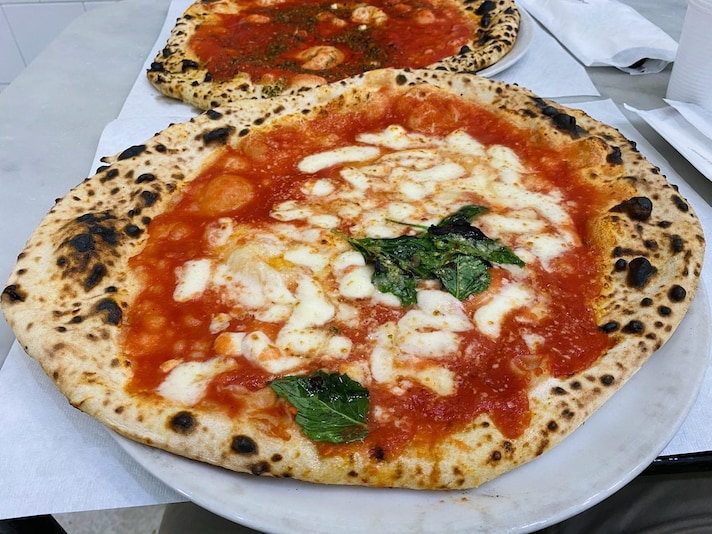
The pizza specification starts from the shape and aesthetics:
- Neapolitan pizza is round, with a diameter that must not exceed 35cm;
- Neapolitan pizza has a raised edge (the famous cornice), puffed up and free of burns of about 1-2 cm;
- Neapolitan pizza must be soft and fragrant.
It then focuses on the ingredients by giving a basic recipe with 0 or 00 flour (the addition of type 1 soft wheat flour is permitted in small percentages, from 5 to 20%) which ranges from 1.6 to 1.8 kilos, brewer's yeast which ranges from 0.1 to 3 grams, a liter of water and between 40 and 60 grams of salt. "Flour, water, salt and yeast are mixed together, starting with the water, making sure that direct contact between salt and yeast does not occur for more than 5 minutes" because, as stated in the AVPN specification, "the salt would damage the yeast cells. Pour a liter of water into the mixer, dissolve a quantity of sea salt between 40 and 60 grams, add 10% of the total quantity of flour, then dissolve the yeast, start the mixer and gradually add the rest of the flour until the desired consistency, called dough point, is reached". The dough should be worked by hand or in the mixer until a compact mass is obtained and they suggest using a flour capable of absorbing water, between 250 and 320 W.
The dough is then left to rest, covered with a damp cloth: there is no specific time limit for this first phase, but master pizza makers suggest letting it rest "for the time deemed necessary for the dough to settle and rest" before carrying out the so-called "stagliata," or the assembly of the individual dough balls. In more traditional pizzerias, the "Neapolitan technique" is used, a technique that has allowed the art of "Neapolitan pizza making" to become a UNESCO intangible cultural heritage site. The technique involves shaping pieces of dough into balls, similar to what cheesemakers do with mozzarella. The dough balls must weigh between 200 and 280 grams to obtain a pizza that is between 22 and 35 centimeters in diameter (depending on how the dough is rolled out and the area of origin). Once the loaves are formed, a second leavening takes place, lasting a variable amount of time, depending on the ambient temperature and humidity and the absorption of the flour used. The second leavening period is specified: a minimum of 8 hours, a maximum of 24 hours, with the possibility of adding 4 hours depending on the type of dough used. Traditional pizza doughs do not require a very long leavening time.
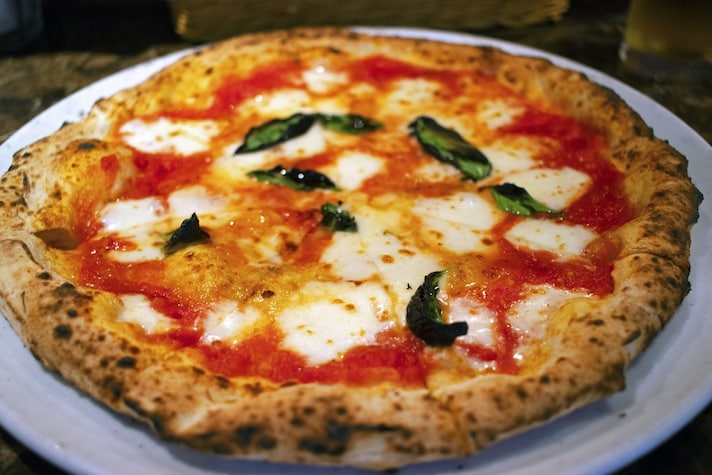
The dough is rolled out using the iconic yet complex movement for non-professionals: starting from the center and working outward, the dough is pressed with both hands. The dough is then turned several times, forming a disc of dough so that the center is no thicker than 2.5 millimeters. The toppings should preferably be from Campania, or at most Italian; the peeled tomatoes should be crushed by hand and should not be dense, so you should leave small pieces; the fresh tomatoes should be cut into wedges. Mozzarella or fiordilatte—you can choose—the important thing is that it is high-quality and evenly distributed across the entire disc, as is the grated cheese (if used). Cooking is a very delicate matter because the specifications almost exclusively allow for a wood-fired oven, with temperatures ranging from 806°F/430°C to 896°F/480°C between the floor and the vault. At these temperatures, it's sufficient to insert the pizza for 60-90 seconds, during which time the pizza will cook evenly around the entire circumference. There's also the option of using an electric or gas oven if you're unable to install a wood-fired oven.
All of this, plus other steps outlined in the specifications, which are mostly technical for professional pizza makers, must lead to the result we all know. Neapolitan pizza is soft, fragrant, easily foldable, and has a distinctive flavor derived from the crust, which has the typical taste and aroma of well-risen and well-baked bread, mixed with the acidic flavor of the tomato, which, having lost only its excess water, remains dense and consistent, complemented by the aromas of oregano, garlic, or basil, respectively, and the flavor of cooked mozzarella. Finally, the oil emulsifies and contributes to the even cooking of the ingredients.
;Resize,width=767;)
