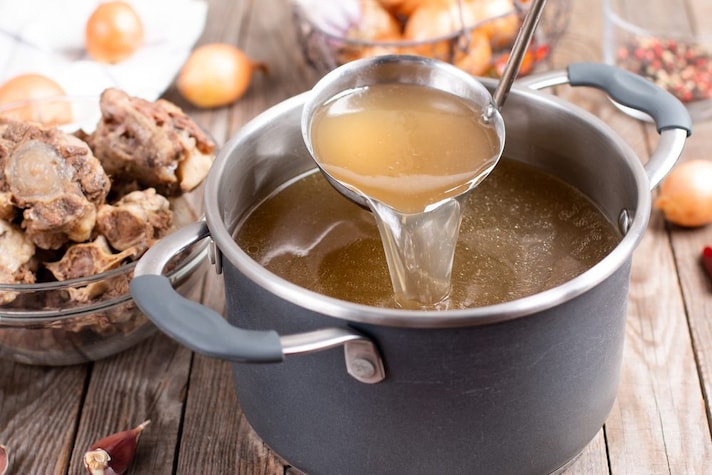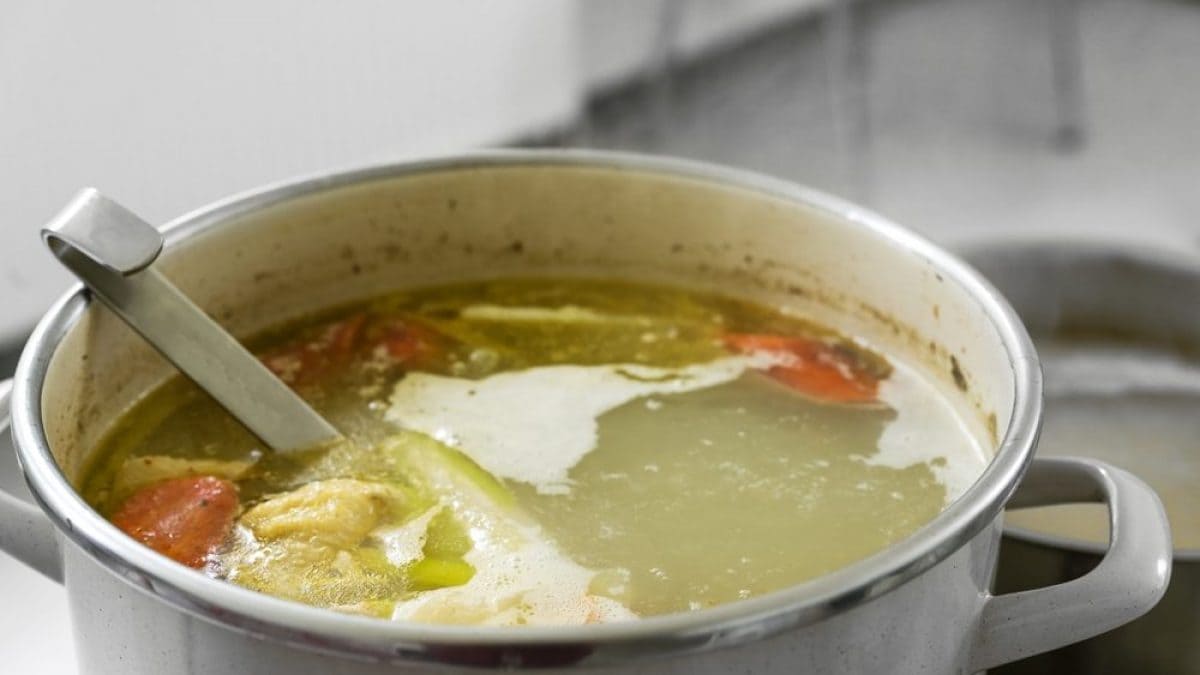
When looking for a broth recipe, we often find the instruction to skim it: essentially removing the solid part that forms on the surface, which is technically called the lees. But what does broth foam consist of, and what's the point of skimming it? Is it mandatory or just optional? Here's everything you need to know about broth foam: what it contains, if and why you should remove it, and how to do it using the cold method.
What Is Lees?
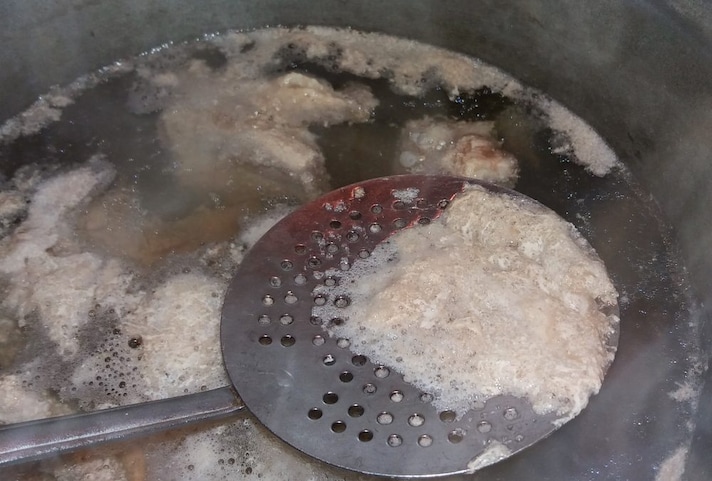
When we prepare a broth, especially if it's meat-based, once it reaches a boil, lees form on the surface: a kind of whitish, grayish, or brown foam, depending on the ingredients used, which floats to the surface and remains on top of the broth. Lees are nothing more than a conglomeration of fats, proteins, and residues from the products used to make the broth: this is why they form especially with meat broths, which are rich in them. In the restaurant industry, large quantities of broth are often made from large bones that are boiled together with vegetables: in this case, it's essential to skim the broth, precisely to eliminate even small bone residues that would be unpleasant for the customer to find on their plate.
So, is skimming broth essential at home? The answer is no, because while in a restaurant it's also a matter of cleanliness and safety, at home you'd never boil huge chunks of bone, but rather pieces whose residue can be removed by filtering the broth through a wide-mesh strainer, like when removing vegetables. In a restaurant, in fact, it's mandatory to serve clear broth without residue, something you can do at home if you wish, but it's not mandatory.
Fat issue: If you prefer a lighter, clearer broth, we suggest skimming it instead, as the foam contains some (but not all) of the fat from the boiled meat. You can do this with a slotted spoon, simply by gently collecting the foamy part at the top of the broth. You'll need to do this as soon as the foam forms, before the suspended particles dissolve in the liquid, repeating the process several times.
There are therefore two reasons why to skim broth:
- Aesthetic reasons. In the past, the foam broth could also contain impurities because hygiene rules were less strict, but today there's no risk, and the reason restaurants serve clear broth is related to the beauty of the dish: clear broth is more inviting, but also has a slightly different flavor. Removing the fat will make the broth less rounded and a touch more acidic.
- Reasons for a dish's lightness. In restaurants where several dishes are eaten in succession, making the broth lighter by removing some of the fat contained in the foam can help diners enjoy all the dishes on offer without feeling overly heavy. It's no coincidence that this is especially true with chicken, hen, and capon broths, as well as beef: it wouldn't make sense to do this with vegetable broth, which produces little fat; in these cases, simply strain the broth through a colander. Even when making broth at home, removing the foam will remove some of the fat from the broth.
There are no health reasons behind this step, which you can do or not do depending on your tastes and those of your guests. It's something you can do, for example, if you've prepared pasta broth, since the broth will also contain other ingredients.
The Cold Method
If you don't have a problem with cloudy broth and prefer it to be more nutritious, it's best not to skim it in the way indicated: instead of doing it when it's hot, you can do it when it's already cooled, so as to remove less protein, but also less fat: these will float to the surface and solidify, becoming easily removable.
How to make it? Let your broth cool to room temperature, then refrigerate it for at least 12 hours, until a thick layer of fat forms on the surface. Then, use a slotted spoon to remove all the solids from the surface and proceed as per the recipe.