
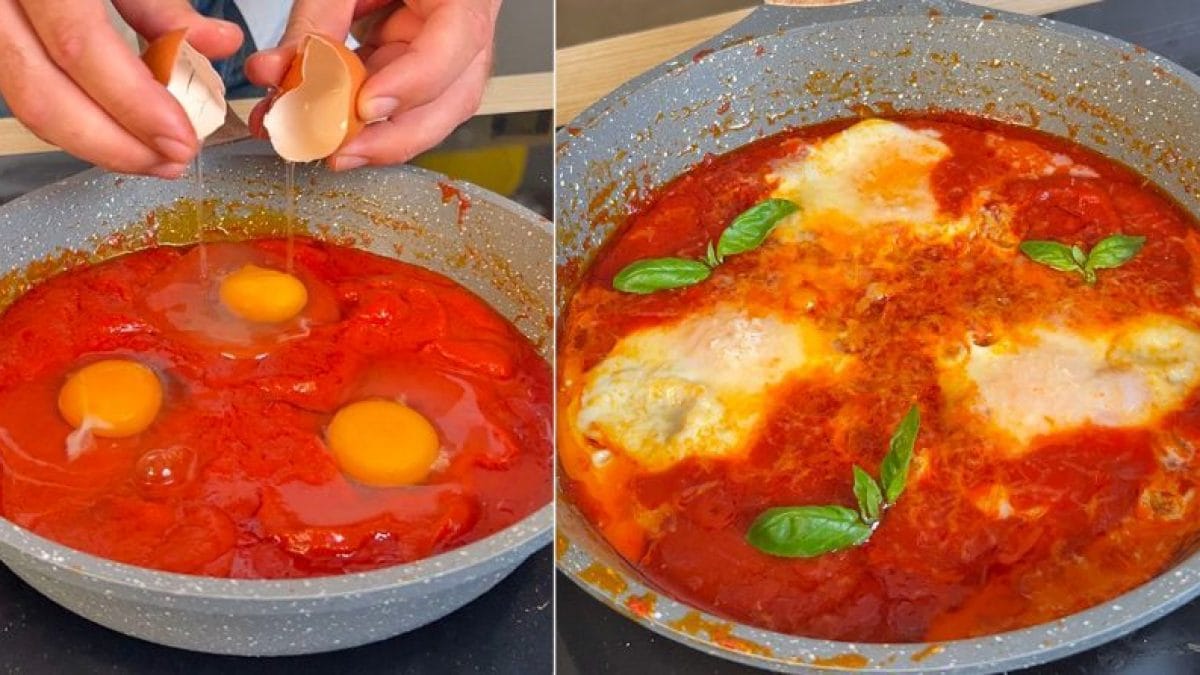
Eggs in purgatory are a bubbling pan of rich tomato sauce where eggs gently settle in, cook to perfection, and emerge as the stars of a meal. It’s the kind of recipe you pull out when time is short, hunger is loud, and you still want something that feels intentional.
At its core, this dish is beautifully straightforward, you just need a garlic and tomato base, a few eggs cracked right into the sauce, a shower of Parmigiano, and a handful of fresh basil. Served with crusty bread, it easily shifts roles, from casual brunch to a quick dinner.
What is Eggs in Purgatory?
Eggs in purgatory, or Uova in Purgatorio, is a classic Southern Italian dish with roots in Naples. The name is as theatrical as the dish itself, the fiery red tomato sauce is said to represent the flames of purgatory, while the eggs symbolise souls finding their way through it.
Traditionally, it was a humble, budget-friendly meal made with pantry staples. Some versions include chili flakes for heat, others add cheese or herbs.
Pro Tips for the Best Eggs in Purgatory
- Since the sauce is the backbone of the dish, a rich and well-balanced tomato passata makes all the difference.
- Letting the sauce cook for a full 10 minutes deepens the flavour and removes any sharp acidity.
- Keep an eye on the eggs, and 5 minutes gives you soft yolks, while 6 leans more toward set. So, choose your preference.
- Add a little salt to the sauce early, then adjust again after the eggs cook to keep everything balanced.
- Adding basil at the end preserves its aroma and keeps it vibrant rather than wilted into obscurity.
Frequently Asked Questions
Can I use canned tomatoes instead of passata?
If passata isn’t available, canned tomatoes work just fine. Just crush or blend them slightly for a smoother consistency. You may also need to simmer a bit longer to reduce excess liquid. Also, taste and adjust the seasoning as canned varieties can vary in acidity.
Can I add onions even though they’re not listed?
Yes, and in fact, the method already sneaks them in. A small onion adds sweetness and depth to the sauce. Finely chop it so it melts into the base rather than standing out, and cook it until golden before adding the tomatoes.
How do I avoid overcooking the eggs?
Keep a close watch once the eggs hit the pan, use medium-low heat, and cover the pan to control cooking gently. Remember, residual heat will continue cooking them slightly after you turn off the stove.
Is this dish suitable for breakfast?
Yes, and it’s a fantastic one. It’s hearty, protein-rich, and far more exciting than typical breakfast options. Pair it with coffee or juice for a complete start to the day.
How to Store Leftovers
They are best enjoyed fresh, but leftovers can still be saved, and store any remaining sauce in the fridge for up to 2 days. Reheat gently on the stove to avoid overcooking the eggs further.
Ingredients
How to Make Eggs in Purgatory

Pour a generous drizzle of olive oil into a pan over medium heat. Add finely chopped onion and the garlic clove, and sauté until golden and fragrant.
Pour a generous drizzle of olive oil into a pan over medium heat. Add finely chopped onion and the garlic clove, and sauté until golden and fragrant.

Pour in the tomato passata, add a pinch of salt, and let it simmer for about 10 minutes.
Pour in the tomato passata, add a pinch of salt, and let it simmer for about 10 minutes.

Crack the eggs directly into the sauce, cover the pan, and let them cook for 5 to 6 minutes.
Crack the eggs directly into the sauce, cover the pan, and let them cook for 5 to 6 minutes.

Sprinkle in the grated Parmigiano and fresh basil. Cover again and cook for another 2 minutes.
Sprinkle in the grated Parmigiano and fresh basil. Cover again and cook for another 2 minutes.

Turn off the heat, garnish with more fresh basil, and serve.
Turn off the heat, garnish with more fresh basil, and serve.
;Resize,width=767;)
