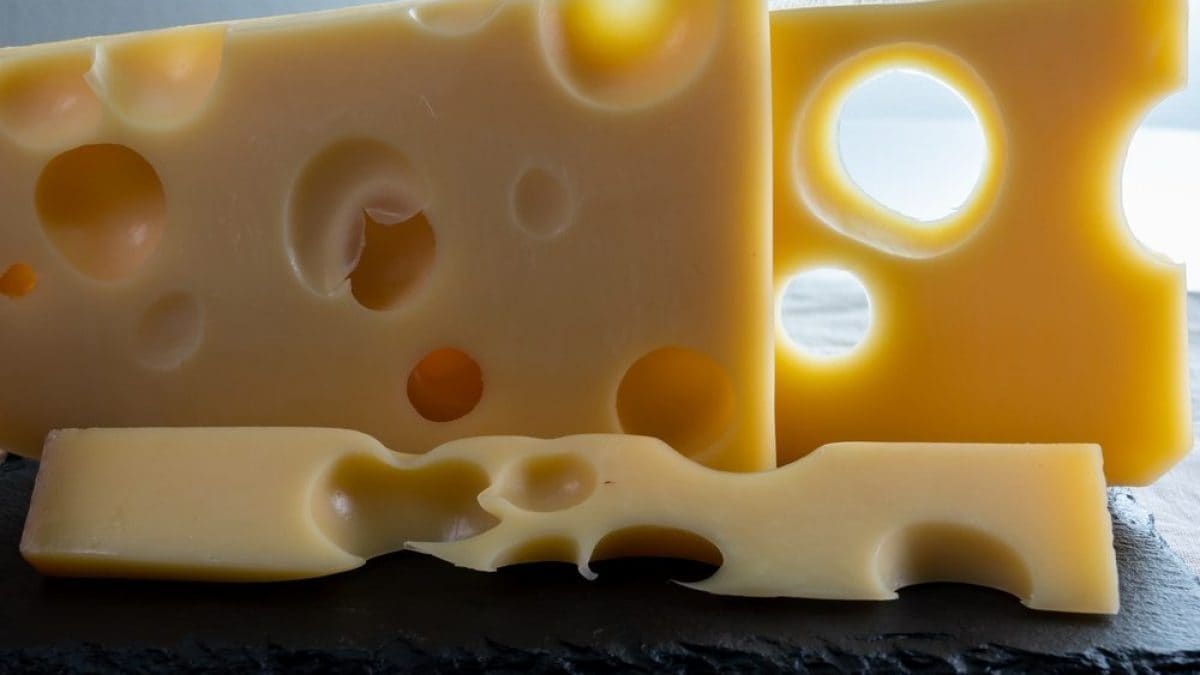
If there's one thing that has made Emmental famous, it's its large holes, the more or less round holes scattered throughout the cheese, which over time have become a distinctive feature universally associated with the quintessential Swiss cheese. They're not just an aesthetic feature, but a biological signature, the visible result of a complex process involving milk, microbes, and time. But in the future, they may no longer be its defining characteristic: Emmental is progressively "losing its holes," a symptom of a more profound change affecting the entire dairy system. A change born from a paradox: the safer and more hygienically controlled milk becomes, the less it behaves like a living substance capable of spontaneous transformation.
The Modern Milk Paradox
In recent decades, milking practices and health regulations have evolved significantly, drastically reducing the presence of impurities and contaminants in milk. Closed milking systems, immediate refrigeration, increasingly stringent microbiological controls, and high hygiene standards have transformed milk into a stable and safe raw material. This is a fundamental advance in terms of food safety, but it has had unexpected consequences for dairy processing.
The point is that milk has never been an "inert" substance: it is a complex ecosystem, populated by a multitude of microorganisms —lactic acid bacteria, yeasts, and environmental microflora—that actively participate in fermentation processes. Today, however, this microbial population has drastically diminished: as industry experts explain, contemporary milk contains far fewer microorganisms than in the past, not only potentially harmful ones, but also beneficial ones.
And this fact is far from secondary: bacteria are not simple "guests," but actual biochemical agents that drive the transformation of milk into cheese. They metabolize lactose, proteins, and fats, generating acidity, aromas, and structure. Without an adequate microbial load, the fermentation process becomes slower, less spontaneous, and above all, less complex.
In the case of Emmental, this balance is particularly delicate: its characteristic holes —the famous holes—depend on the action of specific bacteria, particularly those of the Propionibacterium genus. During ripening, these microorganisms convert lactic acid into propionic acid, acetic acid, and carbon dioxide. It is precisely the latter, accumulating in the cheese paste, that creates the regular cavities that define the appearance of Emmental.
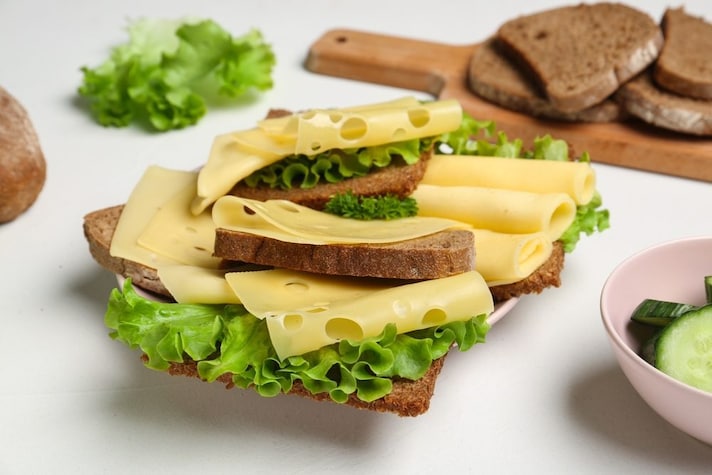
However, if the starting milk is too low in microorganisms or if the microbial ecosystem is unbalanced, the activity of propionic acid bacteria can also be compromised. The gas produced may be insufficient or distributed unevenly, resulting in smaller, distorted, or completely absent holes. Not only that, but the cheese's sensory profile also changes, losing some of its typical sweetness and aromatic complexity.
The result is an altered balance, in which not only potentially pathogenic microorganisms are eliminated, but also beneficial ones, essential for building—in this case literally—the structure, appearance, and flavor of a cheese. In the case of Emmentaler, this transformation becomes visible: fewer microbes means, concretely, fewer holes.
Guided Fermentations and Loss of Biodiversity
Faced with increasingly "sterile" milk, many producers are forced to intervene by adding selected starter cultures to initiate and control fermentation: a now widespread practice that guarantees the stability and safety of the final product, but raises important questions. The use of industrial cultures, often standardized and limited to a few strains available on the market, tends to uniformize results: this reduces the natural variability that historically characterized cheeses, linked to the terroir, production environments, and local microflora.
In this context, so-called "natural" cheeses —produced without the addition of external enzymes and based exclusively on the bacteria present in the milk or developed on the farm—are becoming increasingly difficult to produce. This is not due to ideological choices, but rather to the material transformation of the raw material.
A Problem That Goes Beyond Emmental
To address this phenomenon, the industry is experimenting with various solutions: on the one hand, the controlled addition of propionic acid bacteria —already required by regulations—re-establishes the conditions necessary for the formation of holes; on the other, approaches more closely tied to enhancing the natural context are emerging.
In Switzerland, for example, the Agroscope research center is working on native bacterial strains, isolated from local areas and production, with the aim of preserving the connection between cheese and the environment. Among the solutions being tested is the use of hay dust, which reintroduces beneficial microorganisms into the milk, helping to restore more complex fermentation dynamics.
The issue, however, isn't limited to a single cheese: the progressive depletion of microbial biodiversity is a concern that affects the entire dairy industry and, more generally, the world of fermentation. Other iconic products, such as Camembert, are also affected by similar dynamics: some traditionally used mold varieties are now at risk, replaced by standardized strains that are easier to manage but less representative of the original diversity.
;Resize,width=767;)
