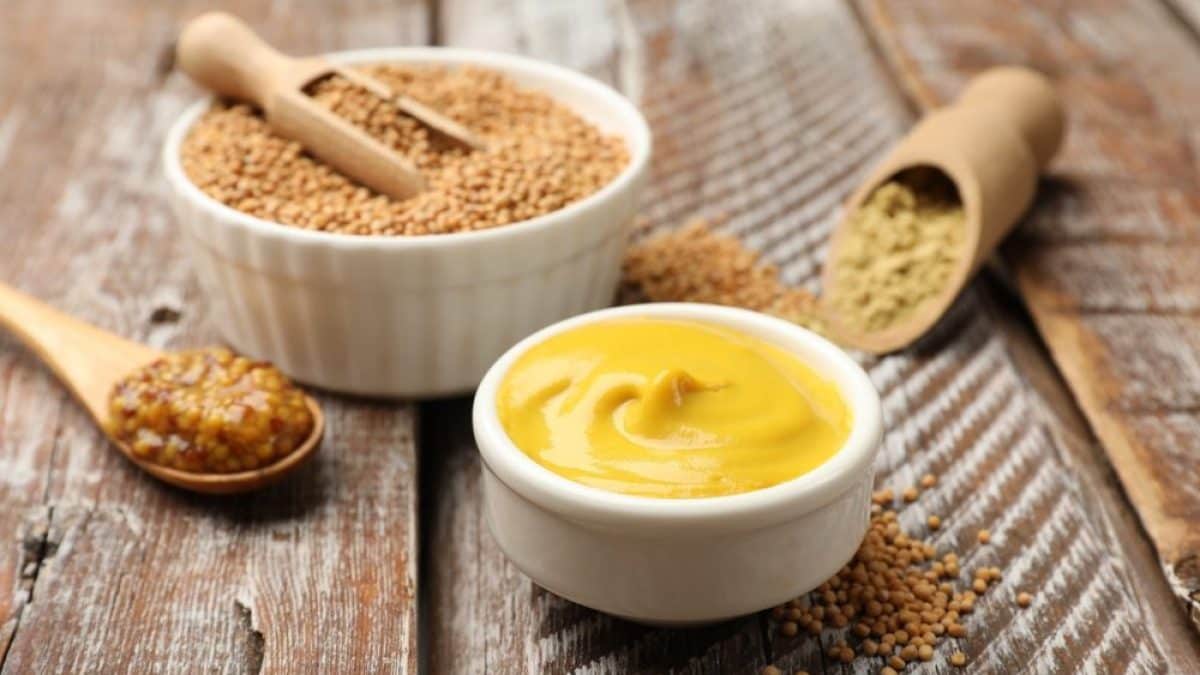
Mustard is one of those condiments that, despite taking up little space in the pantry, can make its mark in the kitchen: its tiny seeds, golden or dark, contain intense aromas capable of transforming a dish: just a teaspoonful is enough to add character to a sauce, liven up a vinaigrette, or liven up a simple sandwich.
Its history spans centuries and continents: the Romans already prepared a paste of crushed seeds mixed with grape must, which gave rise to the Latin term mustum ardens, meaning "burning must," the origin of the word mustard in many European languages. In the Middle Ages, French monasteries perfected the processing of the seeds, transforming mustard into a truly gastronomic product. Over time, each country developed its own interpretation: some sweeter, others more aggressive, some creamy, others rustic and grainy.
Behind this variety of styles, however, lies a relatively simple botanical basis: all mustards, in fact, derive from the seeds of certain plants belonging to the Brassicaceae family, the same as cabbage, broccoli, and turnips. The differences in taste, color, and intensity depend mainly on the species used, the type of grinding, and the liquids used in preparation. Here's everything you need to know about mustard, so you can use it effectively in the kitchen.
The Three Main Species of Mustard
Botanically speaking, almost all mustards used in cooking come from three main species. These plants produce seeds that are very similar in appearance, but with different aromatic characteristics that profoundly influence the final result. The spiciness, in fact, isn't present in the whole seed: it only emerges when the seed is crushed and mixed with a liquid, releasing the essential oils responsible for the typical pungency.
1. Yellow Muastard (Sinapis alba or Brassica alba)

It's the most common variety and also the mildest: yellow mustard has medium-large seeds, pale yellow or beige in color, and contains a smaller amount of the compounds responsible for its spiciness. The result is a mustard with a mellow, slightly acidic flavor and an aroma vaguely reminiscent of hazelnut and young cabbage.
This characteristic makes it perfect for sweeter or more balanced preparations: it is in fact the basis of the classic American mustard, with a bright color and a gentle flavor, but it is also used in salad dressings, flavored mayonnaises and marinades where an aromatic accent is sought without excessive aggressiveness.
2. Brown or Indian Mustard (Brassica juncea)

Considered the most versatile variety, brown or Indian mustard produces dark brown seeds with a more intense and complex flavor profile than yellow mustard. When ground, it develops a strong yet balanced spiciness, making it ideal for more complex dishes.
It is the most commonly used species in quality European mustards, such as Dijon, where its pungent character is balanced by white wine or vinegar. In India, however, Brassica juncea seeds are an everyday ingredient: they are often toasted in hot oil at the beginning of cooking, releasing warm, slightly smoky aromas that form the aromatic base of numerous curries and vegetable dishes.
3. Black Mustard (Brassica nigra)

Black mustard is the oldest and probably the most potent of the three: its seeds are small, almost black, and contain a high concentration of pungent compounds. When ground, they develop a rapid and penetrating spiciness, that sensation that rises to the nose and releases an almost explosive aroma.
It was once widely cultivated in Europe, but today its popularity has declined because the plant is difficult to harvest with modern machinery. However, it remains important in many traditional cuisines, especially in India, the Middle East, and North Africa, where the seeds are used whole, toasted, or ground to give depth and character to dishes.
How Mustard's Spiciness is Born
Mustard's distinctive "sniff" comes from a chemical reaction: when the seeds are ground and mixed with water or vinegar, natural enzymes release pungent aromatic compounds. The temperature and type of liquid greatly influence the final result: water tends to develop a more intense spiciness, while vinegar stabilizes it, making it more rounded and persistent. A small but powerful ingredient.
The Great Traditions of Mustard
Few condiments have transcended centuries and borders like mustard: from medieval monasteries in Burgundy to English pubs and American hot dog stands, this sauce always stems from the same simple gesture: grinding mustard seeds and mixing them with an acidic liquid.
Yet this basic foundation gives rise to vastly different preparations: the type of seed used, the grinding, the addition of vinegar, wine, must, or spices radically transform the final result. Some mustards focus on pungency, others on balance and aroma, still others on sweetness and roundness. The world of mustard is thus surprisingly diverse: each tradition has developed its own interpretation, often tied to local cuisine and the dishes it is intended to accompany.
Dijon Mustard

Originally from Burgundy, it is probably the most famous mustard in the world: its historic recipe called for ground brown mustard seeds mixed with verjuice, the acidic juice of unripe grapes, a popular ingredient in medieval French cuisine. Today, verjuice is often replaced with vinegar or white wine, but Dijon's character remains unmistakable: a creamy consistency, pale color, and a bold yet elegant flavor, with a distinct spiciness that develops quickly on the palate. In the kitchen, it is a true all-rounder: used in vinaigrettes, meat sauces, marinades, and emulsions, where it also helps stabilize the mixture of oil and acids.
Old-Fashioned Mustard (à l'ancienne)

It's a more rustic version of Dijon: the seeds aren't completely ground and remain partly whole, creating the typical grainy texture that crackles under the teeth. The flavor is aromatic but less aggressive than smooth Dijon, with slightly acidic and spicy nuances. This more "textured" structure makes it particularly suitable for accompanying roasts, grilled meats, cured meats, and aged cheeses, to which it adds aroma and complexity without overpowering the main flavor.
English Mustard

Among the most pungent mustards, it is often made from a blend of finely ground yellow and brown seeds, which quickly release the oils responsible for its spiciness. The result is a sauce with a direct and almost explosive character, capable of developing an intense sensation that rises to the nose. Historic brands like Colman's made it famous as early as the 19th century: it traditionally accompanies roast beef, sausages, meat pies, and hearty sandwiches, where its strength cuts through the richness of the fat.
American Mustard

It's probably the most visually recognizable mustard: its bright yellow comes from the addition of turmeric. Made with yellow mustard seeds, vinegar, sugar, and light spices, it has a very moderate spiciness and a generally sweet and tart flavor. Precisely because of this simplicity, it has become the quintessential "pop" mustard. It's inseparable from the imagery of American street food: hot dogs, hamburgers, fries, and barbecue.
German Mustard

In Germany, mustard isn't a single preparation, but a family of regional styles: some are strong and tart, others decidedly sweet. The most famous is Bavarian Süßer Senf, a sweet and spicy mustard traditionally served with Weißwurst, Munich's typical white sausages. In other regions, spicier versions are found, often enriched with sugar, honey, or aromatic spices. In any case, it remains an almost obligatory accompaniment for sausages, bratwurst and smoked meats.
Honey Mustard

A more recent but now very widespread variant, especially in North American cuisine: here the spiciness of the mustard is balanced by the addition of honey, creating a balance between sweet, sour and pungent. The result is a smooth and versatile sauce that works great with fried chicken, white meats, sandwiches and salads, but also as a dip for snacks and finger foods.
Meaux Mustard

A French specialty made with whole seeds and coarsely ground, it retains a rustic, intense character: the flavor is complex, with spicy notes and a rounder spiciness than Dijon. Tradition dictates that it be stored in characteristic stoneware jars sealed with cork and sealing wax, which over time have become a symbol of this historic mustard. It is particularly popular with roast meats, game, and cheeses, where its rich texture really comes into its own.
Mustard Around the World
The history of mustard isn't unique to Europe; on the contrary, the small seeds of the Brassica plant have traveled along trade routes and culinary traditions, finding their way into a wide variety of cuisines. In some, they become a sauce, in others a spice, in still others a basic aromatic ingredient. The seed varieties, processing methods, and uses vary, but the same characteristic always remains: the ability to release intense aromas and a lively spiciness.
In India, black or brown mustard seeds are a key spice in everyday cooking: they are often toasted or popped in very hot oil at the beginning of cooking, a technique called tadka or tempering. As the seeds begin to jump and crackle in the pan, they release aromatic oils that flavor the oil itself, creating the base for curries, lentil dishes, vegetable stir-fries, and chutneys.

In Japan, mustard appears in the form of karashi, a bright yellow paste made from powdered oriental mustard seeds. It is known for its quick and penetrating spiciness, similar in intensity to wasabi but with a different flavor profile. It traditionally accompanies dishes such as tonkatsu, oden, natto, and various types of meat or skewers.
In Eastern Europe and Russia, mustard is also very popular, often in particularly strong versions: here you can find preparations with a strong character, sometimes enriched with horseradish, honey or spices, designed to accompany smoked meats, sausages, preserved fish and robust traditional dishes.
;Resize,width=767;)
