
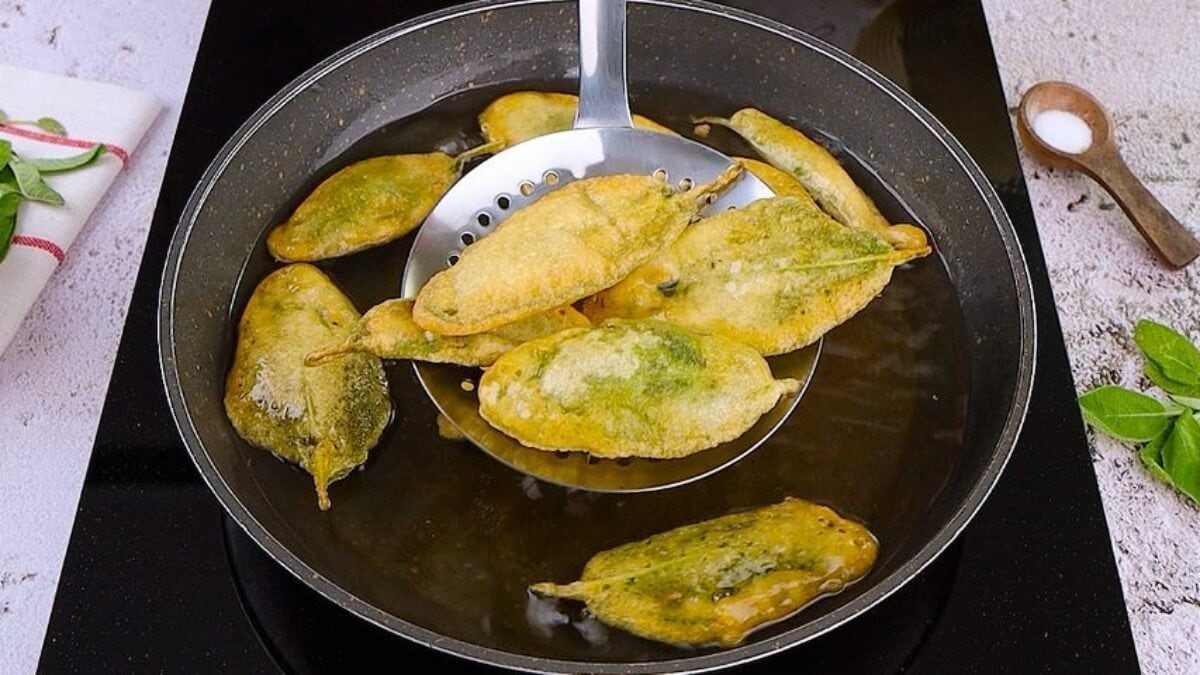
This recipe keeps things simple with fresh sage leaves, a light batter made from flour and cold beer, a spoonful of olive oil, salt, and a whipped egg white. The beer helps create a delicate coating, while the egg white adds lightness to the mixture. Once the coated leaves hit hot oil, they transform into crisp, golden morsels.
You can serve them as a starter, offer them alongside roasted vegetables, grilled meat, chicken, or fish, or scatter them over creamy soups, risotto, and pasta dishes.
What Are Fried Sage Leaves?
Fried sage leaves are fresh sage leaves coated in batter or fried directly in oil until crisp. Sage has a long history in Mediterranean and European cooking, particularly in Italian cuisine, where it is commonly paired with butter, pasta, beans, meat, and roasted vegetables. Its aroma makes it especially useful in rich dishes, as it helps balance heavier ingredients.
Pro Tips for the Best Fried Sage Leaves
- Use fresh sage leaves that are firm, fragrant, and free from dark spots or damage.
- Pat the leaves dry with a clean kitchen towel or paper towels after washing. Excess water can cause hot oil to splatter and may prevent the batter from clinging properly.
- Cold beer helps keep the batter light and makes it easier to achieve a delicate coating. Open the beer just before preparing the mixture so it retains some of its carbonation.
- Sage leaves are delicate, and the batter can brown quickly. Watch the colour carefully and remove the leaves as soon as the coating is golden and crisp.
Frequently Asked Questions
What Do Fried Sage Leaves Taste Like?
Fried sage has an earthy flavour with gentle peppery and slightly pine-like notes. The batter adds a mild, crisp outer layer that contrasts with the herb's aroma. Because sage has a stronger personality than many delicate herbs, you can still taste it through the coating.
Why Is My Fried Sage Batter Soggy?
Soggy batter often results from oil that is not hot enough, overcrowding the pan, or allowing the fried leaves to sit in trapped steam. When the oil is too cool, the coating takes longer to cook and can absorb more oil. Draining the finished leaves on a wire rack and serving them promptly will also help preserve their crispness.
Can I Use Dried Sage Instead of Fresh Sage?
Fresh sage is essential for this particular recipe because the leaves need to remain intact during coating and frying. Dried sage is usually crumbled or finely rubbed and will not provide the same structure or appearance.
How to Store Leftover Fried Sage Leaves
Fried sage leaves are best eaten immediately because their crisp coating gradually softens as it absorbs moisture from the air. If you have leftovers, allow them to cool before storing them in a container and enjoy within the same day. Refrigeration is not ideal for maintaining their texture, and leaving them at room temperature for extended periods can affect food safety.
Ingredients
How to Make Fried Sage Leaves
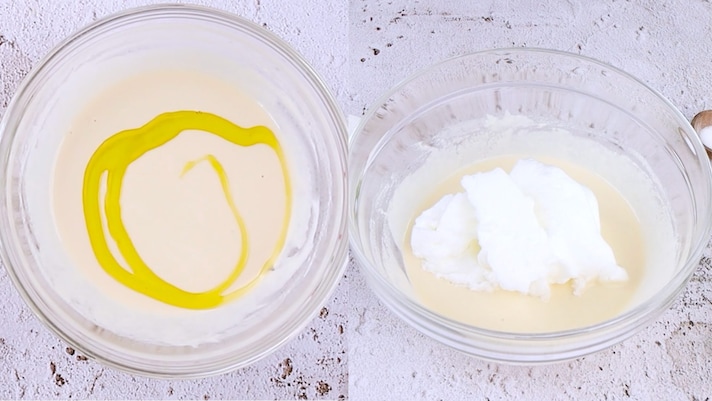
Add the flour and salt to a mixing bowl. Pour in the cold beer and oil, then whisk until you get a thick batter. It should be able to coat the sage leaves without being so thick that it hides their shape completely. Using a spatula, fold in the whipped egg white into the batter.
Add the flour and salt to a mixing bowl. Pour in the cold beer and oil, then whisk until you get a thick batter. It should be able to coat the sage leaves without being so thick that it hides their shape completely. Using a spatula, fold in the whipped egg white into the batter.
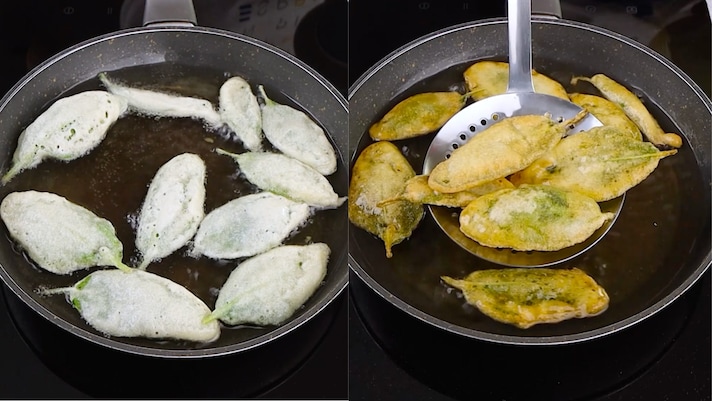
Dip each sage leaf into the prepared batter, turning it so both sides are coated. Fry the leaves in hot oil until the coating becomes crisp and golden, turning the leaves if needed.
Dip each sage leaf into the prepared batter, turning it so both sides are coated. Fry the leaves in hot oil until the coating becomes crisp and golden, turning the leaves if needed.
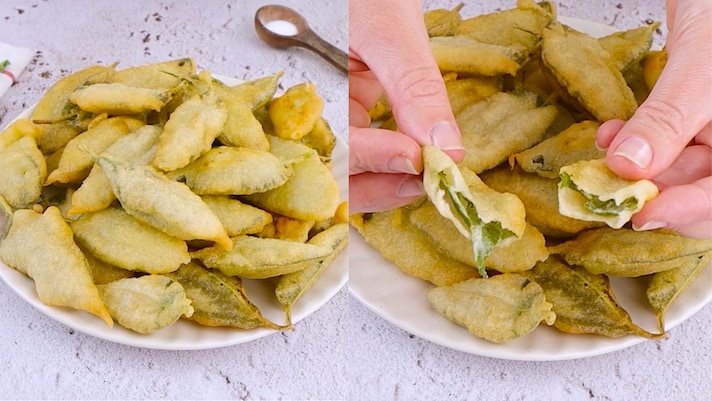
Drain the leaves and enjoy!
Drain the leaves and enjoy!


