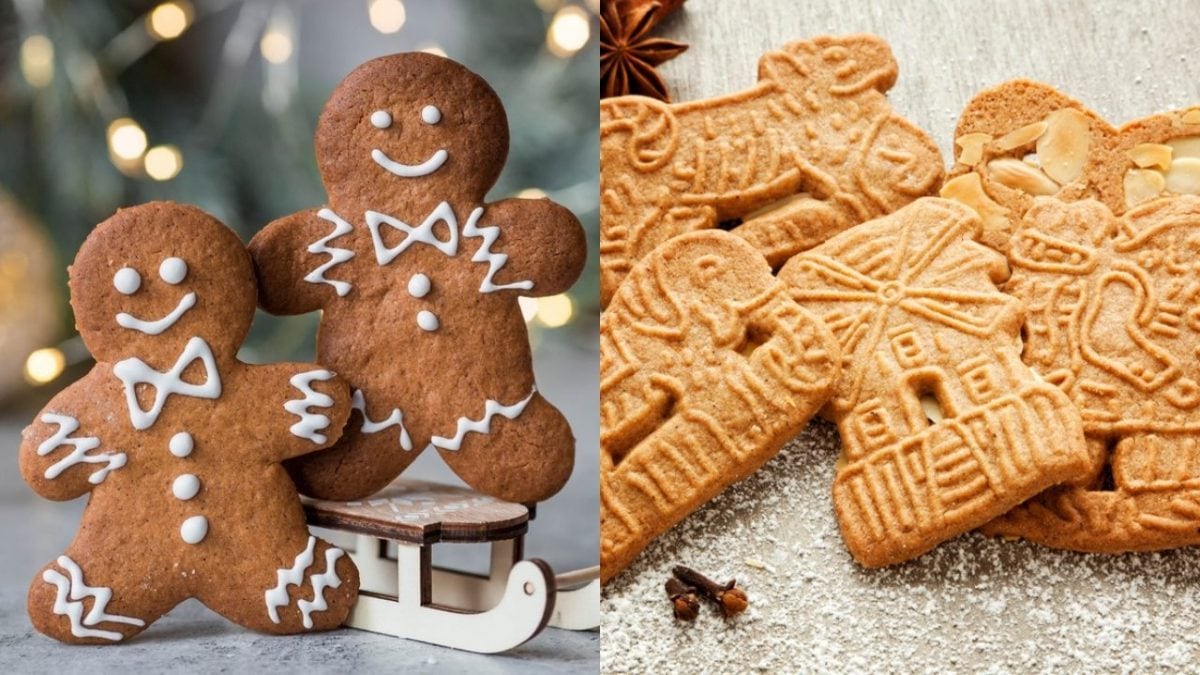
The Christmas season brings with it many recipes that draw on tradition, where the protagonists are most often the typical ingredients of this holiday. In Northern Europe and Great Britain, the scents and flavors of winter are linked to those of spices, which arrived in the Old Continent with trade and which embellished the tables of aristocrats in preparations that over the centuries became increasingly popular and accessible to everyone. And this is where gingerbread and speculoos come into play, delicious and aromatic biscuits that are often confused for each other due to their similar spice base, but which are actually very different. Let's see what the main differences are, including their uses in the kitchen.
Origins
Let's start from the beginning. Gingerbread originated in the Anglo-Saxon world, particularly in England, and then spread to the United States, while speculoos is a biscuit typical of Belgium and the Netherlands, formerly known as Flanders. Both have roots in medieval Europe, when breads rich in spices, dried fruit, and honey were prepared especially for holidays and religious occasions. Over time, gingerbread evolved into biscuits served at the end of meals after court banquets—it is said that Queen Elizabeth I offered them to her guests to aid digestion —and then became a regular feature at fairs, as a symbol of good luck, while speculoos have always been linked to the Christian figure of Saint Nicholas, who brought them as gifts to children.

Ingredients
The recipes for these two biscuits have not remained unchanged over time; they have undergone variations over the centuries, arriving at their current composition. In gingerbread, the protagonist is ginger, accompanied by cinnamon, cloves, and sometimes nutmeg. The sweet base is provided by honey, molasses, or golden syrup, and eggs and butter are almost never missing. In speculoos, however, cinnamon dominates, or there is a complex blend of spices, which also includes cardamom and star anise: the sweetener is provided by brown sugar, which can be raw or muscovado, which accentuates the caramelized note and brown color.
Dough
Given the ingredients that make up the dough, gingerbread dough is softer and moister inside after baking, with a drier surface, while speculoos dough is much more reminiscent of classic butter biscuits, crumbly and crunchy.
Form
Gingerbread is famous for its iconic shapes: the most famous is undoubtedly the "little man," but they can also be made in the shape of Christmas trees, baubles, or stars. One of the most scenic versions, hailing directly from the 19th century, when the trend spread in Great Britain, is that of the charming, completely edible houses. Speculoos, on the other hand, have a more traditional appearance: they are usually rectangular, with ornamental motifs inspired by floral or animal molds, including exotic ones like elephants, used in the past. And let's not forget the biscuits shaped like Saint Nicholas.

Intended Use
Of course, both gingerbread and speculoos are meant to be pleasantly nibbled on, but each one offers some variation on the theme. What we haven't mentioned yet is that the former are closely tied to the decorative aspect of the holidays: they don't just have to be delicious, in short, but also beautiful. The different shapes are glazed with royal icing in different colors, garnished with sprinkles, becoming perfect decorations and delicious placeholders. Speculoos is a biscuit that is also eaten on a daily basis, accompanied by tea, coffee, or a delicious hot chocolate: it also becomes a functional ingredient in home baking, to create alternative tiramisu, spiced cheesecake bases, and spreadable creams.
;Resize,width=767;)
