
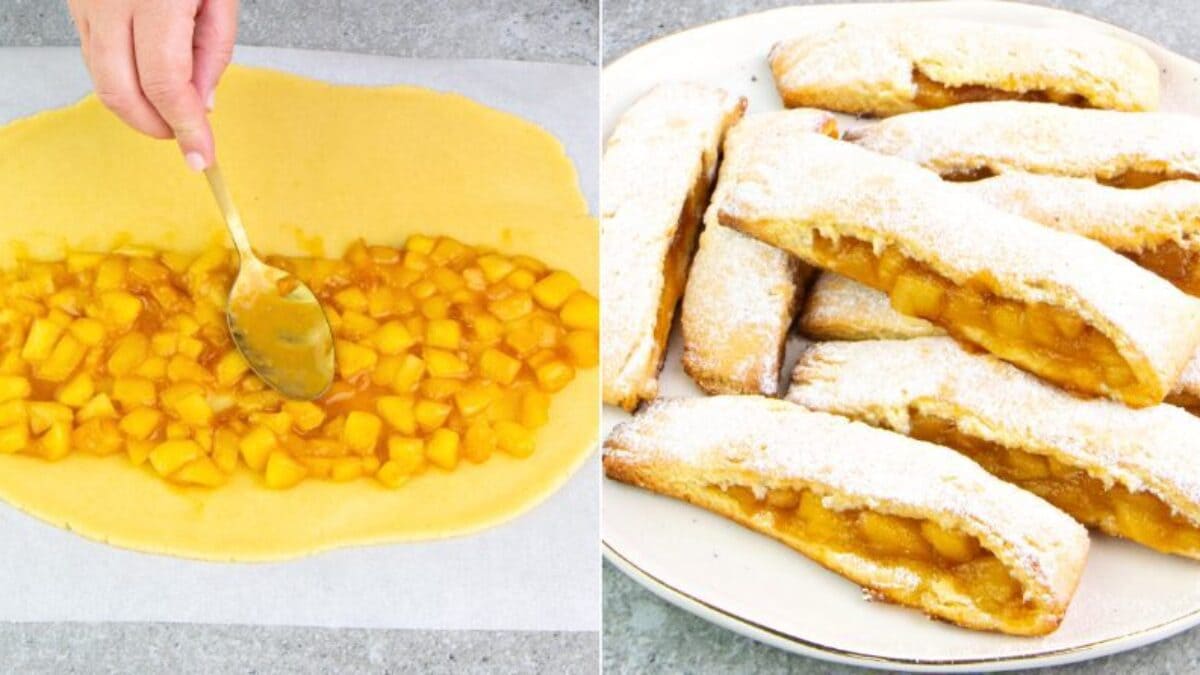
Apple tongues are charming little pastries that combine a tender, homemade dough with a sweet apple filling. The recipe brings together two delicious components, that is, a soft dough made with eggs, sugar, melted butter, lemon juice, flour, and baking powder. Then, it is filled with cooked apple filling flavored with cinnamon, lemon, and apricot jam.
Apple tongues are suitable for afternoon tea, coffee breaks, lunchbox treats, or weekend baking.
What Are Apple Tongues?
The name is used for different baked treats in different places, and the exact shape, texture, and ingredients can vary from one recipe to another. But in this recipe, the dough is rolled out, filled with cooked apples, folded over, and sealed before baking.
Apples provide a naturally fruity flavour and soften as they cook. Sugar sweetens the mixture, butter gives it richness, and apricot jam adds a fruity finish.
Pro Tips for the Best Apple Tongues
- Smaller apple pieces cook more quickly and distribute more evenly inside the dough. Large chunks can make the filling difficult to spread and may prevent the dough from sealing properly.
- Hot apple filling can soften the dough too much and make it difficult to handle. It may also create steam inside the sealed pastries, making the edges harder to keep closed.
- The dough needs enough kneading to come together into a smooth, firm consistency. But stop when it holds together because excessive handling can make the finished pastries tougher than intended.
Frequently Asked Questions
What Do Apple Tongues Taste Like?
Apple tongues have a gentle sweetness, a fruity apple centre, and a warm cinnamon aroma. The lemon juice keeps the filling from tasting overly sweet.
Can I Make Apple Tongues Without Apricot Jam?
The apricot jam contributes sweetness, fruit flavour, and a little body to the filling, but it is not the only option. Apple jam or another mild fruit preserve can work, provided it complements the cinnamon and apples.
Why Is My Apple Filling Too Watery?
Apples naturally release juice during cooking, and some varieties contain more moisture than others. If the filling looks runny, keep cooking it uncovered over low to medium heat, stirring regularly until it thickens.
What Can I Serve with Apple Tongues?
Apple tongues are lovely alongside black tea, herbal tea, coffee, or a mug of hot chocolate. For dessert, serve them with a spoonful of yoghurt, whipped cream, or a small scoop of vanilla ice cream.
How to Store Leftover Apple Tongues
At room temperature, you can enjoy them within one to two days, provided they are kept in suitable conditions. If your kitchen is particularly warm or humid, refrigeration is the better choice. You can also refrigerate them for up to four days. Separate layers with baking parchment if necessary to prevent sticking.
Ingredients
How to Make Apple Tongues

Peel two apples, remove their cores, and cut into small pieces. Transfer the chopped apples to a frying pan or saucepan.
Peel two apples, remove their cores, and cut into small pieces. Transfer the chopped apples to a frying pan or saucepan.

Add the lemon juice, sugar, cinnamon, and butter to the pan. Cook over medium-low heat, stirring occasionally so the apples soften and do not stick to the bottom. Once the apples have softened, stir in the apricot jam and continue cooking for a few more minutes.
Add the lemon juice, sugar, cinnamon, and butter to the pan. Cook over medium-low heat, stirring occasionally so the apples soften and do not stick to the bottom. Once the apples have softened, stir in the apricot jam and continue cooking for a few more minutes.

Crack the egg into a mixing bowl, then add the vanilla sugar and regular sugar. Whisk the mixture until the ingredients are combined. Mix in the lemon juice and melted butter, then add the flour and baking powder. Mix with a spatula until the ingredients begin to come together and a dough starts to form.
Crack the egg into a mixing bowl, then add the vanilla sugar and regular sugar. Whisk the mixture until the ingredients are combined. Mix in the lemon juice and melted butter, then add the flour and baking powder. Mix with a spatula until the ingredients begin to come together and a dough starts to form.

Knead until it forms a smooth, firm dough.
Knead until it forms a smooth, firm dough.

Place the dough on a sheet of baking parchment. Roll it out and add the apple mixture over one half of the rolled-out dough.
Place the dough on a sheet of baking parchment. Roll it out and add the apple mixture over one half of the rolled-out dough.

Fold the empty half of the dough over the apple filling and press the edges together with your fingers to enclose the filling. Next, go around the edges with a fork, pressing firmly to seal the dough and create a neat pattern.
Fold the empty half of the dough over the apple filling and press the edges together with your fingers to enclose the filling. Next, go around the edges with a fork, pressing firmly to seal the dough and create a neat pattern.

Cut the folded dough into individual portions. Line a baking tray with baking parchment and arrange the cut pastries on the prepared tray.
Cut the folded dough into individual portions. Line a baking tray with baking parchment and arrange the cut pastries on the prepared tray.

Preheat the oven to 180°C (360°F) and bake for 20 minutes.
Preheat the oven to 180°C (360°F) and bake for 20 minutes.

Dust the tops with powdered sugar just before serving. Enjoy!
Dust the tops with powdered sugar just before serving. Enjoy!


