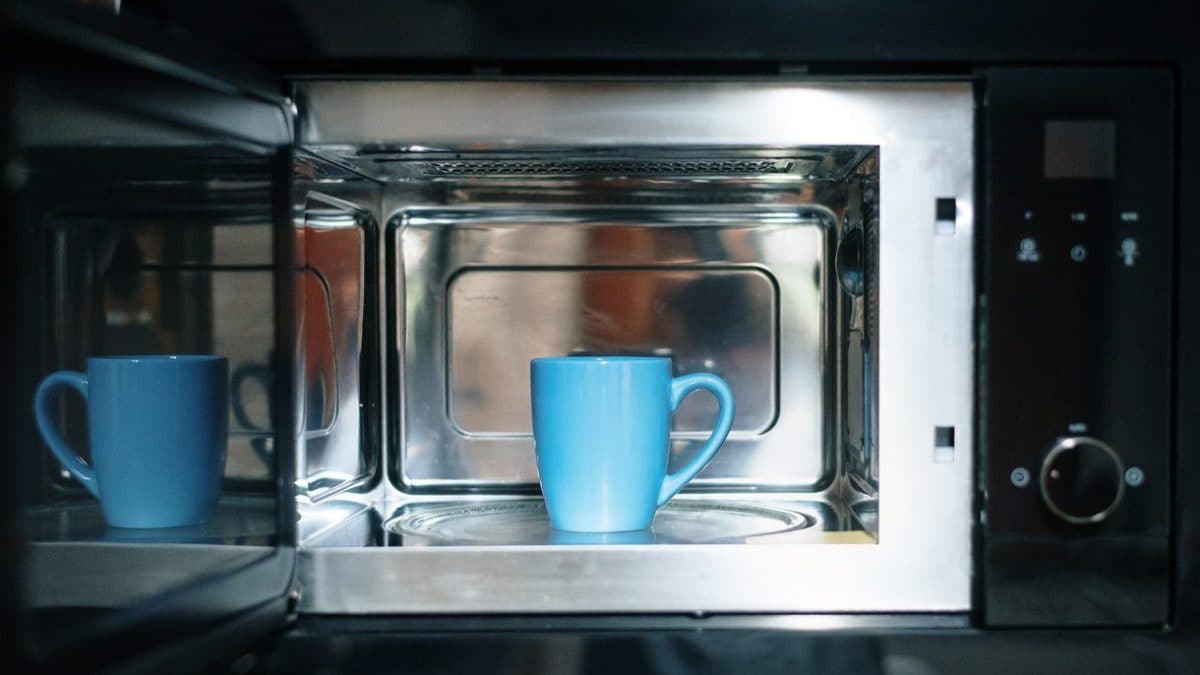
In the frenetic pace of daily life, the microwave oven has become a kitchen workhorse: fast, convenient, and always ready for use. We use it to reheat dishes, thaw food, and even reheat a cup of water. Yet, boiling water in the microwave isn't as simple as it might seem. There are little-known risks, specific physical phenomena, and even safety traps worth knowing about.
The "Super-Boiling" Phenomenon
When you heat water on the stove, you can clearly see bubbles rising, a sign that the liquid has reached boiling point (212°F/100°C). In the microwave, however, this doesn't always happen. Microwaves heat water molecules, distributing energy throughout the liquid. If the container is very smooth and the water is free of micro-imperfections or small air bubbles, it can reach temperatures above 212°F/100°C without forming visible bubbles. This state is called super-boiling and can be extremely dangerous.
Why is it dangerous? Under super-boiling conditions, the water appears calm and quiet, but only until it's disturbed: adding a tea bag, a teaspoon of salt, or even simply moving the container can trigger a violent instant boil, splashing hot water.
Microwaves and "Patchy" Heating
Unlike the uniform heat of a pot or electric kettle, the microwave doesn't heat everything equally. There can be very hot and cold spots within the same cup, creating unstable temperature points. This makes it difficult to both control when the water has actually reached a boil and predict how it will behave when you remove it or stir it.
Water itself is not dangerous to boil in the microwave, as long as you use suitable containers. The greatest risks come not from the water, but from:
- containers not suitable for the microwave, especially some plastics which can release chemicals if heated improperly;
- non-microwave-safe materials that may warp, overheat, or release unwanted compounds.
For this reason, it is always important to check that the container is labeled as microwave-safe before heating liquids in it.
How to Reduce Risks if You Absolutely Must Use the Microwave
Heating water in the microwave is a common practice, especially for making tea or coffee quickly. However, to avoid the risk of super-boiling and possible burns, it's important to take certain precautions.
- Place a non-metallic object in the cup before heating. A wooden stick, a spatula, or even a tea bag helps the bubbles form gradually. This simple trick makes the boil more stable and reduces the risk of the seemingly still water reacting suddenly when stirred or when other ingredients are added.
- Heat water in short bursts rather than in one long session. Heating for 30–60 seconds at a time, stirring between cycles, allows the heat to be distributed more evenly. This prevents localized temperature spikes, which are a major cause of overboiling.
- Wait a few seconds before touching or pouring water. Even after the microwave stops, the water can be extremely hot and unstable. Letting it sit for a few seconds before moving the cup or adding sugar, coffee, or tea reduces the risk of sudden boiling at the first movement.
- Use only microwave-safe containers. It's best to choose glass or ceramic mugs marked as microwave-safe. Avoid containers made of non-certified plastic or with metal decorations, which can overheat or release unwanted substances. Not filling the mug to the brim also helps limit spills.

Safer Alternatives
Whenever possible, it is best to rely on methods that guarantee greater control and security.
- The electric kettle is fast, precise and has an automatic shut-off, almost completely reducing the risk of accidents.
- The pot on the stove allows you to directly observe the boiling and gradually adjust the heat.
- Hot water dispensers are a practical solution for those who frequently drink tea or herbal teas.
In conclusion, the microwave can be used with caution to heat water, but for a true boil, traditional methods remain the safest and most predictable.
;Resize,width=767;)
