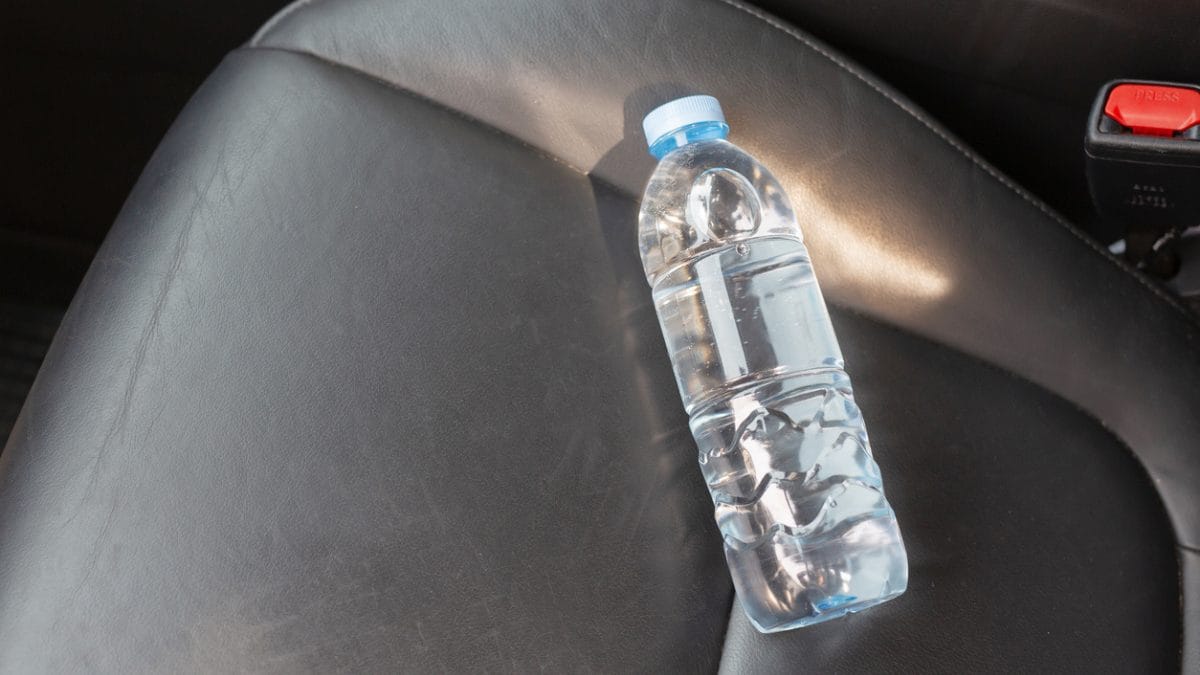
We’ve all done it. You hop into the car, parched, and your eyes land on the half-full water bottle rolling around on the floor. It’s warm — sometimes hot — but hey, water is water… right?
According to new research, maybe not. A recent study from the University of Florida (along with follow-up tests replicated by other food-safety labs) confirms what scientists suspected for years: when plastic water bottles are exposed to high heat, like inside a parked car, they can release chemicals and microplastics you definitely didn’t plan on drinking.
The inside of a parked car can easily climb past 120°F on a moderate summer day. On hotter days, temperatures reach 130–150°F in under an hour. Plastic isn’t built for that kind of environment, and the study’s findings show how quickly it begins to break down.
The Study Behind the Warning
The research team tested disposable polyethylene terephthalate (PET) water bottles under heat exposure to mimic real-world car conditions. What they found isn’t exactly refreshing news. Their findings highlighted two main concerns:
PET plastic is stable at cool temperatures, but heat speeds up its degradation. The study found elevated levels of:
- Antimony, a metalloid used in plastic manufacturing
- BPA analogs, even in plastics marketed as “BPA-free”
- Acetaldehyde, a compound that can alter taste and odor
These chemicals leached into the water more aggressively once the bottles sat at temperatures above 120°F.
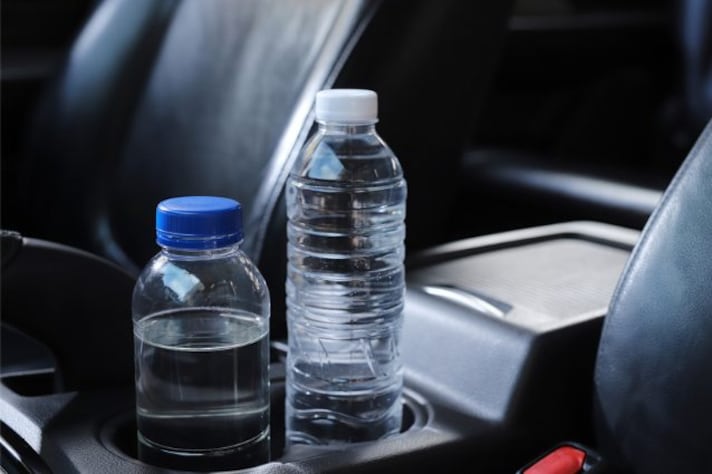
When exposed to high heat, PET water bottles shed billions of tiny plastic particles, far more than they release under normal conditions. Scientists observed a spike in microplastic shedding after just a few hours of heat exposure. That forgotten bottle rolling around your cup holder? It has been slowly seasoning itself.
Why Heat Is the Real Culprit
Plastic bottles aren’t designed to withstand prolonged high temperatures. When they’re left in a hot car, two things happen simultaneously:
- The plastic becomes unstable, softening and breaking down at a molecular level.
- The water becomes a “solvent,” encouraging particles and chemicals to migrate into it.
Even reusable plastic bottles aren’t entirely immune. While they’re sturdier than single-use bottles, most still degrade when repeatedly left in hot cars, dishwashers, or direct sunlight.
So What Should You Use Instead?
Thankfully, you don’t need to choose between dehydration and mystery chemicals. Safer alternatives include:
Stainless Steel Bottles
Durable, temperature-stable, and chemical-free. They may get hot to the touch, but they won’t leach anything into your drink.
Glass Bottles (With Silicone Sleeves)
Best for around-the-house or office use. They don’t react with heat or water — period.
Insulated Bottles (Vacuum-sealed)
These not only stay chemical-free but keep your water cold even if the car turns into a sauna.
;Resize,width=767;)
