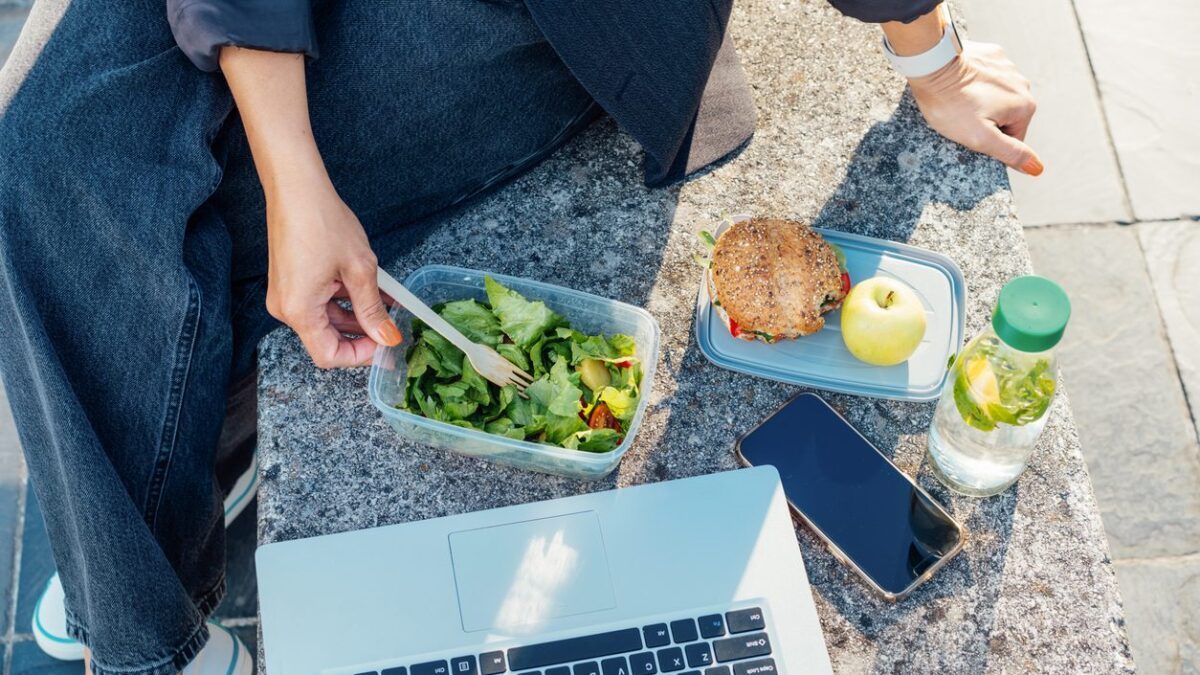
Between looming deadlines, emails piling up, and meetings that drag on far beyond their intended duration, for many workers, lunch breaks have become a distracting affair: a fork in the right hand, a mouse in the left, and a constant gaze glued to the screen. Eating in front of the computer may seem like the best way to optimize time and demonstrate maximum productivity, but in reality, it's a decidedly harmful habit for both physical health and mental performance.
Unplugging and stepping away from your desk is essential for allowing your body to digest properly and your mind to reset. With the help of biologist and nutritionist Simone Gabrielli, we'll explore in detail why eating lunch at your desk is unhealthy and how to best organize your office lunch break to maintain mental focus and high energy levels for the following hours. Finally, we'll offer valuable practical tips for tackling even the most challenging and stressful days when you're forced to eat while glued to your computer.

Why Eating at Your Desk is Bad For You
Working and eating at the same time prevents our bodies from activating the natural physiological processes related to nutrition. These are the main reasons why we should always interrupt our work activities during our lunch break and focus on what we're about to consume.
- Slow digestion and bloating: When you're working or answering emails, your brain senses a state of activity or stress and keeps the sympathetic nervous system active. In this "fight or flight" mode, the body cuts off blood flow to the stomach, sending it primarily to the brain and muscles. The result? Food sits there, digestion slows, you accumulate gas, and you find yourself facing the afternoon with a heavy burden in your stomach and uncomfortable bloating.
- No mental break, double the stress: the brain has a natural attention span. If you skip your break to get on with your tasks, you'll end the day completely drained and with sky-high cortisol (the stress hormone);
- Loss of satiety: Eating without paying attention to what's on your plate disrupts your natural satiety signal. You'll finish eating without even realizing it, and after just an hour, you'll feel unsatisfied hunger again.
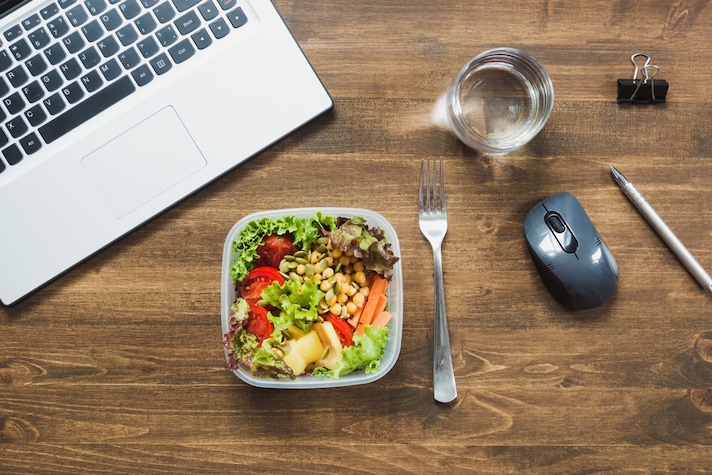
How to Organize Your Lunch Break at The Office
Eating properly and regaining energy during the workday doesn't require complex strategies or elaborate preparations, but proper planning of time and choice of ingredients. As Dr. Simone Gabrielli suggests, the lunch break must once again be a time dedicated to mindful nourishment and mental and physical recovery.
Here are some valuable tips from our expert:
- Get up from your chair and get a change of scenery; the golden rule is to get a change of scenery and physically disconnect from your workstation. Moving to your company's break room, sitting on a bench in a nearby park, or even just taking another table in the common areas allows you to break up the work flow. Taking your eyes off your monitors and the artificial lights from screens also allows you to relax and your brain to perform a true cognitive reset, lowering cortisol levels.
- Compose light and balanced meals: to avoid the classic "post-prandial slump"—caused by excessive blood flow to the digestive system following unbalanced or overly large meals—it's essential to create a balanced single dish. This must skillfully combine three elements: lean proteins: slices of chicken or turkey breast, hard-boiled eggs, tofu, fish fillets (such as tuna in water or salmon) or legumes (chickpeas, lentils, beans); seasonal vegetables: both raw and cooked, to ensure a high intake of water, minerals, and satiating fiber; and slow-release complex carbohydrates, such as brown rice, quinoa, spelt, barley, or a slice of rye bread. This mix ensures constant energy, satisfaction, and great satiety, without triggering insulin spikes. To complete the meal, you can add a fresh seasonal fruit;
- Take a 10-minute light walk: After a meal, even just ten minutes of exercise is a good habit. A short walk outdoors or along the corridors of a building improves circulation, promotes venous return (counteracting ankle swelling caused by a sedentary lifestyle), and helps maintain more stable blood sugar levels throughout the afternoon.
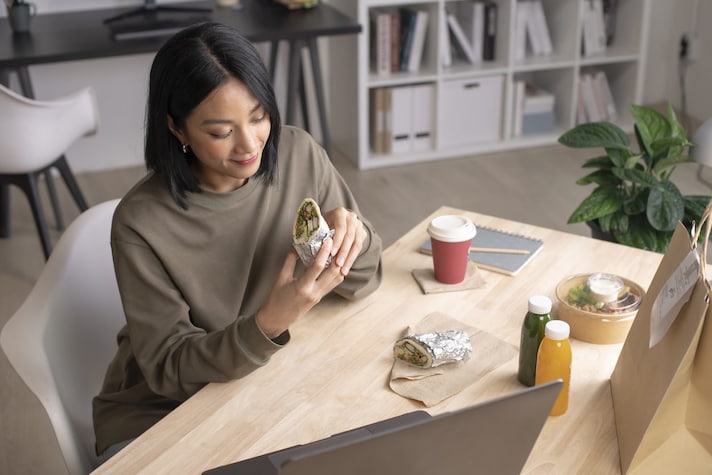
What If You're Forced to Eat Lunch at Your Desk?
Despite good intentions, there inevitably come those more difficult and urgent days when you can't leave your desk. If you're forced to eat lunch at your desk, you can implement a series of practical measures to limit the damage and prevent burnout:
- Close your work tabs for 15 minutes; the top priority is to give your mind a micro-break, even if you're still sitting in the same chair. Stop typing, minimize spreadsheets, and close your email. Dedicate this time solely to eating: you can listen to a podcast, watch an informative YouTube video, or simply observe what's happening outside the window. Taking your attention away from your workload allows your nervous system to slow down and improves digestion.
- Chew thoroughly and choose the right foods: Sitting, perhaps even slightly hunched over your desk, compresses and hinders the natural motility of the stomach. To facilitate the work of this organ, it's essential to chew each bite thoroughly and slowly. From a practical standpoint, avoid heavily seasoned, greasy, or sauce-rich foods that risk weighing you down, slowing digestion, or staining your workspace. Choose easy-to-manage, pre-composed (or semi-composed) dishes, such as a cold grain salad with pulled chicken, couscous with vegetables and chickpeas, or a whole-wheat wrap filled with turkey breast, lettuce, and tomatoes.
- Drink water and avoid sugary drinks: hydration is key to supporting digestion and concentration. Always keep a bottle of still water handy at your desk, not just during your lunch break, and absolutely avoid cans of carbonated or sugary drinks. Relying on your third or fourth coffee of the day or traditional energy drinks to mask a physiological drop in energy isn't the wisest choice: you'll only experience more anxiety, restlessness, and heartburn, worsening cognitive performance.
;Resize,width=767;)
